



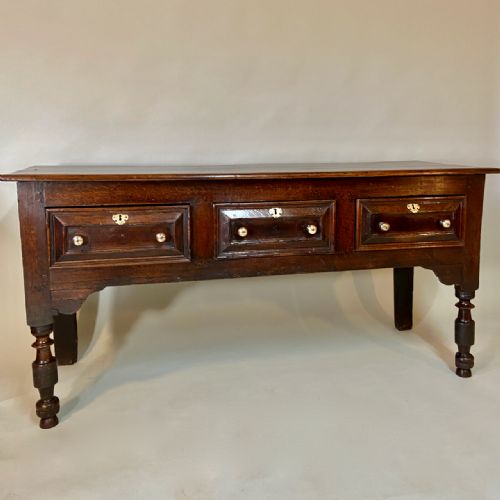
Carolean Oak Hall Table
A carolean oak hall table brings heavy timber and precise seventeenth-century turning straight into a modern entranceway.
Carolean Oak Hall Table
A carolean oak hall table typically takes the form of a side table, server, or low dresser designed with sturdy proportions. These surfaces anchor an entranceway with seventeenth-century character and practical utility.
The pieces on this page span the seventeenth and eighteenth centuries, incorporating styles such as Jacobean, Charles II, and William and Mary. Side tables and dresser bases appear most frequently among the current selection.
Origins trace directly to English workshops of the period, employing heavy structural timber to create enduring hallway furniture. Buyers encounter forms ranging from simple side tables to geometrically moulded servers.
How they were made
Makers built these tables primarily using solid oak, occasionally integrating walnut, painted surfaces, and wood inlay for visual contrast. Structural integrity relied on thick timber framing joined by traditional methods.
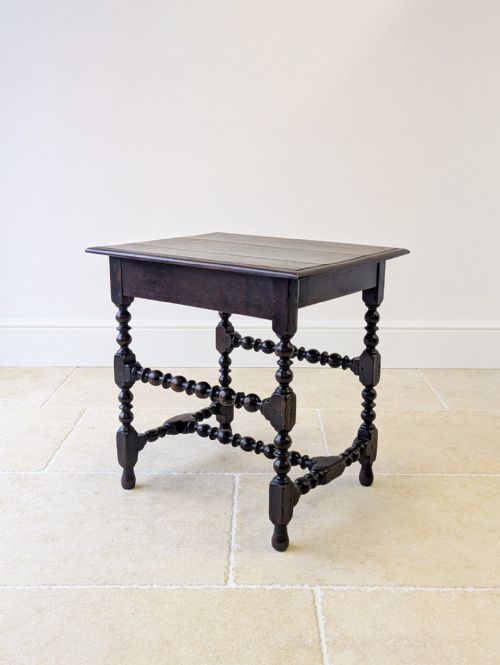
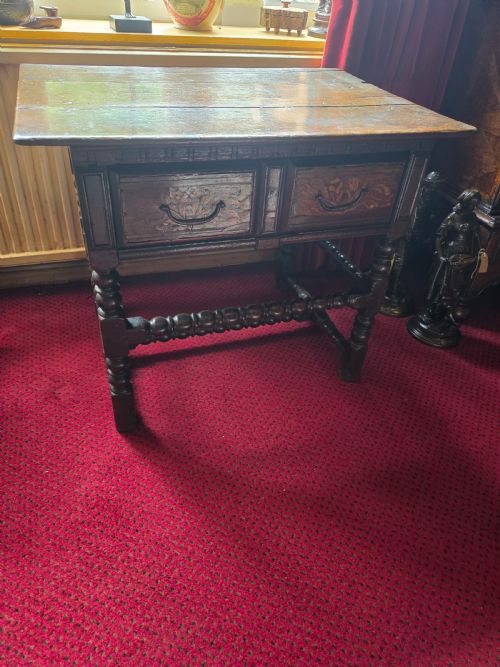
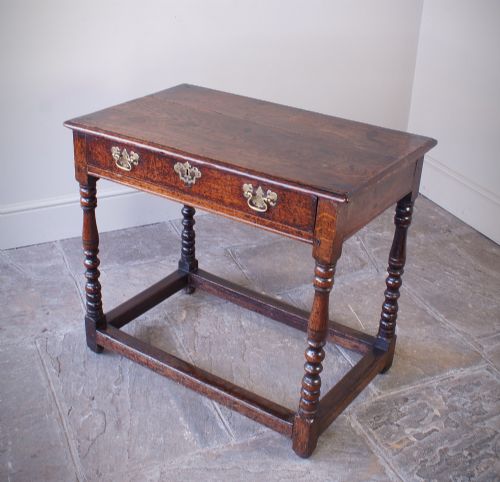
Decorative elements include intricate bobbin turning on legs and geometric moulding applied to drawer fronts. Iron and brass fittings completed the construction, providing operational hardware for drawers.
Carolean Oak Hall Table Retail Price Guide 2026
Typical asking prices for carolean oak hall table among the pieces listed under this phrase on Sellingantiques today, from the lower quarter to the upper quarter. They describe what is for sale here now, not the wider market.
Listings feature oak, walnut, and painted finishes across seventeenth and eighteenth-century periods, including Jacobean and William and Mary styles.
What varies in quality
The distinction between standard examples and superior pieces rests on the complexity of the timber work and decorative carving. Elaborate geometric moulding and crisp bobbin turning elevate the visual weight of a piece.
Surface preservation significantly influences character, as original painted finishes and distinct wood inlay demonstrate higher artisanal ambition. Integrated parquetry and well-preserved structural joinery separate standard utility tables from finer regional works.
The Carolean Oak Hall Table Glossary
- Bobbin-turning
- A form of lathe turning that produces a series of rounded, spool-like shapes along the length of a table leg. This decorative technique appears frequently on seventeenth-century side tables.
- Parquetry
- Geometric mosaic woodwork formed by small pieces of wood fitted together to create a patterned surface. It decorates the tabletops of specific seventeenth-century examples.
- Dresser base
- A low, heavy table fitted with drawers beneath the main surface, utilised historically for storage and serving. These robust forms provide substantial surface area in a hallway.
- Geometric moulding
- Raised wooden profiling arranged in rectilinear patterns upon drawer fronts. This technique adds depth and shadow to seventeenth-century case pieces.
- Credence table
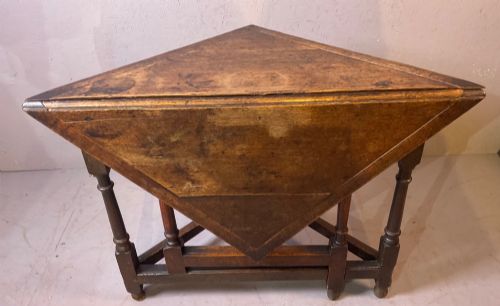
- A folding table featuring a pivoting top supported by a swing leg, historically used in ecclesiastical and domestic settings. Surviving examples in oak demonstrate specialised early joinery.
Carolean Oak Hall Table: Frequently Asked Questions
What is a carolean oak hall table?
A carolean oak hall table is a heavy wooden surface dating from the seventeenth century or later revival periods, built in forms such as side tables or low dressers.
These pieces were constructed in England to handle daily domestic use while displaying the characteristic turning and moulding of the era.
How were these tables used originally?
Historical tables of this scale served practical domestic functions for food preparation, storage, and displaying household goods.
In a modern hallway, they function as surface furniture for holding post, keys, and decorative items.
How do I identify a seventeenth century piece?
Seventeenth-century pieces display authentic construction methods, heavy oak timber, and period-specific details like bobbin-turning and geometric mouldings.
Materials such as iron and brass hardware further anchor the item within the seventeenth and eighteenth-century timeline.
Will an antique oak table fit a modern hallway?
Side tables and low dressers from this period offer relatively compact footprints despite their robust timber construction.
Their linear forms allow them to sit flush against hallway walls without blocking movement through the space.