






Carolean Dining Chairs
Carolean dining chairs bring seventeenth-century grandeur to modern rooms through elaborate woodwork and high-backed silhouettes.
Carolean Dining Chairs
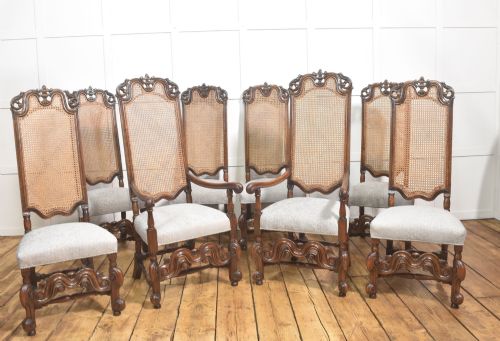
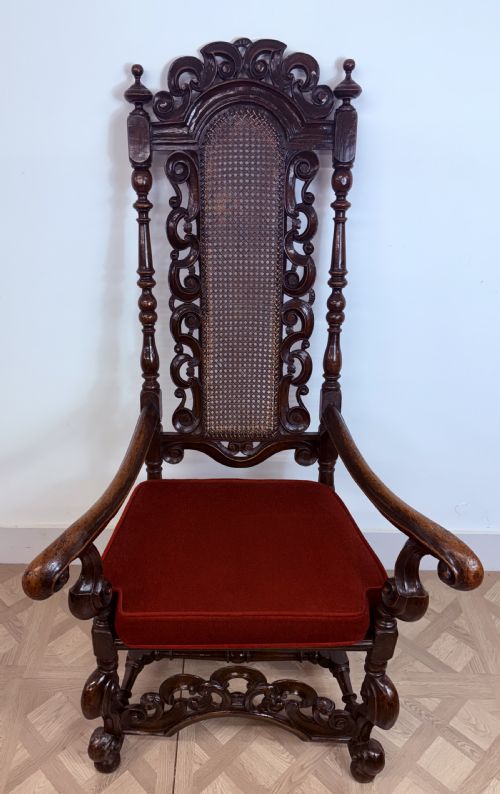
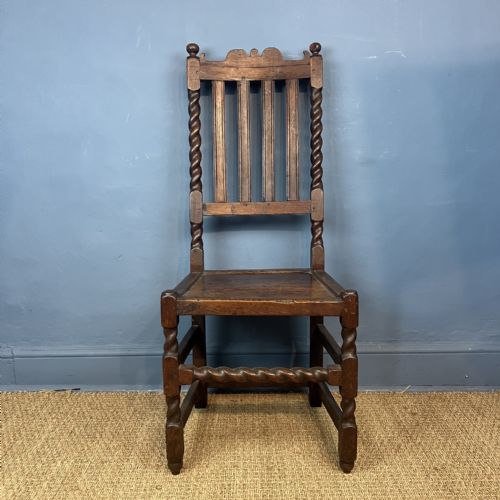
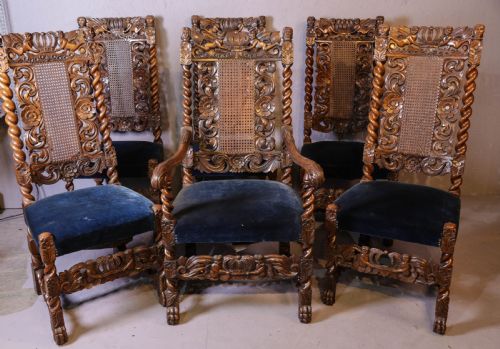
Carolean dining chairs embody the ornate aesthetic of the restoration period, featuring commanding high backs, sculpted wooden frames and scrolled details. Buyers seeking these seating options encounter authentic seventeenth-century pieces alongside later nineteenth-century and early twentieth-century revivals.
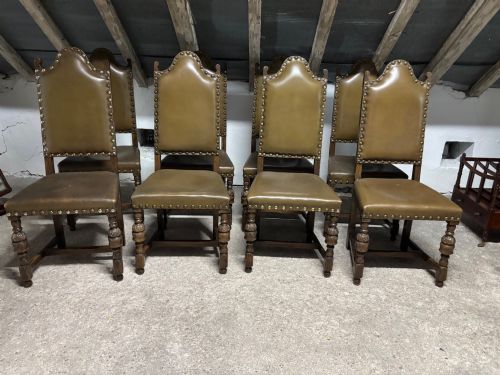
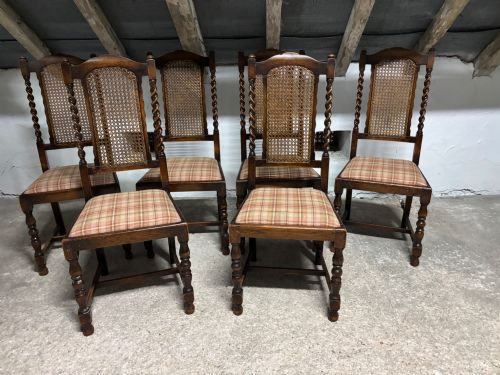
The selection ranges from single armchairs and side chairs to substantial matched sets suitable for dining tables. Regional variations such as Lancashire chairs and Yorkshire back stools appear alongside formal walnut and oak iterations.
Makers across different eras drew inspiration from the reign of Charles II, producing sturdy high-back side chairs and upholstered seating. These forms served both formal dining and reception purposes in historic interiors.
Assessing quality and craftsmanship
Depth and crispness of the carved ornamentation separate superior examples from softer, more perfunctory nineteenth-century revivals. The integration of the joints and the retention of original timber patination dictate the desirability of each piece.
The integrity of the cane work and the authenticity of the structural timbers influence the standing of individual chairs. Matched sets display uniform timber selection and consistent carving across every piece in the group.
Carolean Dining Chairs Retail Price Guide 2026
Typical asking prices for carolean dining chairs among the pieces listed under this phrase on Sellingantiques today, from the lower quarter to the upper quarter. They describe what is for sale here now, not the wider market.
Early chairs were intentionally built narrow to accommodate the monumental dresses worn by ladies of the court.
The Carolean Dining Chairs Glossary
- Carolean
- Pertaining to the reign of Charles II, marked by lavishly carved woodwork and rich textiles. This style revived classical motifs following the restoration.
- Cane
- Woven rattan material utilised for chair backs and seats. It offers lightness and flexibility while displaying intricate patterns.
- Back stool
- An early form of chair without arms, serving as a precursor to the modern dining chair. These pieces often feature joined oak construction.
- Jacobean revival
- A nineteenth-century movement emulating seventeenth-century English furniture designs. Craftsmen utilised heavy oak and deep carving to recreate historic forms.
- Farthingale chair
- An upholstered, armless chair designed to accommodate wide seventeenth-century dresses. The seat height and proportion suit period costume.
Carolean Dining Chairs: Frequently Asked Questions
Are carolean dining chairs comfortable for daily use?
Most historic examples feature upright wooden backs and firm cane or upholstered seats designed for formal posture rather than lounging.
Adding discreet modern cushions can improve comfort without altering the historic character of the seating.
How do I distinguish original seventeenth-century chairs from later revivals?
Original pieces display authentic timber ageing, hand-cut joinery marks and period-specific wear patterns on the touch points.
Nineteenth-century revival pieces often utilise machine-sawn elements and softer carving styles typical of Victorian workshops.
Can I mix different styles of carolean chairs around a table?
Mixing single armchairs and side chairs follows historical precedent where dining suites were assembled over time.
Matching the primary timber, such as oak or walnut, helps maintain visual harmony across disparate chairs.
How should I care for caned backs and seats?
Caned panels require gentle cleaning with a damp cloth and occasional light conditioning to prevent the natural fibres from drying out.
Avoiding direct sunlight and excessive weight protects the woven material from snapping.