

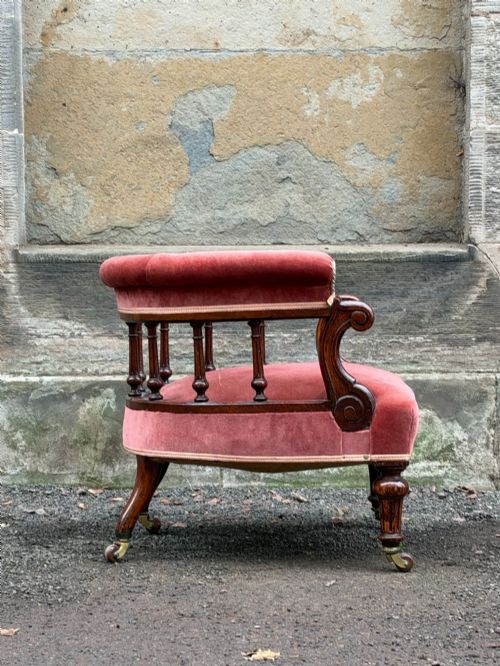
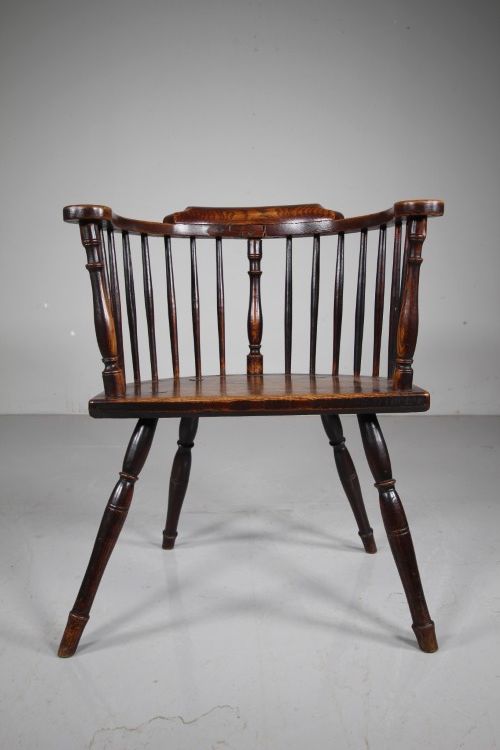
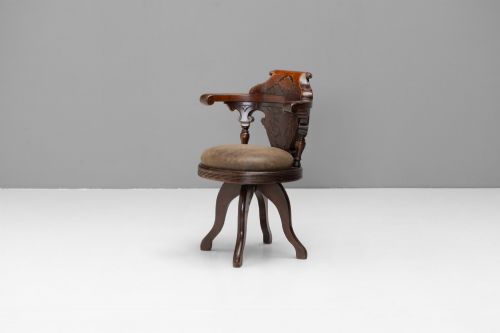
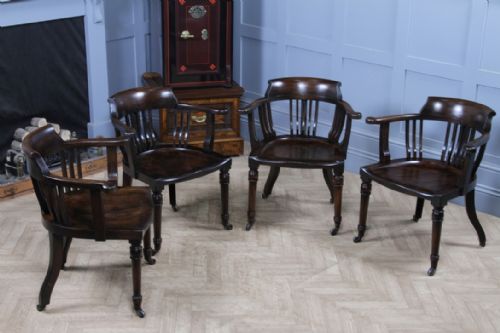


Captain Chair Furniture
Captain chair furniture offers sturdy seating built for desks and studies, blending robust timber construction with traditional comfort.
Captain Chair Furniture
When you search for captain chair furniture, you find solid timber seating designed for studies, offices, and country homes. These pieces include desk chairs, armchairs, and carver chairs dating from the eighteenth century through to the early twentieth century.
The versions you meet most frequently on this page are Victorian and Edwardian examples fashioned from elm, ash, and oak. Many incorporate regional vernacular designs such as smoker's bows and Windsor chairs alongside swivel desk mechanisms.
Makers and styles span Georgian country pieces, Arts and Crafts designs, and Scottish country vernacular forms. The selection encompasses both humble workshop items and refined mahogany scroll arm carvers.
Construction and Materials
Makers constructed these chairs primarily from domestic hardwoods like elm, ash, beech, and oak, often combining timbers within a single frame. Mahogany and rosewood appear in more formal desk chairs, occasionally embellished with brass inlay.
Joinery methods rely on traditional turning, steam-bending, and pegged mortise and tenon joints to withstand heavy daily use. Swivel mechanisms introduced in later periods added functional iron and brass hardware to wooden frames.
Captain Chair Furniture Retail Price Guide 2026
Typical asking prices for captain chair furniture among the pieces listed under this phrase on Sellingantiques today, from the lower quarter to the upper quarter. They describe what is for sale here now, not the wider market.
Listings span the eighteenth century to the early twentieth century, featuring oak, mahogany, elm, and ash across eight distinct stylistic periods.
Judging Quality
Quality rests in the integrity of the timber selection, such as the bold figuring found in burr elm panels. Heavier framing and crisp turning distinguish superior regional work from standard production.
The sophistication of the mechanism and the retention of original leather upholstery elevate certain desk chairs above simpler vernacular forms. Original patination on unpainted wood surfaces indicates careful preservation over generations.
S&H Jewell·Shoolbred
The Captain Chair Furniture Glossary
- Smoker's Bow
- A low-backed wooden armchair with a continuous bentwood rail and turned spindles, commonly used in smoking rooms and offices.
- Windsor Chair
- A chair built with a solid wooden seat into which the legs and back spindles are driven directly.
- Carver Chair
- An armchair, often designed to match a set of dining chairs but built with wider proportions.
- Vernacular
- Furniture built by local tradesmen using regional traditions and available native timbers rather than following strict metropolitan pattern books.
- Burr Elm
- Timber taken from the grotesque growth of an elm tree, prized for its swirling grain patterns in desk panels.
Captain Chair Furniture: Frequently Asked Questions
What is a captain's chair?
A captain's chair is a sturdy wooden armchair historically used in offices, ships, and studies. They typically feature a low curved back rail and a comfortable timber seat.
Many examples found today include swivel bases or desk chair configurations dating from the Victorian and Edwardian eras.
How do I date a wooden desk chair?
Dating involves examining the construction methods, wood species, and hardware. Eighteenth-century and Georgian pieces show hand-tool marks and pegged joints.
Later Victorian and Edwardian versions often incorporate factory-made iron swivel mechanisms and commercial brass fittings.
Where were these chairs used?
These chairs served primarily in professional offices, libraries, ships' cabins, and country houses. Their robust construction suited long hours at a desk.
Simpler country vernacular versions also furnished farmhouse kitchens and rural parlours across Britain.
How do I care for antique timber chairs?
Maintain antique wooden chairs by keeping them away from direct heat sources and sudden humidity changes. Feed dry timber occasionally with traditional wax polish.
Avoid harsh chemical cleaners that can strip the historic patination accumulated over centuries of use.