



Caned Wood Sofa
These caned wood sofa pieces bring lightness to a room through woven panels.
Caned Wood Sofa
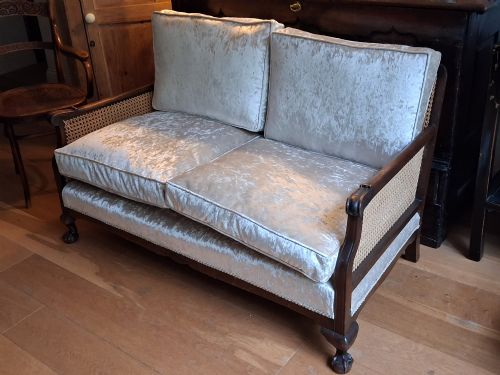
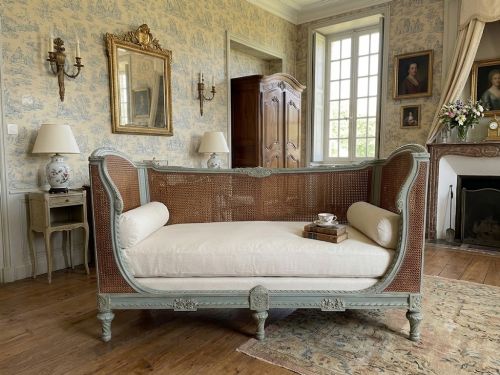
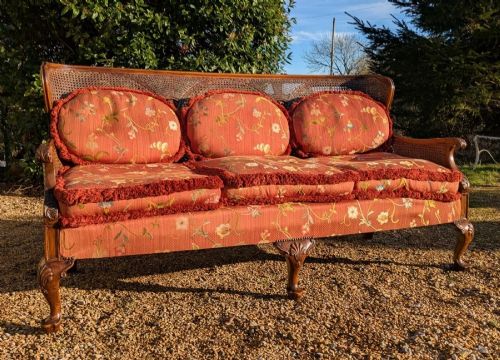
A caned wood sofa combines a wooden frame with woven natural cane panels, usually forming the backrest or armrests. Buyers searching for a caned wood sofa encounter various historical forms, from French bergère settees and Louis XVI style day beds to Anglo-Indian hardwood daybeds and Viennese bentwood loveseats.
The pieces on this page span several centuries and stylistic traditions, including 18th century Swedish Gustavian settees, 19th century French painted caned sofas, and 20th century designs. Object types range across settees, daybeds, chaise longues, and love seats, offering diverse seating arrangements for historic and eclectic interiors.
How they were made
Frames are constructed from timbers such as walnut, beech, hardwood, and Rio rosewood, alongside painted and gilded wood surfaces. Skilled cabinetmakers shaped these structures using traditional joinery before integrating woven cane or rattan cane panels into the framework.
Many examples incorporate loose cushions filled with materials like feathers and covered in linen or fabric to provide comfort alongside the rigid woven support. Surface treatments vary from natural bleached woods to decorative paint finishes and gilt details.
Caned Wood Sofa Retail Price Guide 2026
Typical asking prices for caned wood sofa among the pieces listed under this phrase on Sellingantiques today, from the lower quarter to the upper quarter. They describe what is for sale here now, not the wider market.
Pieces span from the eighteenth century through to the 1930s across French, Swedish, and Anglo-Indian traditions.
What varies in quality
The standard of execution in the cane work distinguishes finer examples, where the density and neatness of the weaving show high craftsmanship. The choice of timber also dictates quality, with dense hardwoods and finely carved walnut or rosewood frames sitting at the upper end of the scale.
Proportion and stylistic adherence define the visual success of each piece, whether it follows strict French revival lines or regional Anglo-Indian traditions. Original surface treatments, such as period paint or gilding that has aged naturally, add further distinction to the object.
The Caned Wood Sofa Glossary
- Bergère
- An enclosed upholstered armchair or settee with wooden frames and typically a cane or upholstered back. These originated in France and often feature exposed carved woodwork.
- Canapé
- The French term for a decorative sofa or settee. Examples often reflect specific periods of design, such as Louis XVI or Louis XV styles.
- Daybed
- A piece of furniture serving as both a sofa and a bed for resting during the day. Many historical variations include caned panels and accompanying cushions.
- Bentwood
- Wood that has been heated and shaped into curved forms, famously utilised in Viennese production. This technique creates strong, lightweight frames without heavy joints.
- Gustavian
- The Swedish interpretation of French neoclassical design, characterised by restrained carving and pale painted finishes. These pieces date predominantly from the late eighteenth century.
Caned Wood Sofa: Frequently Asked Questions
Where should I place a caned wood sofa?
These pieces suit drawing rooms, sunrooms, or large bedrooms where their open woven panels can be appreciated from multiple angles. Their lighter visual weight allows them to sit comfortably without dominating a space.
Ensure the placement avoids direct, harsh sunlight to protect natural cane and historic wood finishes over time.
How do I care for the cane panels?
Maintain natural cane by dusting it gently with a soft brush and keeping the material slightly hydrated in very dry indoor environments. Avoid placing heavy, concentrated weight directly onto the woven sections.
Professional re-caning is available for historic pieces if the original weaving eventually sustains damage through long use.
Are these sofas comfortable for daily lounging?
Most historical examples are designed for upright seating, often supplemented with feather or fabric cushions to soften the rigid structure. Daybeds and chaise longues offer extended surfaces for lying down. Nesting extra cushions can adapt the seating depth to personal preference.
How can I tell the period of a caned sofa?
Dating relies on examining the timber species, joinery methods, and stylistic cues such as carved motifs or painted finishes. Eighteenth and nineteenth-century pieces display hand-carved details and construction techniques distinct from later revivals.
Consulting the specific design vocabulary, such as Gustavian restraint or Louis XV curves, helps narrow down the era of manufacture.