

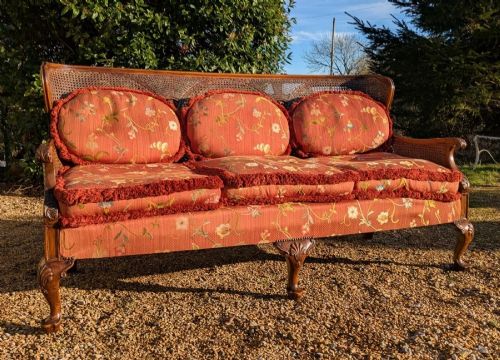


Caned Walnut Bergere
A caned walnut bergere brings tactile warmth and French-inspired elegance to a room through its woven panels and rich timber frame.
Caned Walnut Bergere
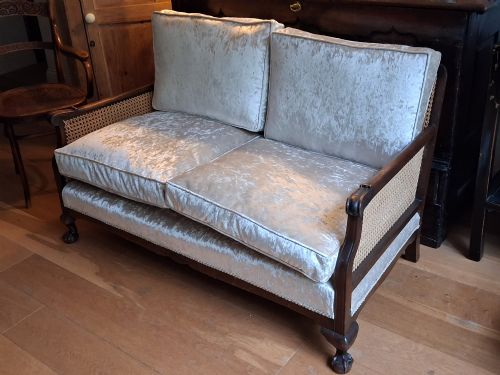
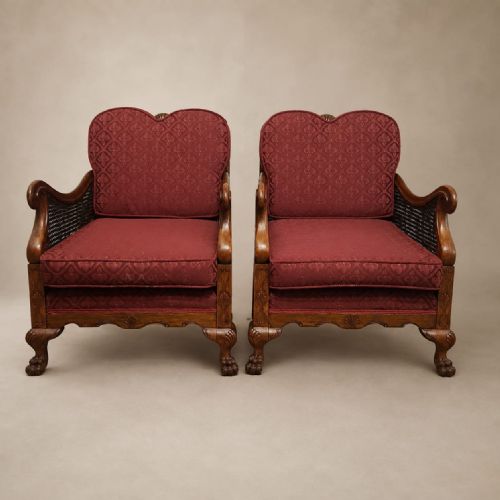
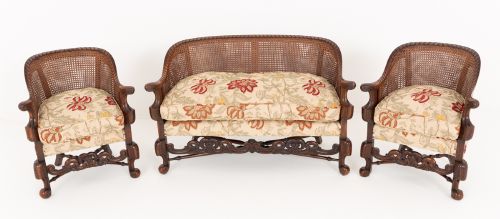
When you search for a caned walnut bergere, you encounter deep-set lounging seats and matching suites framed in timber and enclosed with woven panels. These pieces span the nineteenth and early twentieth centuries, drawing on revived French and English aesthetics from Louis XV to Carolean styles.
Armchairs and sofas dominate the selection, alongside rarer forms such as window seats, folding steamer chairs, and full-sized beds. The woodwork is typically walnut, paired with fitted cushions in velvet, fabric, or textile.
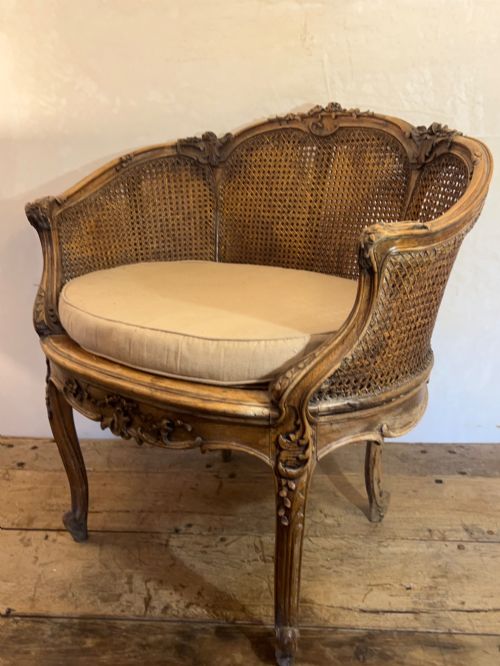
The prevalent examples on this page balance solid walnut construction with delicate split cane or woven cane backs and sides. Whether you choose an Edwardian pair or a nineteenth-century French corbeille seat, each piece offers traditional low-slung comfort.
How they were made
Cabinetmakers shaped solid walnut into curved and carved frames, utilising traditional joinery to support the load of deep seating. Timber surfaces often display natural grain patterns, sometimes enhanced by gentle carving along the crest rails and arm supports.
Craftsmen wove rattan cane by hand through pre-drilled holes along the inner frame, creating taut, resilient panels that flex under weight. Loose feather cushions or upholstered pads in velvet and textile were then added to the seat base for comfort.
Caned Walnut Bergere Retail Price Guide 2026
Typical asking prices for caned walnut bergere among the pieces listed under this phrase on Sellingantiques today, from the lower quarter to the upper quarter. They describe what is for sale here now, not the wider market.
Some nineteenth-century makers scaled down these grand French seating designs to create tiny child-sized bergere chairs.
What varies in quality
The distinction between ordinary and exceptional pieces lies in the crispness of the walnut carving and the regularity of the cane weave. Finer examples feature deep, hand-chiseled relief work on the frame and perfectly tensioned cane panels that remain taut across the curves.
Proportion and scale also separate the standard production from finer workshop output, particularly in matched suites and pairs. Substantial walnut frames with balanced arm profiles and intact original joinery represent the upper tier of the range.
The Caned Walnut Bergere Glossary
- Split cane
- Fine strands of rattan split longitudinally, presenting a smooth outer surface used for weaving intricate furniture panels. It provides both flexibility and tensile strength.
- Carolean style
- A late seventeenth-century English aesthetic marked by rich carving, scrolling foliage, and high-backed frames. Walnut was the primary timber utilised during this period.
- Corbeille
- A French seating form with a rounded, basket-like back that wraps around the sitter. It often appears in nineteenth-century interpretations of Louis styles.
- Squab cushion
- A removable loose cushion designed to fit the seat base of a chair or sofa. In these pieces, they are frequently filled with feathers.
Caned Walnut Bergere: Frequently Asked Questions
What is a bergere chair?
A bergere is a French-style enclosed armchair characterised by wooden framing and woven cane panels along the back and sides. It is built for relaxed seating, usually accompanied by a thick loose cushion.
These chairs date across the nineteenth and early twentieth centuries, appearing in various revival styles from Louis XV to Art Deco.
How do I care for cane panels?
Cane requires moderate humidity to prevent the natural rattan from becoming brittle and snapping under tension. Dust the woven surfaces regularly with a soft brush and avoid placing the furniture near direct heat sources.
Moistening the underside of the cane occasionally helps maintain its elasticity over years of use.
Are these pieces French or English?
The evidence shows both origins, alongside numerous English interpretations of French designs. Nineteenth-century French pieces often exhibit Louis XV or corbeille profiles, while English makers produced Georgian and Carolean revival seating.
Walnut and cane work appear across both traditions during the Victorian and Edwardian eras.
What rooms suit a walnut bergere?
A bergere armchair or sofa suits drawing rooms, libraries, and bedrooms where deep seating and classic timber frames add texture. Their low profiles and woven cane sides create an airy visual presence despite the dark walnut wood.
Window seats and pairs of library armchairs offer functional seating options for varied domestic layouts.