



Caned Back Wooden Bench
A caned back wooden bench brings lightness and historic form to a room through woven natural seating and timber frames.
Caned Back Wooden Bench
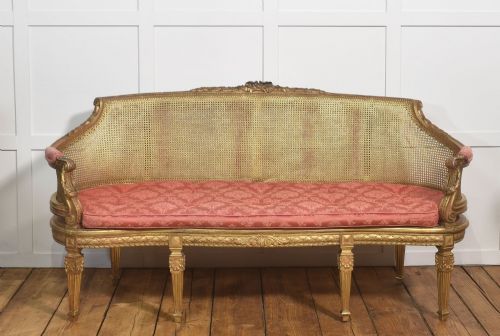
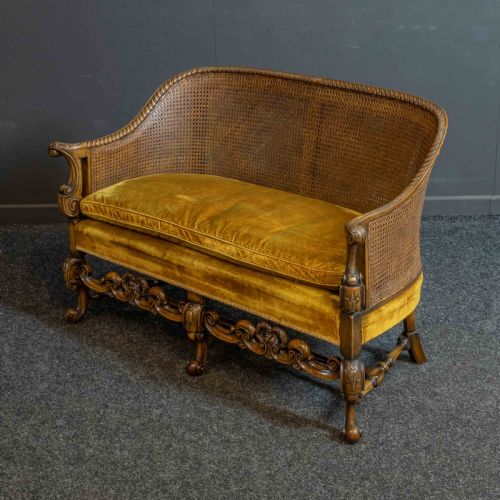
When you search for a caned back wooden bench, you encounter seating forms that range from compact settees to larger couches across several centuries. The examples on this page span the eighteenth century through to the early twentieth century, taking shape as French bergere settees, painted daybeds, and bentwood loveseats.
The most common iterations on this page draw upon European revival aesthetics, particularly French Louis XVI and Gustavian designs, alongside Anglo Indian interpretations. These pieces combine wooden frames with woven cane panels to create sturdy yet visually open seating for domestic interiors.
Materials and construction methods
Makers constructed these frames from a variety of timbers including walnut, beech, satinwood, and rosewood, sometimes applying paint, giltwood, or a bleached finish. Artisans shaped the wood using traditional joinery before integrating woven cane panels into the backrests and sometimes the seats.
Upholstery and textiles such as damask fabric and loose cushions frequently accompany the cane work, adding comfort to the rigid wooden and woven structures. Bentwood techniques also appear in twentieth-century examples, utilising steam to curve the timber into lighter profiles.
Caned Back Wooden Bench Retail Price Guide 2026
Typical asking prices for caned back wooden bench among the pieces listed under this phrase on Sellingantiques today, from the lower quarter to the upper quarter. They describe what is for sale here now, not the wider market.
Regional styles represented here include French Chateau, Gustavian, Viennese Bentwood, and Anglo Indian designs.
Assessing craftsmanship and execution
Quality in these pieces rests upon the precision of the timber carving and the tightness of the cane weaving. Finer examples display crisp detail in the wooden frames, whether through neoclassical fluting, applied gilding, or finely turned elements.
The integration between the wooden structure and the woven panels dictates the overall integrity of the piece. Superior construction ensures the cane tension remains even and the underlying frame joints stay rigid through decades of use.
The Caned Back Wooden Bench Glossary
- Bergere
- An enclosed upholstered armchair or settee with wooden sides and a cane or upholstered back. These French seating forms often feature exposed polished or painted timber frames.
- Canework
- A method of weaving rattan or cane strips into patterned grids for chair backs and seat inserts. This technique provides a durable yet lightweight surface that allows air circulation.
- Bentwood
- Timber curved into rounded shapes by exposure to steam and pressure. This innovative process created lighter, flowing furniture forms during the nineteenth and twentieth centuries.
- Giltwood
- Timber coated with a thin layer of gold leaf or metallic powder. This decorative finish enhances the carved details of formal European seating.
- Gustavian
- The Swedish interpretation of French neoclassical design characterised by restrained carving and pale painted finishes. These pieces emphasise functional elegance and lighter colour palettes.
Caned Back Wooden Bench: Frequently Asked Questions
Where should I place a caned back wooden bench?
These benches suit hallways, bedrooms, or living rooms where their open cane backs prevent a room from feeling crowded.
Their decorative timber frames also allow them to sit effectively away from walls as freestanding room dividers.
How do I care for the cane panels?
Keep cane work hydrated by occasionally wiping it with a damp cloth to prevent the natural fibres from becoming brittle.
Avoid placing these pieces near direct heat sources or in overly dry environments that might crack the material.
Are these benches comfortable for daily seating?
Many examples are designed with slanted backrests and curved arms that offer supportive posture during relaxed sitting.
Adding custom cushions or squabs upholstered in complementary fabric enhances the comfort for prolonged use.
How do I distinguish eighteenth-century pieces from later revivals?
Examine the timber patination, tool marks, and construction joints for signs of period hand-tool fabrication.
Revival pieces from the nineteenth and twentieth centuries often display machine-tooled consistency and distinct stylistic blending.