

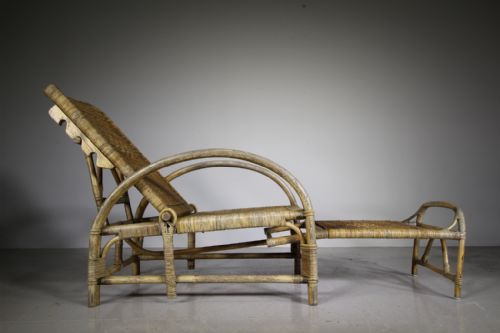


Cane Reclining Chair
These cane reclining chair designs span the nineteenth and twentieth centuries, offering adjustable seating built from sturdy woods and woven panels for relaxation.
Cane Reclining Chair
A cane reclining chair provides flexible lounging through adjustable timber frames paired with woven seating surfaces. Buyers searching for a cane reclining chair will encounter forms ranging from nineteenth century campaign and plantation models to twentieth century steamer chairs and garden armchairs.
The material palette of a cane reclining chair includes walnut, teak, mahogany, and bamboo, often styled within British Colonial, Victorian, Arts and Crafts, or Art Deco traditions. Examples on this page span the 1880s through the 1930s, including daybeds, chaise longues, and lounge chairs alongside standard armchairs.
How they were made
Makers constructed the frames of a cane reclining chair using solid timbers such as walnut, teak, and mahogany, frequently incorporating folding mechanisms for transport or storage. Joints relied on traditional joinery supplemented by brass hardware on campaign and steamer examples.
Seating and backrests utilised woven cane, rattan, or wicker panels to provide flexible support that accommodated the reclining postures required in warmer climates or domestic settings.
Cane Reclining Chair Retail Price Guide 2026
Typical asking prices for cane reclining chair among the pieces listed under this phrase on Sellingantiques today, from the lower quarter to the upper quarter. They describe what is for sale here now, not the wider market.
Materials recorded across the inventory include cane, rattan, walnut, teak, bamboo, fabric, mahogany, and brass.
What varies in quality
The choice of primary timber sets the structural standard, distinguishing dense hardwoods like teak and Bombay rosewood from lighter bamboo or oak alternatives. Fine execution shows in the precision of the folding mechanisms and the tightness of the woven cane panels.
Historical attribution influences distinction, with pieces carrying connections to known makers like Angraves of Leicester or the style of Heals of London commanding particular attention.
Angraves of Leicester·Heals of London
The Cane Reclining Chair Glossary
- Cane
- Woven material derived from the outer skin of rattan palms, used to create flexible seats and backs. It provides durable support while allowing ventilation.
- Plantation chair
- A large armchair featuring extended armrests designed for resting legs, originating in colonial settings. These pieces prioritize relaxed reclining postures.
- Steamer chair
- A folding deck chair equipped with an adjustable backrest and leg extensions. It was traditionally used on ocean liners and garden terraces.
- Bergère
- An enclosed upholstered armchair with wooden framing, sometimes incorporating cane panels in the sides or back. It originated in France during the eighteenth century.
- Campaign style
- Portable furniture designed for military officers or travellers, featuring folding frames and brass fittings. Pieces disassemble or fold compactly for transport.
Cane Reclining Chair: Frequently Asked Questions
What is a cane reclining chair?
A cane reclining chair is an adjustable seat featuring a timber frame and a woven cane or rattan back and seat. These chairs were designed for relaxation in domestic, colonial, or travel contexts.
They appear in forms such as steamer chairs, plantation chairs, and daybeds, utilising woods like teak, walnut, and mahogany alongside bamboo.
How do you use a steamer chair?
A steamer chair is used for outdoor or deck lounging, featuring an adjustable backrest and an integrated footrest extension. The folding frame allows the chair to be adjusted for sitting upright or lying back.
Many examples include wide armrests designed to support the arms comfortably while reclining in gardens or on verandahs.
Where were plantation chairs used?
Plantation chairs were utilised in nineteenth century colonial settings, particularly across British India and tropical regions. The deep seats and extended arms allowed occupants to recline with their legs elevated for cooling airflow.
These chairs were constructed from sturdy local or imported hardwoods to withstand warm climates.
How do you date a cane reclining chair?
Dating relies on stylistic markers, timber choices, and construction methods associated with periods from the Victorian era through the 1930s. Details like brass campaign hardware, Arts and Crafts simplicity, or Art Deco lines provide chronological clues.
Makers' marks or stamps, when present, offer further verification of the manufacturing decade.