

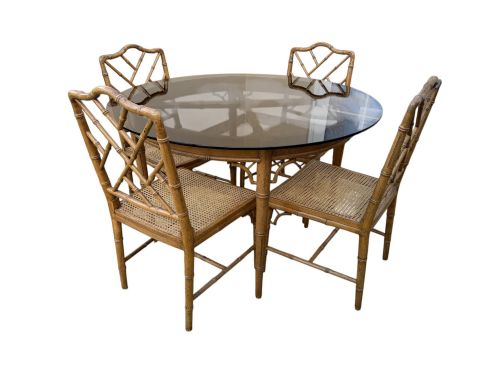
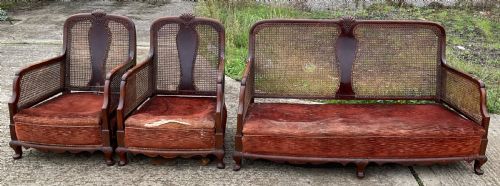
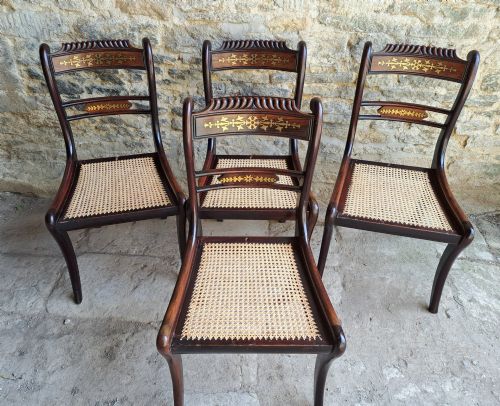
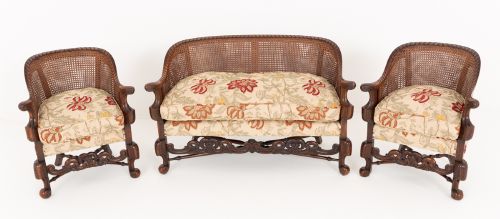
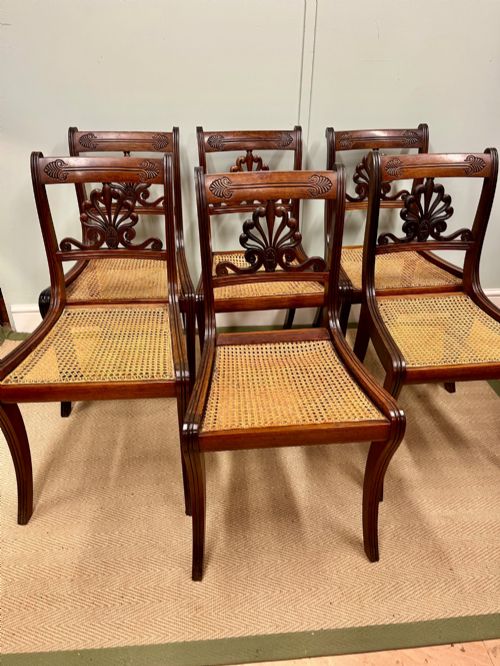


Cane Furniture Set
A cane furniture set brings tactile woven texture and architectural elegance into a room, offering enduring seating solutions from diverse historical periods.
Cane Furniture Set
When you search for a cane furniture set, you are looking at matched groupings of seating and occasionally bedroom suites that utilise woven plant materials for their seats, backs or structural panels. These ensembles span multiple eras including the Georgian period, the Regency era, and the late nineteenth century.
Beyond standard dining arrangements, the evidence shows rarer configurations such as folding chairs, bedroom suites, and large-scale armchairs in distinct regional designs like Anglo-Indian and Anglo-Burmese colonial styles.
How they were made
The construction of these pieces relies on robust timber frames shaped through traditional joinery and steam bending techniques, paired with intricate hand-woven cane panels. Woods utilised in these frameworks include rosewood, walnut, ebony, oak, and ebonised wood.
Decorative embellishments recorded in the evidence involve brass inlay, painted finishes, and stylistic carvings reflecting Carolean, Louis XVI, and Egyptian Revival design influences.
Cane Furniture Set Retail Price Guide 2026
Typical asking prices for cane furniture set among the pieces listed under this phrase on Sellingantiques today, from the lower quarter to the upper quarter. They describe what is for sale here now, not the wider market.
The site listings incorporate materials ranging from standard woven cane and oak to exotic rosewood, ebony, and brass inlay across multiple centuries.
What varies in quality
The distinction between standard examples and top-tier pieces rests on the complexity of the timber framework and the sophistication of the joinery. Finer sets incorporate exotic woods like ebony and rosewood alongside precise brass inlay or elaborate stylistic carving.
The integrity and tightness of the hand-woven cane work and the uniformity across matched suites determine the overall refinement of the group. Larger sets maintain a higher degree of difficulty in keeping every individual component consistent in execution and material grade.
The Cane Furniture Set Glossary
- Cane
- A material derived from the peeled and processed stems of rattan palms, utilised for flexible and breathable woven panels in seating. It provides a lightweight yet durable surface for chair backs and seats.
- Regency
- An architectural and decorative style spanning the early nineteenth century, characterised by classical restraint and influences from ancient Greece, Rome, and Egypt. Furniture from this period frequently employs dark exotic woods and brass detailing.
- Bergere
- An enclosed upholstered armchair with wooden framing, often incorporating woven cane panels on the sides and back. This French-inspired form gained popularity in revivalist interiors of the late nineteenth century.
- Bentwood
- A technique of dampening wood and applying heat to bend it into curved structural shapes, famously utilised in bistro chairs. This method allows for sturdy, lightweight frames with minimal joints.
- Ebonised
- Wood treated with a chemical stain or finish to imitate solid ebony, creating a dense black surface. This treatment was frequently applied to nineteenth-century dining chairs to achieve a dramatic, formal appearance.
Cane Furniture Set: Frequently Asked Questions
What periods do these sets come from?
The listings span several centuries, with examples originating from the Georgian era, the Regency period, and the nineteenth century. Later nineteenth and early twentieth-century interpretations also appear, including revival styles.
Specific stylistic influences recorded in the evidence range from seventeenth-century Carolean and Louis XVI designs to Egyptian Revival and Anglo-Indian colonial aesthetics.
How large are typical dining sets?
Dining chair groupings vary considerably in scale, ranging from matched sets of three or four chairs up to extensive suites containing fourteen armchairs. Smaller configurations often comprise bistro or folding chairs.
Larger groupings frequently require careful spatial planning to accommodate the generous proportions of nineteenth-century frames and arm designs.
What woods are used in the frames?
Makers utilised a diverse palette of timbers depending on the period and regional origin of the suite. Common structural woods include rosewood, walnut, oak, and ebonised wood.
Finer examples incorporate luxury materials such as solid ebony and feature decorative elements like brass inlay and painted surfaces.
Can cane furniture be used daily?
These historical seating pieces were built for functional domestic use, employing resilient woven plant materials supported by rigid timber frames. Regular placement in everyday living spaces is common for robust dining and accent chairs.
Proper environmental conditions help maintain the tension and flexibility of the woven panels over extended periods of use.
Are bedroom suites available?
The selection extends beyond dining furniture to encompass comprehensive bedroom suites featuring painted and caned surfaces. These coordinated groupings include matching bedsides and drawer units alongside the primary bed frame.
Such suites demonstrate the versatility of woven cane techniques applied to larger domestic storage and sleeping furniture.