



Cane Barrel Chair
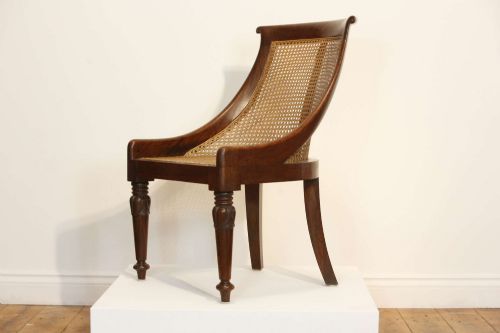
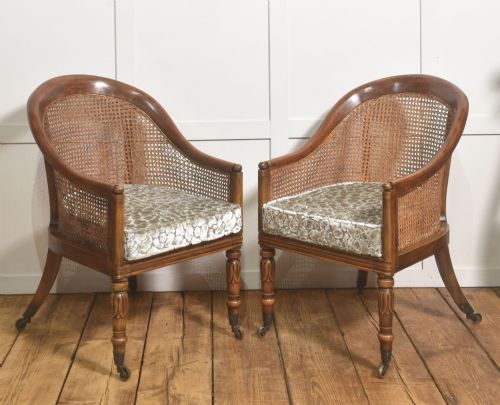
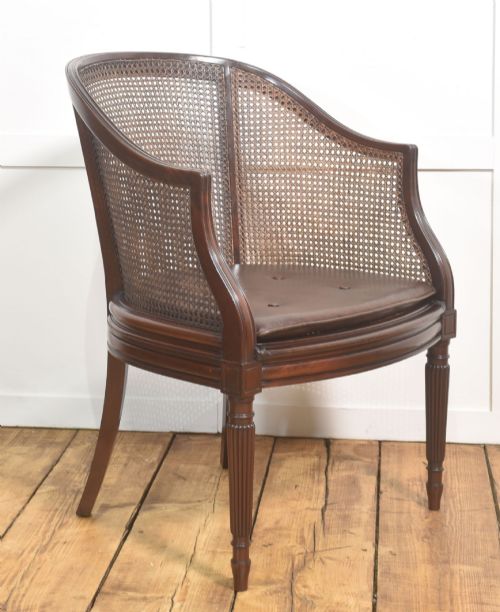
These cane barrel chairs bring curved backs and woven support together, offering a deeply comfortable seat for a study or reading corner.
Cane Barrel Chair
A cane barrel chair forms a rounded, enveloping tub shape that wraps around the sitter with an integrated back and arms. When searching for a cane barrel chair, you encounter forms that span the nineteenth century up through the nineteen-thirties, with Edwardian and Victorian iterations appearing frequently.
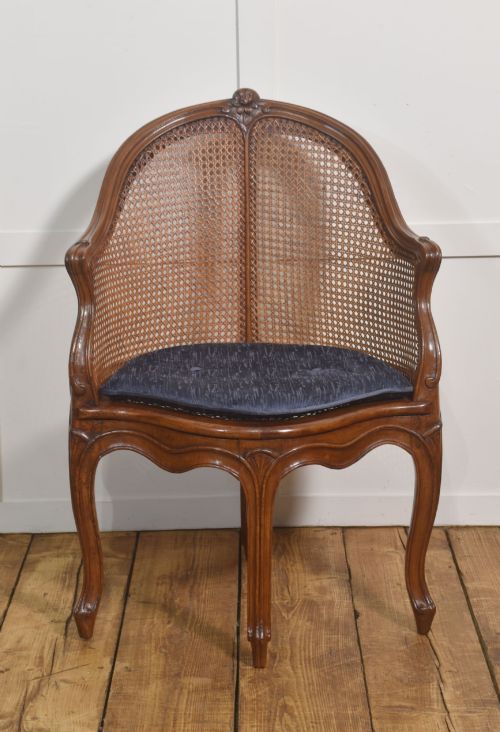
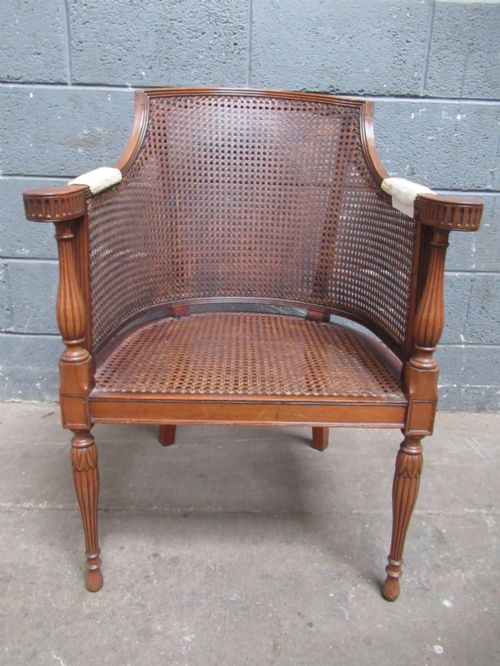
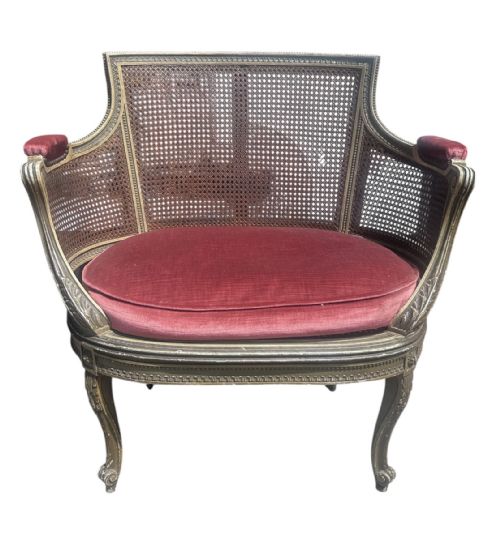
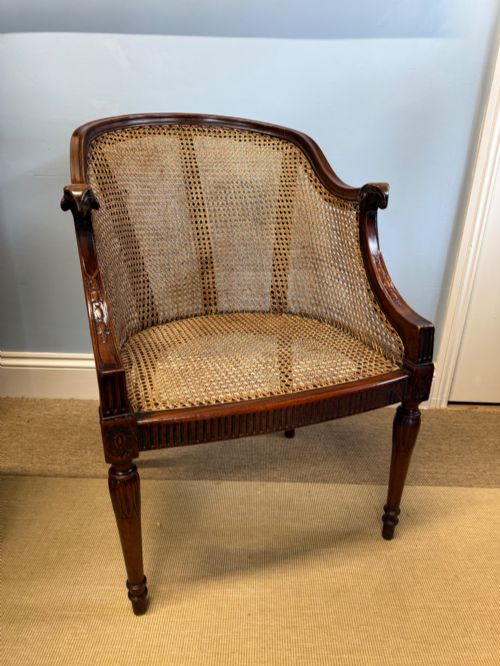
The defining feature is the open-work woven cane panels set into the wooden frames of the back and sometimes the sides. Many examples follow French Louis XV or Regency styles, while others lean towards Art Deco Anglo Indian designs or heavy Edwardian proportions.
Armchairs dominate the selection, functioning as reading seats, library chairs, or parlour musician's chairs. Woods like mahogany and walnut dominate the framing, occasionally paired with upholstered loose cushions in fabric or velvet.
How they were made
Cabinetmakers constructed the supportive frames using hardwoods such as mahogany, walnut, teak, and simulated or faux rosewood. These timbers were shaped into curved tub profiles to create the signature rounded silhouette.
The characteristic open-work panels utilise woven cane and rattan cane tightly threaded through drilled frames. Artisans completed certain library and parlour chairs with brass details and fitted drop-in or loose cushions upholstered in leather, fabric, or velvet.
Cane Barrel Chair Retail Price Guide 2026
Typical asking prices for cane barrel chair among the pieces listed under this phrase on Sellingantiques today, from the lower quarter to the upper quarter. They describe what is for sale here now, not the wider market.
Victorian musicians required specialised parlour chairs with low or absent arms so their billowing sleeves would not catch while they played.
What varies in quality
The refinement of the timber carving and the tightness of the woven cane panels define the grade of the piece. Crisp lines in Regency or Louis XV style frames indicate superior workmanship from the workshop.
Condition of the woven cane remains paramount, as uniform tension across the barrel back reflects skilled hand-weaving. The integration of secondary materials like brass fittings and quality hardwoods elevates the standing of the armchair.
The Cane Barrel Chair Glossary
- Bergère
- An enclosed upholstered armchair with wooden framing and cane-filled sides and back. These French-inspired seats usually feature a cushioned base.
- Tub chair
- A deep-seated armchair with a continuous curved back and arms forming a barrel shape. The design encloses the sitter for comfort.
- Cane
- Woven material made from the peeled bark of rattan palms. It provides flexible, breathable support for chair backs and seats.
Cane Barrel Chair: Frequently Asked Questions
What is a cane barrel chair?
A cane barrel chair is an armchair featuring a rounded, tub-like back filled with woven cane panels. The curved frame wraps around the sitter to provide enclosed support.
These pieces use wooden frames of mahogany, walnut, or teak combined with open-weave rattan. They appear in styles ranging from Regency and Louis XV to Art Deco.
How do I style a cane barrel chair?
You place a cane barrel chair in a library, study, or corner where the curved wooden frame and woven back remain visible from all angles. Their open aesthetic keeps rooms feeling light.
Many examples include loose cushions upholstered in fabric, leather, or velvet. You can pair them with traditional wooden desks or use them as standalone reading seats.
How do I date a cane barrel chair?
You date a cane barrel chair by examining the timber, the style of the carving, and the weave of the cane. Victorian and Edwardian iterations often feature mahogany frames, while Regency pieces display classical lines or simulated rosewood.
Nineteenth-century French Louis XV styles show characteristic cabriole legs and curved crest rails. Twentieth-century examples incorporate Art Deco influences or simpler Edwardian proportions.
Were these chairs used in libraries?
Library armchairs and bergères provided comfortable seating for reading rooms during the nineteenth and early twentieth centuries. The enclosed tub shape offered support for extended periods of sitting.
Such chairs combined wooden frames with padded seat cushions and breathable cane backs. This construction suited studies and parlours alike.