

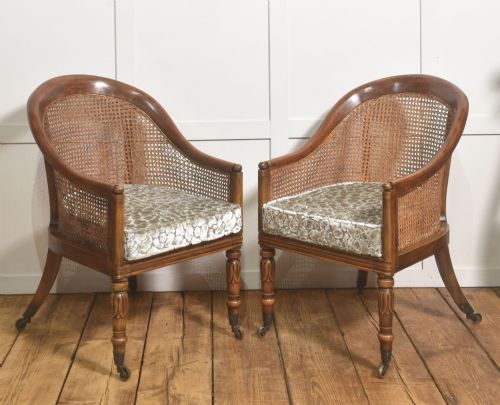
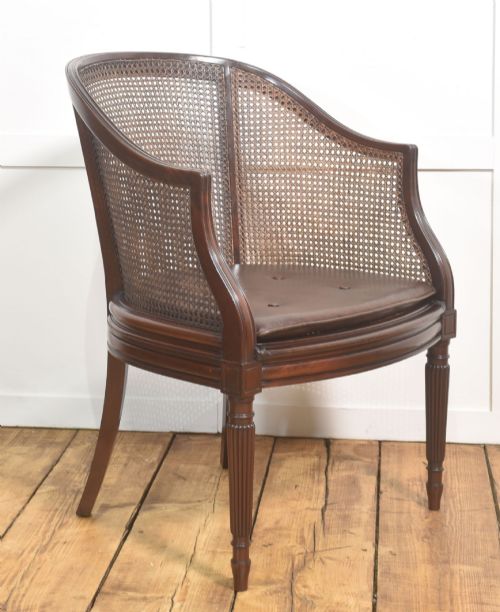
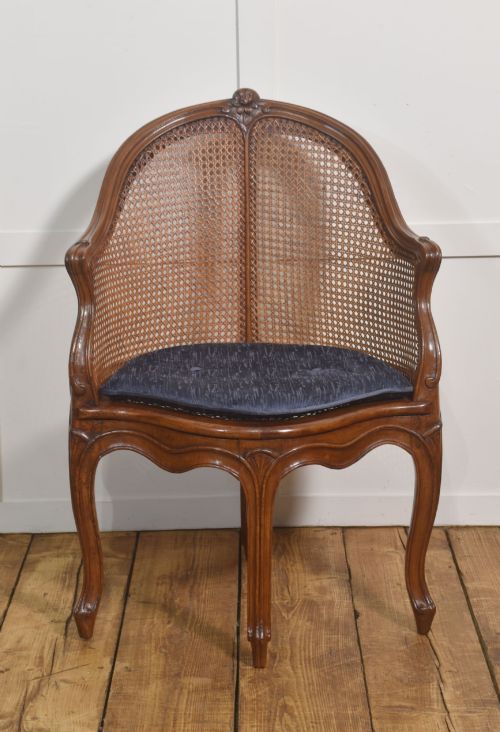
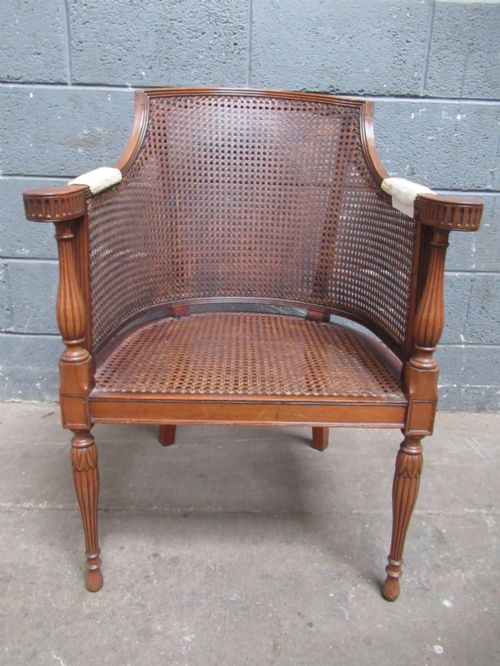
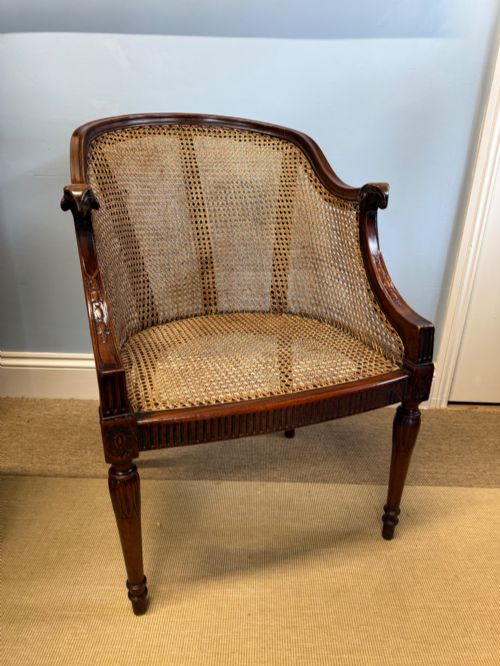
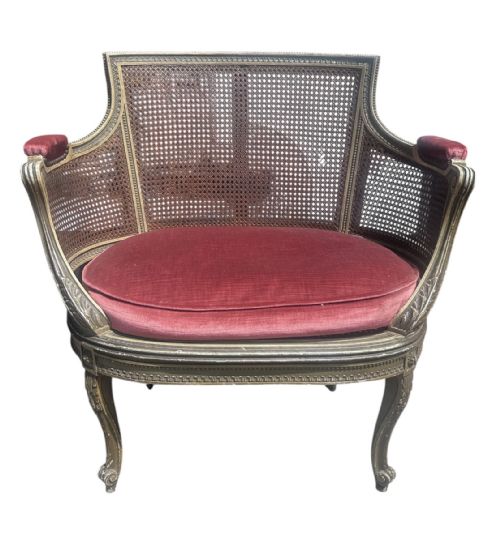


Cane Barrel Armchair
These cane barrel armchairs offer curved comfort and woven texture, bringing timeless seating elegance to any interior.
Cane Barrel Armchair
A cane barrel armchair provides a rounded, enclosing backrest that supports the sitter in comfort. The form wraps around the user, creating a distinct tub or barrel silhouette.
You meet versions spanning the nineteenth century, Edwardian era, and Art Deco period. These pieces originate from French, English, and Anglo-Indian traditions, often taking inspiration from Regency and Louis XV styles.
Makers construct these armchairs primarily as library armchairs, tub chairs, and parlour seating. The open woven panels keep the substantial wooden frames feeling light and airy.
How they were made
Carpenters shaped solid timbers including mahogany, walnut, teak, and simulated rosewood into curved frames. These hardwoods provide the structural strength needed to support the wrapped barrel shape.
Artisans wove natural cane and rattan cane through drilled holes along the frame to form tight, supportive back and seat panels. Brass details occasionally accent the woodwork, while fabric, velvet, and leather provide cushioning on the seats.
Cane Barrel Armchair Retail Price Guide 2026
Typical asking prices for cane barrel armchair among the pieces listed under this phrase on Sellingantiques today, from the lower quarter to the upper quarter. They describe what is for sale here now, not the wider market.
Listings feature mahogany, walnut, and teak frames paired with woven cane, rattan, fabric, and leather.
What varies in quality
The refinement of the wooden carving and the tightness of the cane weaving separate standard examples from finer ones. Smooth curves on simulated rosewood or mahogany show superior joinery.
The integration of upholstered velvet, fabric, or leather pads affects the overall proportion and comfort of the chair. Original polished surfaces carry greater integrity than later refinished woodwork.
The Cane Barrel Armchair Glossary
- Bergère
- An enclosed upholstered armchair with wooden framing and cane-work sides or back. This French seating form dates back to the eighteenth century.
- Tub chair
- An armchair featuring a continuous curved back and arms forming a single semi-circular enclosure. The design derives its name from its barrel-like profile.
- Cane
- Strips of rattan plant peeled and woven into open patterned mesh for furniture panels. It offers flexibility combined with high tensile strength.
- Regency style
- A design aesthetic reflecting early nineteenth-century British classicism. Pieces often incorporate dark woods and clean architectural lines.
Cane Barrel Armchair: Frequently Asked Questions
What is a cane barrel armchair?
A cane barrel armchair is a seated furniture piece featuring a rounded, enclosing backrest wrapped in woven cane. The curved frame creates a distinct tub shape that supports the sitter from behind and sides.
These chairs appear in mahogany, walnut, and teak across various historical periods including the Victorian era and Edwardian period. Their defining characteristic is the combination of solid wooden framing with breathable woven panels.
How were these armchairs used historically?
Historically, these armchairs served as comfortable seating in parlours, libraries, and sitting rooms. The enclosed barrel shape offered protection from drafts in large period rooms.
Library armchairs provided sturdy seating for reading, while parlour musician chairs gave performers ergonomic support. Their relatively compact footprint allowed them to sit comfortably beside fireplaces or writing desks.
How do I live with a cane armchair?
Living with a cane armchair requires placing it away from direct heat sources to prevent the natural rattan cane from drying out and snapping. Regular dusting keeps the woven mesh free from debris.
Adding a loose fabric or leather seat cushion enhances daily sitting comfort while protecting the woven base from direct wear. Their versatile wood tones allow them to blend into both traditional and modern interiors.
How can I tell the periods apart?
Differentiating periods relies on observing the timber choice, decorative carving motifs, and overall furniture proportions. Regency and Victorian examples often feature heavy mahogany or simulated rosewood with classical revival details.
Edwardian and later twentieth-century interpretations typically show lighter wood frames and simplified silhouettes. Examining the tightness of the cane work and joinery construction also helps indicate the age of the piece.