

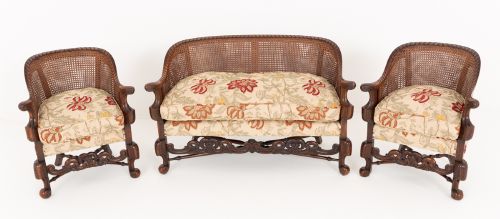
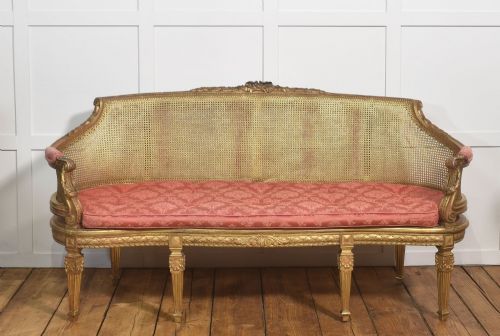
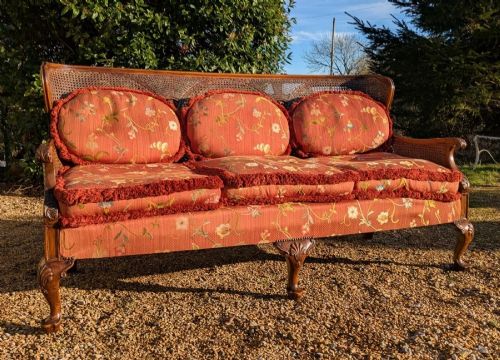


Cane Back Lounge
These cane back lounge pieces offer deep seated rest and open woven texture, bringing timeless comfort to any sitting room.
Cane Back Lounge
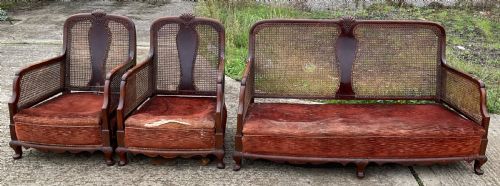
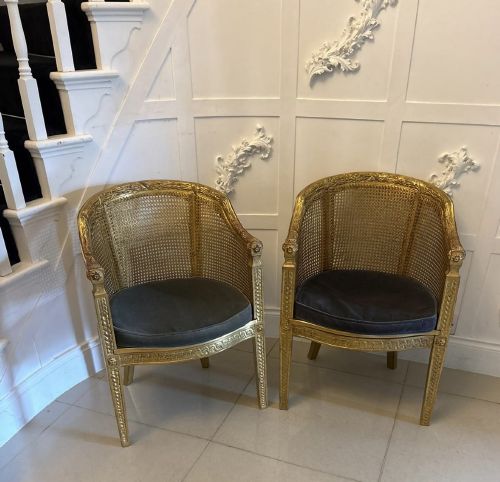
When you search for cane back lounge furniture, you encounter seating designed for relaxation, spanning armchairs, rocking chairs, settees and sofas. The selection ranges from Victorian giltwood bergere armchairs and Carolean style suites to Edwardian bentwood rockers and Arts and Crafts oak reclining chairs.
The most common examples on this page are early twentieth century pieces, particularly bergere armchairs and lounge chairs featuring woven cane and rattan panels. These designs often incorporate loose fabric or velvet cushions for added comfort, drawing upon French and English revival styles.
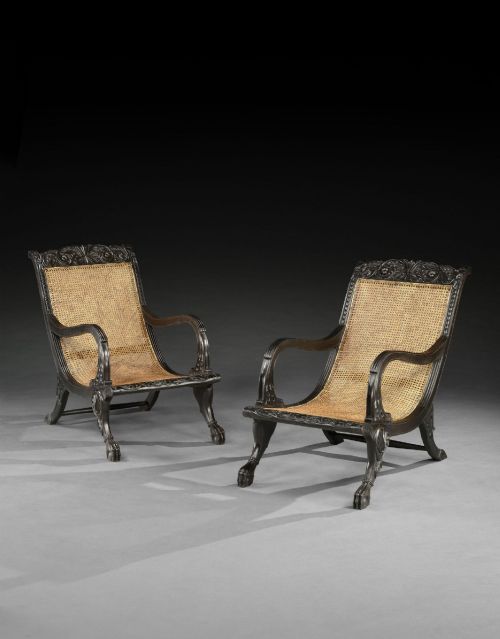
Origins stretch across various traditions, including French giltwood salon seating, Anglo Indian peacock chairs and colonial plantation chairs. Buyers find everything from compact fireside armchairs to large seating suites suitable for principal reception rooms.
How they were made
The construction of these pieces relies on sturdy timber frames shaped from walnut, oak, mahogany, teak and giltwood. Artisans utilised traditional joinery to support the structural demands of deep seating and reclining mechanisms.
Woven cane, rattan and woven cane panels form the characteristic backs and sometimes seats, requiring skilled hand labour to thread and tension the material. Frames are frequently paired with upholstery materials like velvet and fabric, alongside feather cushions.
Cane Back Lounge Retail Price Guide 2026
Typical asking prices for cane back lounge among the pieces listed under this phrase on Sellingantiques today, from the lower quarter to the upper quarter. They describe what is for sale here now, not the wider market.
The furniture spans multiple eras from the nineteenth century through the Edwardian period and into the nineteen thirties.
What varies in quality
The distinction between standard examples and finer pieces lies in the choice of timber and the execution of the carving. Superior frames feature rich woods like walnut or finely gilded surfaces, accompanied by crisply carved details in styles such as Louis XVI or Carolean.
The integrity and tightness of the hand woven cane work also define the standard of a piece, alongside the original proportions and comfort of the lounge design.
The Cane Back Lounge Glossary
- Bergere
- An enclosed upholstered armchair with wooden framing, often featuring cane sides and back panels. This French seating form became popular in various revival styles throughout the nineteenth and twentieth centuries.
- Bentwood
- A technique of steaming timber until pliable and bending it into curved forms. This method defines many rocking chairs and lounge chairs from the early twentieth century.
- Giltwood
- Timber that has been coated with a thin layer of gold leaf or gesso paint. It appears frequently on French salon armchairs and settees from the nineteenth century.
- Cane
- Strips of peeled rattan woven into patterned meshes to form breathable panels for chair backs and seats. It provides both structural support and decorative texture.
- Plantation Chair
- A deep seated lounge chair with an extended footrest or reclining capability, originating from colonial settings. These pieces are typically constructed from dense tropical hardwoods like teak.
Cane Back Lounge: Frequently Asked Questions
What is a bergere armchair?
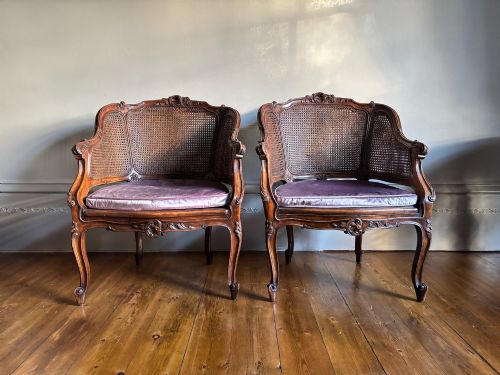
A bergere is an enclosed upholstered armchair characterised by exposed wooden framing and woven cane panels along the back and sides. These chairs prioritise comfortable lounging and often include loose feather seat cushions.
Originating in France, the form was later adopted across English and continental workshops during various revival periods, resulting in both formal giltwood salon pieces and sturdy oak fireside chairs.
How do I care for cane furniture?
Cane requires moderate humidity to prevent the natural rattan fibres from becoming brittle and snapping. Avoid placing these lounge pieces directly next to radiators or in harsh sunlight.
Regular gentle dusting keeps the woven panels clean, and occasionally wiping the cane with a damp cloth maintains its moisture balance.
Are these chairs comfortable for daily use?
Most of these lounge pieces were explicitly designed for relaxation, featuring deep seats, supportive raked backs and cushioned pads. Many include reclining mechanisms or plush velvet and fabric upholstery.
Chairs like plantation loungers, bergere sofas and rocking armchairs provide substantial ergonomic support for everyday reading or resting.
How can I tell the period of a lounge chair?
Dating relies on examining the timber species, joinery methods, revival style influences and hardware construction. Victorian and nineteenth century pieces often display heavier carved mahogany or giltwood, while early twentieth century examples lean towards bentwood, dryad finishes or Arts and Crafts oak.
Comparing the tightness of the cane weave and the specific upholstery materials also helps narrow down the decade of manufacture.