





Canal View Artwork
Canal view artwork brings the luminous atmosphere of historic waterways and Venetian canals directly into your interior.
Canal View Artwork
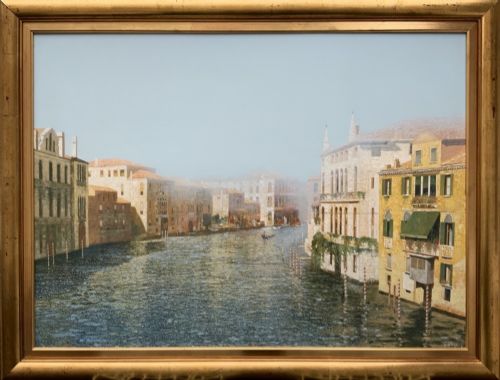
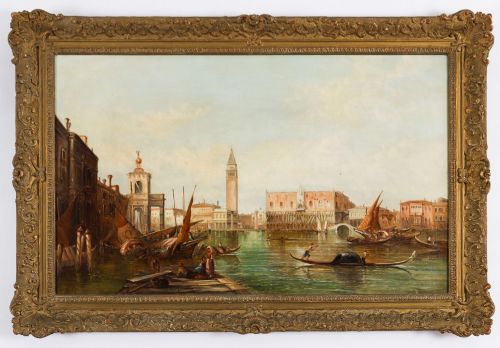
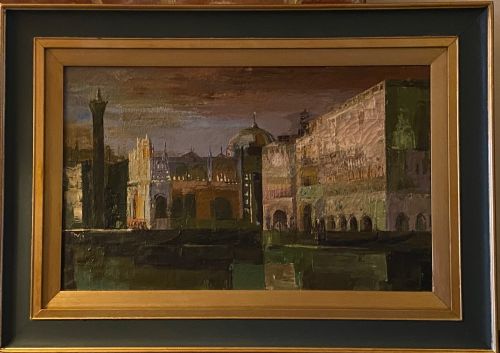
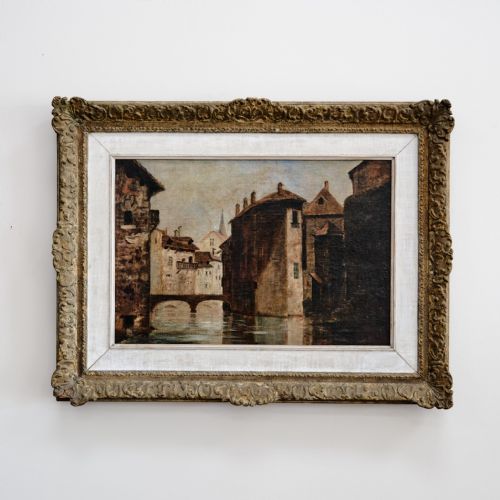
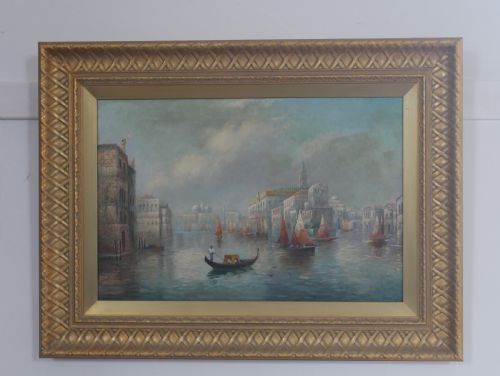
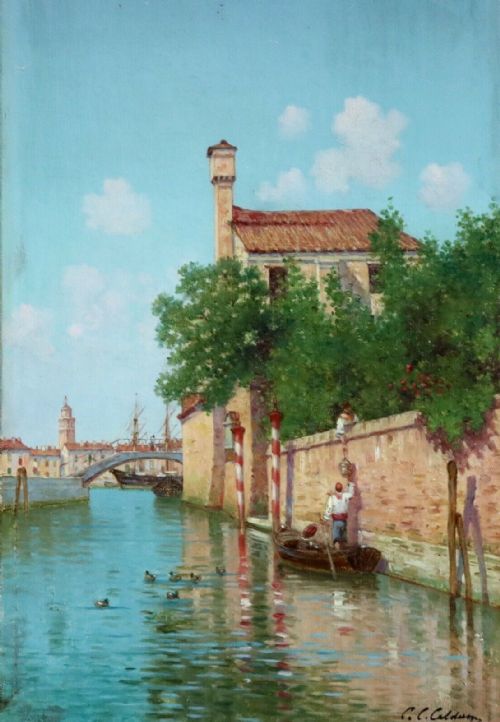
When you search for canal view artwork, you find oil paintings and watercolours celebrating historic waterways, most notably depictions of Venice. The selection here centres on nineteenth-century canvases, Victorian scenes, and mid-century interpretations.
The subjects focus heavily on the Grand Canal, the Doge's Palace, La Dogana, and local Venetian lagoons. British impressionist and French school approaches dominate the visual style of these water-themed compositions.
Makers and painters represented include Alfred Pollentine, Jane Vivian, and William Raymond Dommersen. These paintings capture bustling boat traffic alongside quieter architectural vistas rendered in oil on canvas.
Materials and techniques
The primary medium used across these pieces is oil paint applied to stretched canvas, alongside occasional watercolour on paper. Canvases are frequently housed within heavy wood frames finished with gesso and gold leaf or gilt highlights.
Brushwork ranges from the tight topographical precision of nineteenth-century townscapes to the looser, atmospheric handling of impressionism. Painters built up light and water reflections using layered oil pigments to create depth on the canvas.
Canal View Artwork Retail Price Guide 2026
Typical asking prices for canal view artwork among the pieces listed under this phrase on Sellingantiques today, from the lower quarter to the upper quarter. They describe what is for sale here now, not the wider market.
Listings feature works spanning from the nineteenth century through the Victorian era up to mid-century modern interpretations.
Distinctions in quality
Quality rests upon the handling of light on water and the architectural accuracy of the depicted palazzos and bridges. Stronger works demonstrate a confident command of perspective and atmospheric perspective rather than mere mechanical reproduction.
The integrity of the original canvas, the preservation of the painted surface, and the appropriateness of the surrounding giltwood frame influence the overall standing of an individual artwork.
Sushila Singh·F.D. Campo·Jane Vivian·Alfred Pollentine·William Raymond Dommersen·Hercules Brabazon Brabazon·Maud Raphael Jones·Charles Clement Calderon
The Canal View Artwork Glossary
- Oil on Canvas
- Pigments bound in a drying oil medium applied to a woven fabric support. This technique allows for rich colour blending and textured brushwork.
- Giltwood
- Wood carved and coated with gold leaf or metallic powder. It provides a reflective, ornate border for traditional paintings.
- Gesso
- A plaster-like mixture applied to wooden frames as a base before gilding. It creates a smooth surface for detailed ornamentation.
- Townscape
- A painting depicting an urban landscape or city view. These works often focus on architectural landmarks and busy waterways.
Canal View Artwork: Frequently Asked Questions
How do I hang a large canal painting?
Support heavy framed canvases securely using appropriate wall anchors matched to your plaster or brickwork.
Position the centre of the artwork at standard eye level to create a balanced focal point in the room.
Where were most nineteenth-century canal scenes painted?
Artists frequently travelled to Venice to capture the unique light, historic palazzos, and bustling canals.
Many painters worked plein air before finishing their detailed compositions back in their European studios.
How do I clean an antique oil painting?
Dust surfaces gently with a soft, dry brush to prevent particulate buildup on the painted canvas.
Avoid chemical solvents or moisture, and consult a professional conservator for deeper cleaning.
How can I tell a Victorian painting from a mid-century one?
Victorian works often display tighter topographical detail and heavier gilt frames with elaborate gesso moulding.
Mid-century pieces typically show looser brushwork and cleaner framing styles reflecting modern aesthetic shifts.