


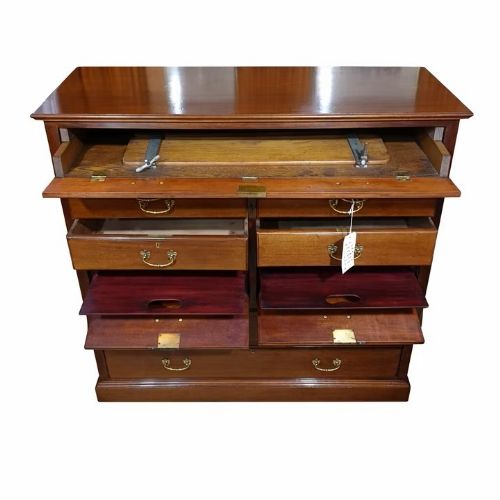

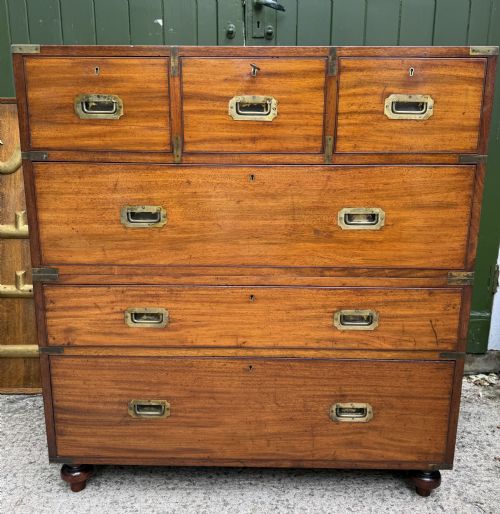
Campaign Tallboy
A campaign tallboy provides substantial storage in a modular, travel-ready format, bringing structural clarity and practical timber work to domestic spaces.
Campaign Tallboy
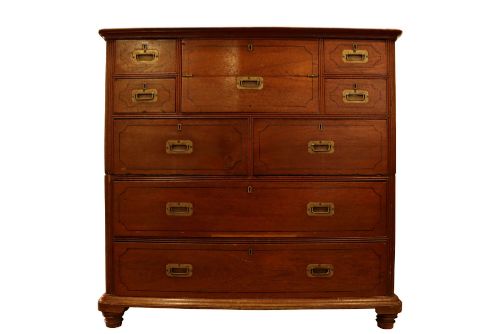
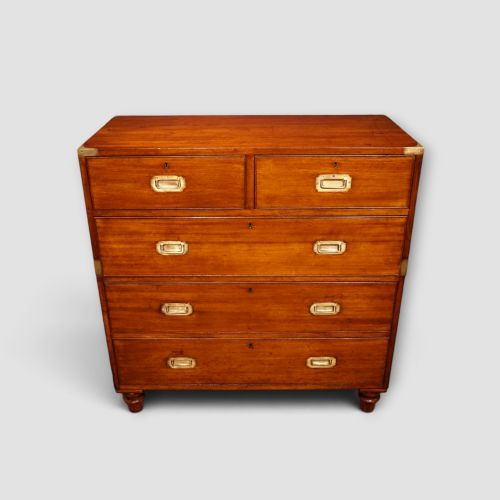
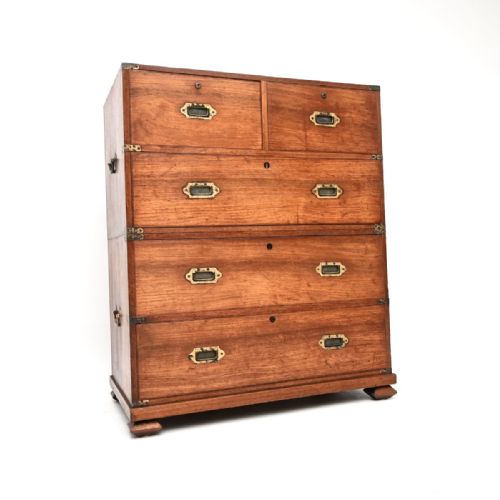
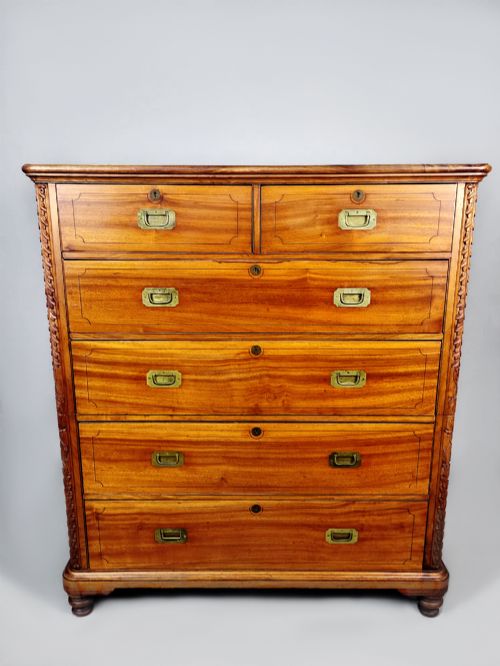
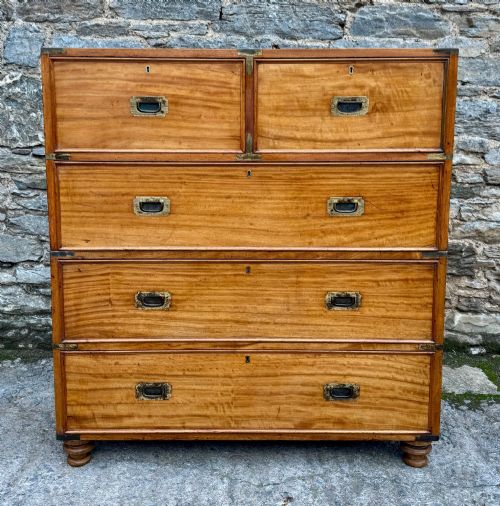
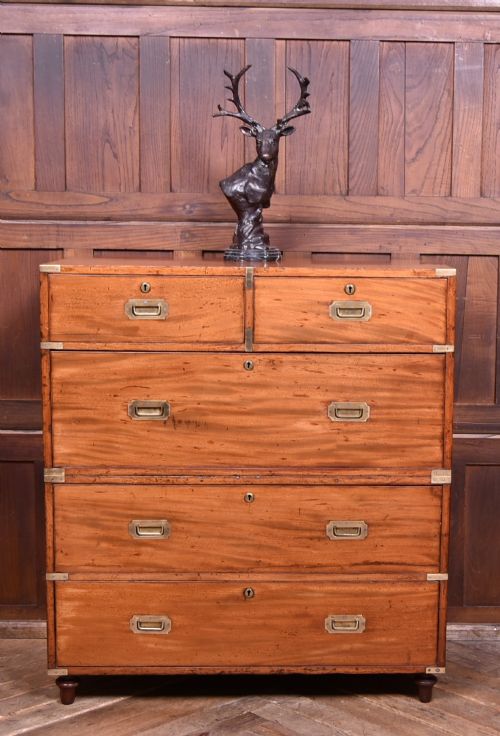
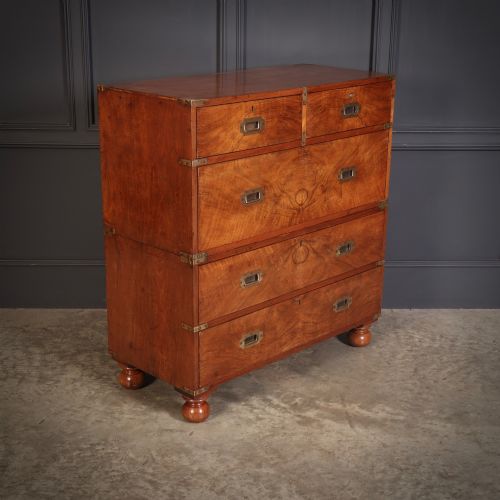
A campaign tallboy combines the tall, stacked drawer arrangement of traditional tallboys with the modular, transportable engineering characteristic of military furniture. When searching for a campaign tallboy, buyers encounter pieces engineered in distinct sections that separate for transit.
The versions appearing most frequently on this page originate from the nineteenth century, spanning Victorian and Regency periods, alongside later twentieth-century iterations. These chests manifest primarily in mahogany, teak, camphor wood, and walnut, frequently adhering to military or colonial specifications.
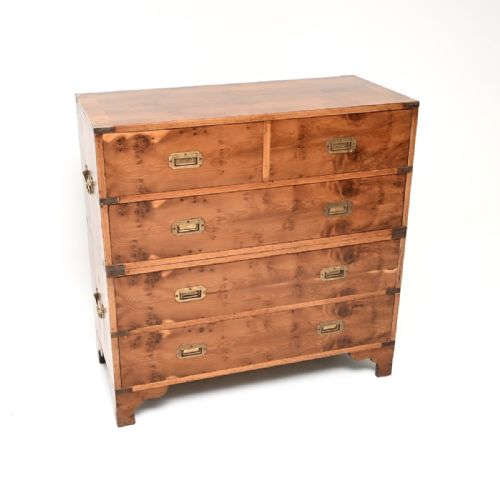
Forms extend beyond standard chests of drawers to incorporate secretaire chests and wardrobes, reflecting the multi-purpose utility required by officers on campaign. The physical presence of brass corners, recessed handles, and carrying brackets defines the aesthetic category.
Materials and construction methods
Makers utilised durable timbers suited to tropical climates and rigorous travel, predominantly selecting dense hardwoods like mahogany, teak, padauk, and camphor wood. These woods resist warping and provide structural integrity for sectional carcass construction.
Metalwork played a structural role, with brass corners, strapwork, and flush-fitting inset handles protecting vulnerable edges and allowing uniform stacking without protruding hardware. Joints were fitted precisely to enable the separate modular sections to lock together securely.
Campaign Tallboy Retail Price Guide 2026
Typical asking prices for campaign tallboy among the pieces listed under this phrase on Sellingantiques today, from the lower quarter to the upper quarter. They describe what is for sale here now, not the wider market.
Some chests retain their original aromatic camphor wood construction, keeping officers' wardrobes naturally fragrant across centuries.
Distinctions in quality and execution
Quality rests in the precision of the brass-bound joinery and the integrity of the modular locking mechanisms that hold the stacked sections together. Superior examples exhibit seamless integration of flush hardware and tight, clean timber joints that endure repeated dismantling.
The selection of timber grain, such as figured walnut, burr walnut, or birds eye maple, separates standard utilitarian pieces from high-status commissions made for senior officers. Original brass fittings and functioning internal secretaire drawers further elevate the standing of a piece.
Army And Navy
The Campaign Tallboy Glossary
- Two-part chest
- A chest of drawers constructed in two separate modular sections that stack vertically for transport. This design facilitates movement during military campaigns.
- Secretaire chest
- A chest featuring a fitted pull-down writing drawer with internal compartments. It provided a functional desk surface for officers on the move.
- Brass fittings
- Corner brackets, straps, and flush-fitting inset handles made of brass. They protected edges from impact and eliminated external projections.
- Camphor wood
- An aromatic hardwood utilised for campaign furniture to deter insects. It possesses a distinct natural scent and stability.
- Wellington chest
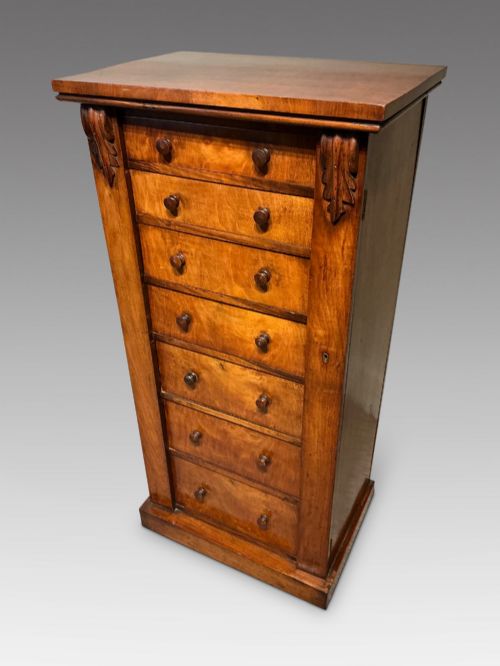
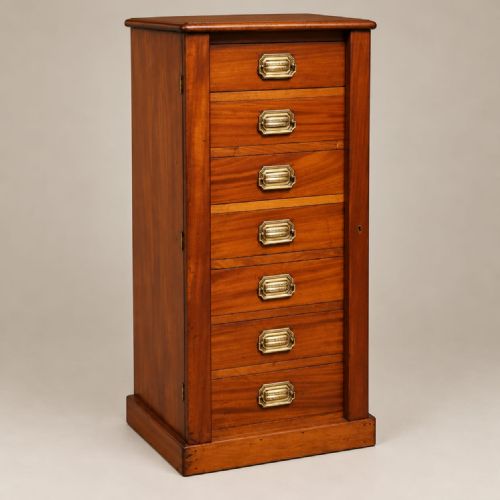
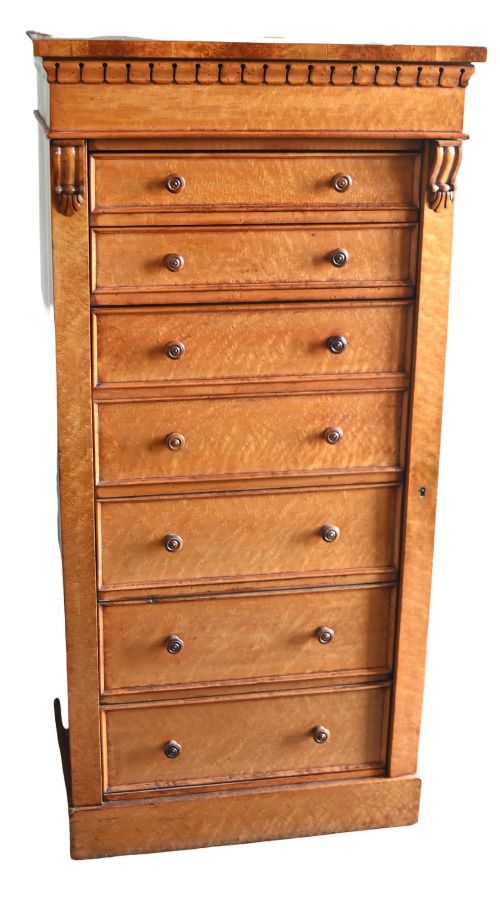
- A tall, slender chest of drawers featuring a locking side-bar. This hinged pilaster secured all drawers simultaneously.
Campaign Tallboy: Frequently Asked Questions
What is a campaign tallboy?
A campaign tallboy is a tall, sectional chest of drawers designed for military transport, featuring brass hardware and modular stacking sections.
These pieces combine vertical storage capacity with the robust construction required by officers relocating across colonial territories.
How were these chests used?
Officers used them to transport uniforms, documents, and personal belongings during military campaigns. The modular design allowed staff to pack and load quarters quickly.
Many examples include secretaire drawers that doubled as writing desks for administrative duties in the field.
How do I identify a period piece?
Period pieces display nineteenth-century timber characteristics, hand-cut dovetail joints, and substantial brass mounts fitted flush into the wood. Makers utilised dense hardwoods like teak, mahogany, and camphor wood.
Inspect the sectional joins where upper and lower carcasses meet to verify the modular engineering.
How do I live with campaign furniture?
These chests integrate well into modern bedrooms and studies, offering deep drawer storage and a strong linear profile. Their modular nature also makes them manageable to move between rooms.
Maintain the timber with appropriate wax and protect brass surfaces from excessive moisture to preserve the finish.