


Cameo Art Glass
Cameo art glass bridges colour and form through layered vessels shaped across the late Victorian era and the twentieth century.
Cameo Art Glass
Cameo art glass encompasses vases, table lamps, decanters, and decorative bowls formed from multi-layered glass blanks. These pieces predominantly date from the periods around nineteen hundred, nineteen ten, and nineteen twenty, aligning with the height of the Art Nouveau and Art Deco movements.
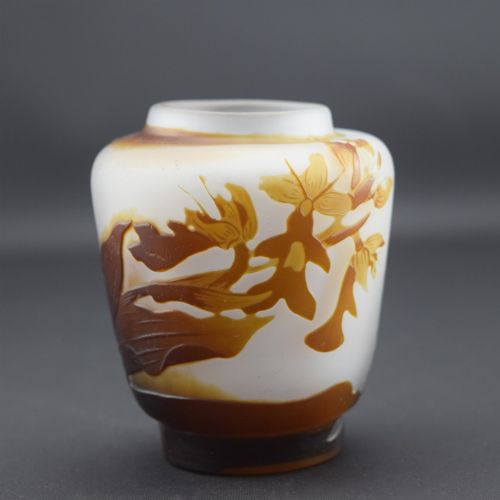
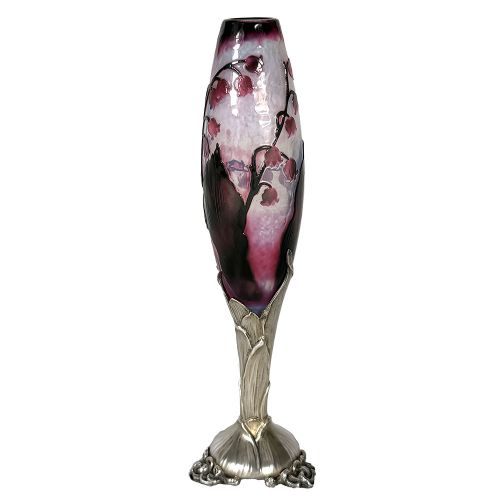
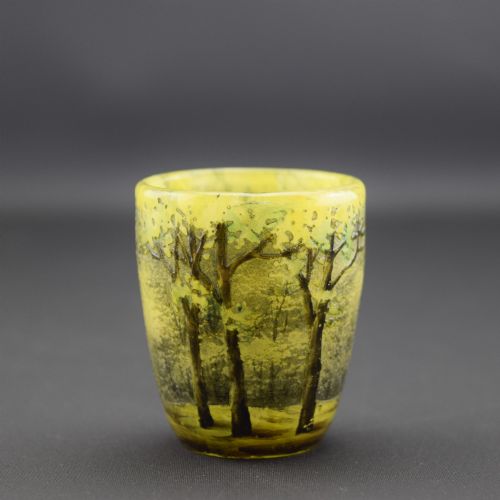
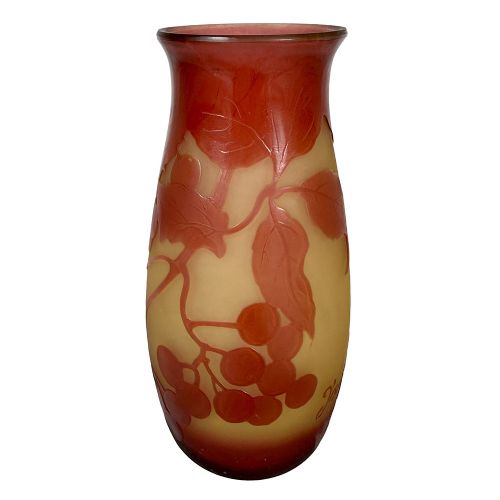
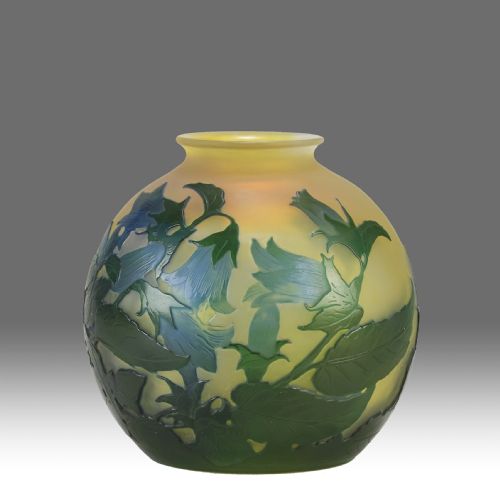
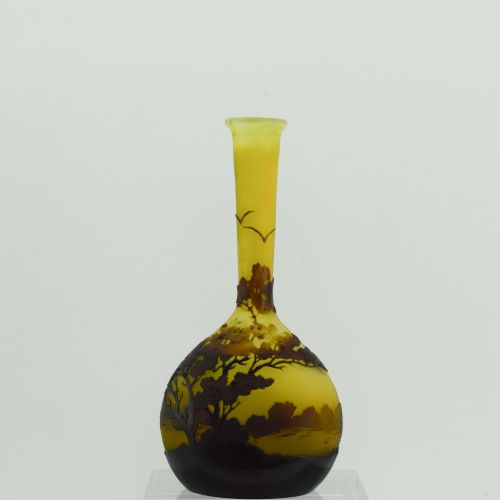
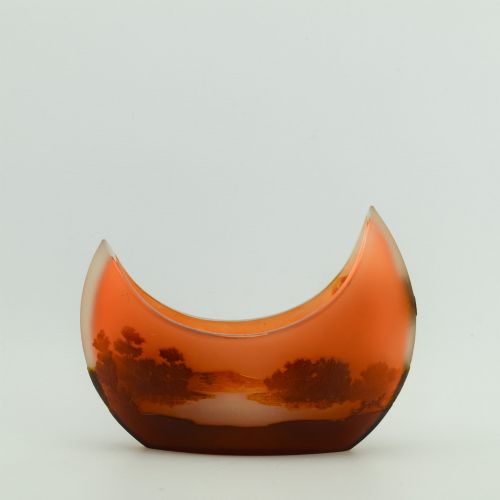
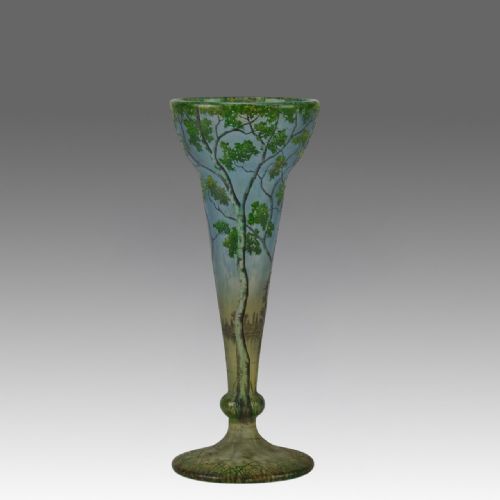
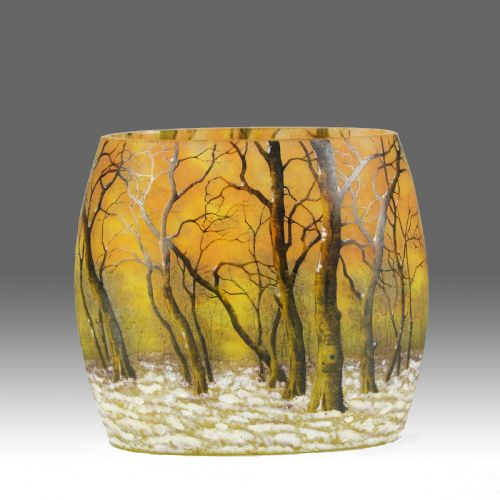
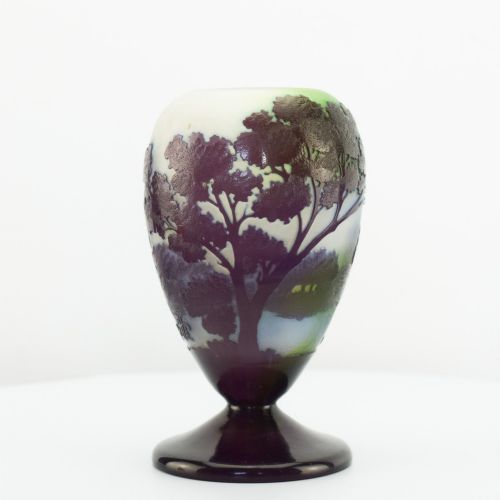
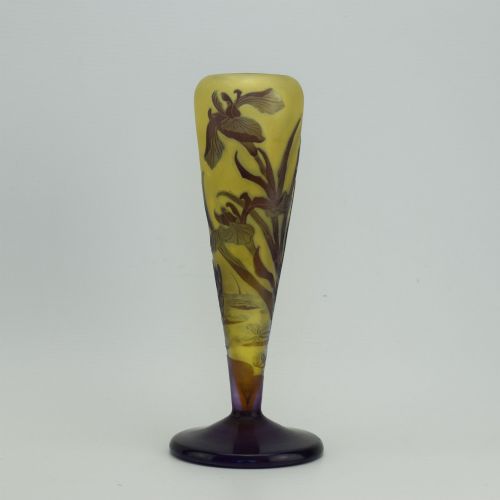
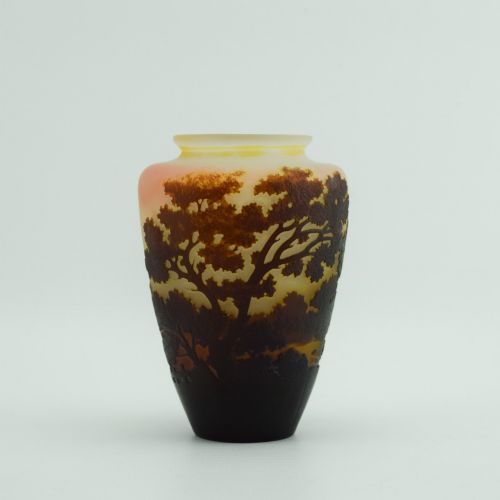
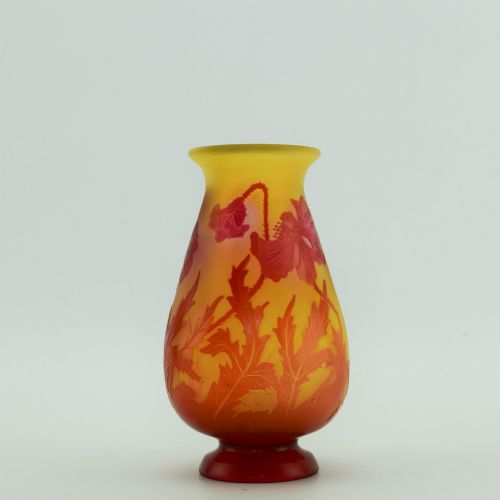
Vessels featuring botanical motifs such as cornflowers, lilies of the valley, and poppies appear frequently alongside topographical landscape scenes depicting winter forests and aquatic views. Forms range from miniature cabinet pieces to large oviform and banjo vases bearing distinct maker signatures.
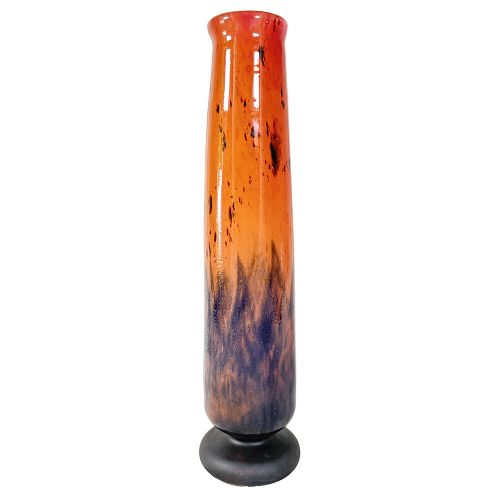
Makers utilised contrasting layers of glass to carve detailed reliefs, producing pieces that span subdued natural tones and vibrant oranges, reds, and purples. Collectors encounter both acid-etched depths and wheel-carved profiles executed by prominent French and English glasshouses.
Methods and materials
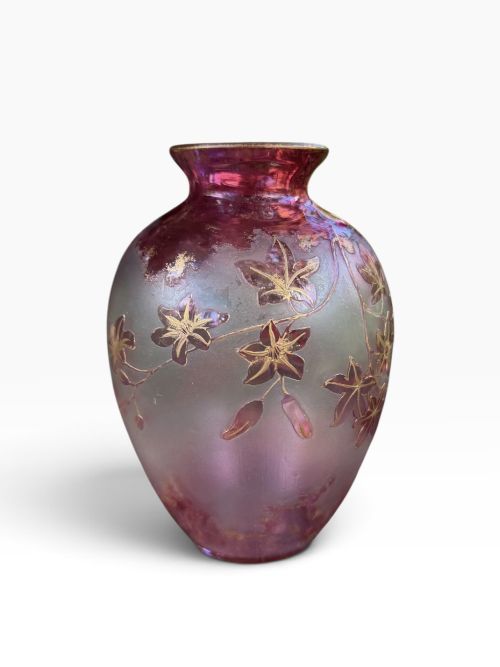
Glassmakers created these objects by gathering multiple layers of coloured glass onto a core before blowing the molten material into vases and bowls. Enamel, gold leaf, and frosted glass treatments were frequently applied to enhance surface texture and visual depth.
Makers cut away the exterior layers using chemical acid-etching or mechanical wheel-carving techniques to reveal contrasting background colours. This subtractive process required precise skill to maintain even depths across complex floral and landscape designs.
Cameo Art Glass Retail Price Guide 2026
Typical asking prices for cameo art glass among the pieces listed under this phrase on Sellingantiques today, from the lower quarter to the upper quarter. They describe what is for sale here now, not the wider market.
Listings span periods from Victorian times through the nineteen thirties, encompassing Art Nouveau and Art Deco styles.
Assessing quality and execution
The precision of the carving distinguishes high-level output, where undercut details and subtle gradations in glass thickness create genuine relief rather than flat surface patterns. Superior examples exhibit clean transitions between colour layers without acid burn or over-polishing.
Compositional balance and the integration of metal mounts, such as silver work by specific silversmiths, elevate certain vessels. The complexity of the subject matter, from multi-pass etched landscapes to air-blown souffle forms, directly reflects the ambition of the original workshop.
Emile Galle·Daum Freres·Baccarat·Thomas Webb and Sons·Legras·Schneider·Georg Adam Scheid
The Cameo Art Glass Glossary
- Acid-Etched Glass
- Glass treated with hydrofluoric acid to eat away exposed surface areas and create a low-relief design. This method allowed workshops to replicate intricate cameo effects more rapidly than hand-carving.
- Wheel-Carved Glass
- Glass shaped and detailed using small rotating abrasive wheels mounted on a lathe. This technique provides sharp edges and deep incisions characteristic of top-tier craftsmanship.
- Souffle Glass
- Glass blown into a metal mesh or internal mould to expand the vessel into a textured shape. Pieces produced this way display pronounced surface contours.
- Blown Glass
- Glass shaped by inflating molten material gathered at the end of a blowpipe. This foundational method determined the initial wall thickness required for subsequent cameo carving.
- Frosted Glass
- Glass treated to achieve a matte, non-reflective surface finish. It is often combined with polished cameo layers to create contrast.
Cameo Art Glass: Frequently Asked Questions
How do I identify a Galle cameo vase?
Authentic pieces usually bear an etched or enamelled signature of the maker within the design cameo itself, reflecting the specific period of production between eighteen ninety and nineteen twenty.
Examine the weight, the crispness of the acid or wheel carving, and the naturalistic floral or landscape motifs characteristic of the Nancy school.
What is the difference between Art Nouveau and Art Deco cameo glass?
Art Nouveau pieces focus on flowing organic lines, floral subjects, and natural landscapes inspired by plants and water. These designs dominated the turn of the twentieth century.
Art Deco examples shift toward geometric precision, bolder colour contrasts, and stylised forms that became popular by the nineteen twenties.
Where were these glass pieces manufactured?
The majority of the output originates from French glasshouses centred around Nancy and Paris, alongside notable contributions from English makers such as Thomas Webb and Sons.
Regional techniques and signature acid signatures often indicate the specific workshop origin.
How should I display cameo art glass at home?
Position these vessels near natural light sources to allow the layered glass colours and translucent qualities to stand out clearly. Placing them away from direct heat protects any applied enamel or gold leaf details.
Pairing items of similar periods helps create a cohesive display on shelves or tables.