

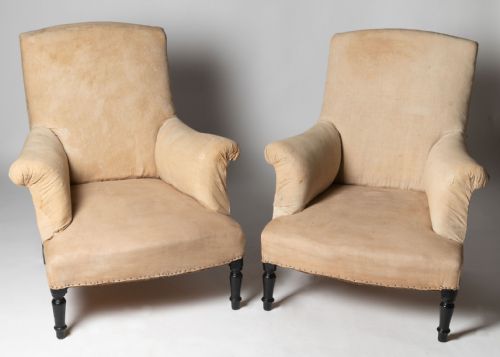
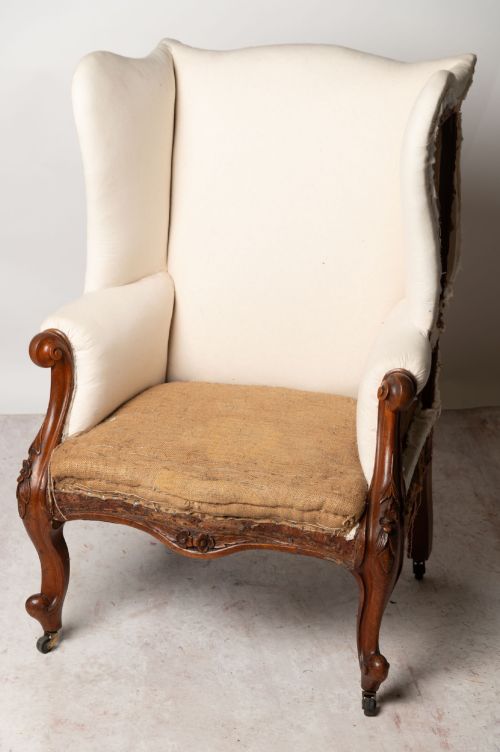
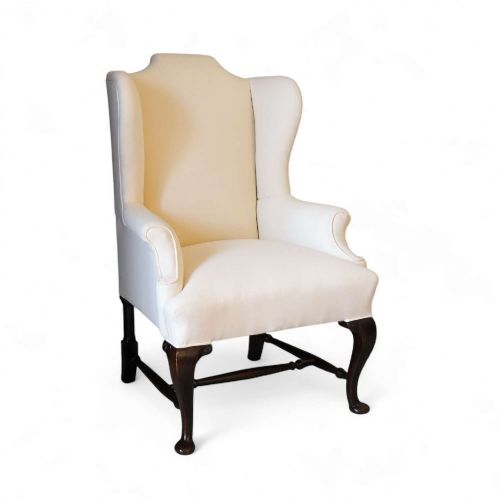


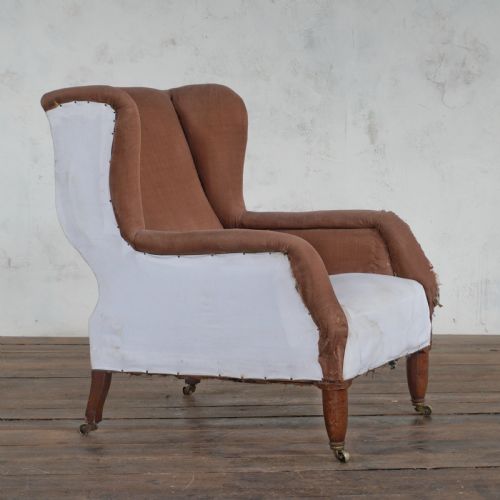


Calico Wing Chair
A calico wing chair offers deep-seated comfort and historic character, arriving ready for your own choice of top fabric or left plain for a clean, minimal look.
Calico Wing Chair
A calico wing chair is a traditional upholstered armchair designed with protective side panels on the back to shield the sitter from draughts. These seating pieces span the eighteenth and nineteenth centuries, including Georgian, Victorian, and revival periods.
The pieces listed here appear prepared in plain calico or hessian foundation covers, often described as upholstered to the calico stage. This unadorned intermediate state allows you to see the timber frame clearly and finish the upholstery to your own taste.
Forms range from early eighteenth-century examples to Chippendale revival and Victorian rococo revival armchairs. Mahogany, oak, and walnut feature heavily in the exposed wooden legs and underframes.
How they were made
Makers constructed the structural frames from solid hardwoods like mahogany, oak, and walnut, shaping the legs and stretchers to match the prevailing style of the period. Brass castors occasionally support the feet on nineteenth-century examples.
Traditional upholstery techniques layer natural stuffings and webbing beneath a tight cover of cotton calico or hessian. This foundational layer provides the firm shape over which decorative fabric would traditionally sit.
Calico Wing Chair Retail Price Guide 2026
Typical asking prices for calico wing chair among the pieces listed under this phrase on Sellingantiques today, from the lower quarter to the upper quarter. They describe what is for sale here now, not the wider market.
Listings span the eighteenth and nineteenth centuries, featuring Georgian, Victorian, and revival styles built from mahogany, oak, and walnut.
What varies in quality
Quality rests in the proportion of the wings and the crispness of the timber carving on the legs and underframe. Finer pieces display well-balanced curves in the arms and back that command the room.
The integrity of the underlying wooden frame dictates the baseline worth of the chair. Untouched eighteenth-century framing differs significantly from later nineteenth-century revival interpretations in heft and joinery.
Thomas Sopwith
The Calico Wing Chair Glossary
- Calico
- A plain-woven cotton fabric used here as a tight foundational upholstery cover. It provides a neutral base ready for final decorative fabric or left plain.
- Wingback
- An armchair style featuring projecting side panels attached to the back. These wings originally served to trap heat from a fireplace and block side draughts.
- Hessian
- A coarse woven fabric made from jute fibres, utilised in traditional upholstery foundations. It holds the internal stuffing securely within the frame.
- Chippendale Revival
- A nineteenth-century design movement recreating the mid-eighteenth-century furniture styles of Thomas Chippendale. These pieces imitate the carved mahogany details of the earlier era.
Calico Wing Chair: Frequently Asked Questions
Why buy a chair in calico?
Buying a chair upholstered in calico lets you inspect the underlying frame and proportions without distraction. It also provides a blank canvas for your own choice of top fabric.
Many buyers prefer this stage because it avoids the expense of stripping away old top covers. You can commission your preferred textile directly onto a sturdy historic foundation.
How do I date a wing chair?
Dating relies on the timber species, leg shapes, and stretcher arrangements beneath the upholstery. Eighteenth-century frames often show simpler, heavier lines compared to later revival pieces.
Reference points include Georgian mahogany or earlier oak framing. Revival pieces from the nineteenth century frequently mimic these older forms with varying degrees of precision.
Were wings designed for warmth?
The side panels on wing chairs originated to protect sitters from cold draughts in large, poorly heated rooms. They trapped heat around the head and shoulders near an open hearth.
Over time, the form evolved from a practical utility into a grand status symbol. By the eighteenth and nineteenth centuries, the silhouette became a staple of refined parlour seating.
What woods are used underneath?
Structural frames utilise durable hardwoods such as mahogany, oak, and walnut. These timbers provided the necessary strength to support heavy internal stuffing and constant use.
Exposed woodwork on the legs and stretchers matches the primary timber of the period. Brass fittings sometimes appear on the feet of later nineteenth-century examples.