




Calibre Cut Sapphire Jewellery
Calibre cut sapphire jewellery brings together closely set stones shaped specifically to fit a geometric design.
Calibre Cut Sapphire Jewellery
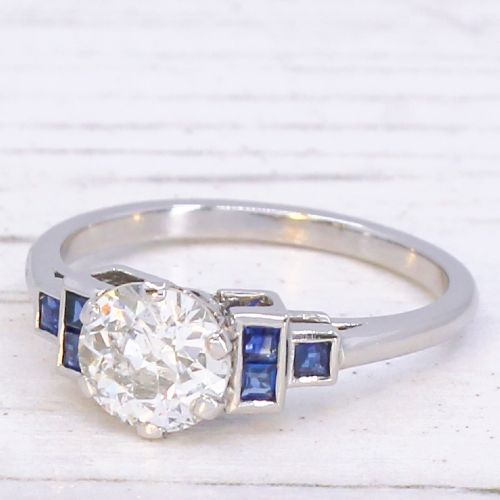
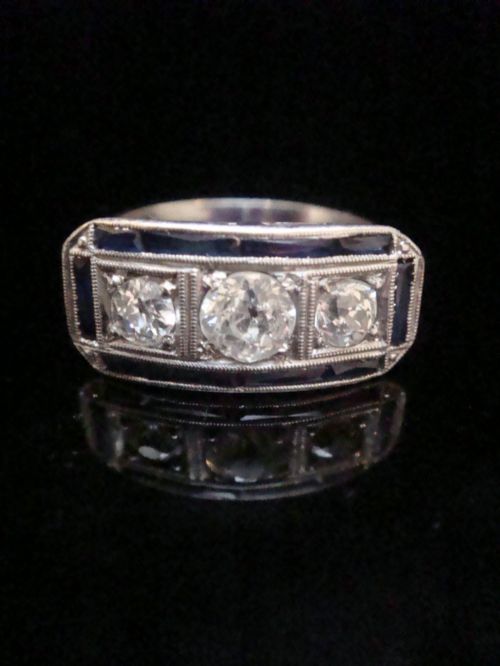
Calibre cut sapphire jewellery centres on pieces designed to showcase small, precisely faceted blue stones fitted closely together within geometric frameworks. These items most frequently appear as rings, line bracelets, and brooches originating from the early decades of the twentieth century. Buyers seeking calibre cut sapphire jewellery will find that rings dominate the selection, spanning target, cluster, and marquise configurations.
The aesthetic is deeply rooted in the Art Deco period, though examples stretch from Edwardian origins through to mid-century revivals. Platinum and 18ct white gold provide the primary mounting metals for these designs, creating a bright monochromatic backdrop that heightens the intense blue of the sapphires. Alongside the blue stones, old cut diamonds appear continuously to form contrasting borders and accents.
French makers contributed significantly to the output of this era, producing substantial dress rings and multi-gem bracelets that incorporate rubies alongside sapphires and diamonds. While rings remain the most common format, line bracelets featuring alternating sections of calibre sapphires and diamonds represent the pinnacle of period wristwear. The heavy reliance on platinum settings ensures that surviving pieces retain their structural integrity despite delicate stone arrangements.
Materials and construction
Makers constructed calibre cut sapphire jewellery by grinding and faceting individual gemstones to fit exact channel settings or custom bezels without visible gaps between them. Platinum emerged as the preferred metal for this work because its strength allowed jewellers to form whisper-thin claws and channels while holding dozens of tiny stones securely. White gold and yellow gold also appear, particularly in pieces that combine multiple metal tones or date slightly outside the core Art Deco years.
Diamonds set alongside the sapphires are typically old cut, old European cut, or rose cut stones selected to match the linear geometry of the mount. The precise cutting of each sapphire required immense skill from lapidaries who shaped every individual stone by hand to follow curves and sharp angles alike. This meticulous construction method ensures that the surface of the jewellery appears as a continuous ribbon of colour and sparkle.
French jewellers occasionally mixed rubies into the sapphire geometry just to see who was paying attention.
Evaluating calibre cut sapphire jewellery
Quality in calibre cut sapphire jewellery rests upon the precision of the stone alignment and the uniformity of the sapphire colour. Superior pieces display stones that fit edge to edge with absolute exactness, creating a seamless mosaic of deep blue without distracting gaps or mismatched hues. The calibre stones must sit flush with the metal framework, demonstrating the high level of lapidary skill required to shape each tiny gem.
The calibre of the supporting diamonds and the complexity of the platinum or white gold mounting further differentiate standard items from exceptional examples. Finer pieces often incorporate intricate pierced work, millegrain edging, and substantial old cut diamond clusters that frame the central sapphire design harmoniously. When the metalwork remains crisp and the sapphire colour saturation is even throughout the geometric layout, the piece achieves lasting distinction.
The Calibre Cut Sapphire Jewellery Glossary
- Calibre cut
- A style of gemstone cutting where stones are specifically shaped to fit tightly into a precise geometric mounting without gaps. This technique is a defining hallmark of Art Deco fine jewellery.
- Old cut diamond
- A diamond cut by hand before modern machinery standardised proportions, characterised by a high crown, small table, and deep pavilion. These stones produce a softer, candlelit sparkle compared to modern brilliant cuts.
- Target ring
- A ring style featuring a central gemstone surrounded by one or more concentric rings of contrasting stones, creating a bullseye pattern. This form was exceptionally popular during the Art Deco era.
- Millegrain
- A decorative technique involving a row of tiny, raised metal beads along the edges of a setting. It adds a refined, textural border to platinum and gold mounts.
- Line bracelet
- A flexible bracelet featuring a continuous line of gemstones linked together sequentially. In period pieces, these frequently alternate diamonds with calibre cut coloured stones.
Calibre Cut Sapphire Jewellery: Frequently Asked Questions
What is calibre cut sapphire jewellery?
Calibre cut sapphire jewellery comprises rings, bracelets, and brooches set with specially shaped blue sapphires that fit tightly together to form geometric patterns. These items date primarily from the early twentieth century and rely heavily on platinum mounts.
The technique allows jewellers to create sharp lines and solid blocks of colour that define the aesthetic of the period. Diamonds typically accompany the sapphires to provide maximum contrast.
How do I care for antique sapphire jewellery?
Cleaning antique calibre cut pieces requires gentle handling using warm water and a soft brush, avoiding harsh chemical dips that might harm the delicate metal settings. Because the stones are fitted closely together without much space underneath, professional inspection helps ensure the security of each tiny gem.
Storing each item separately in a lined box prevents the platinum or gold mounts from scratching against other pieces. Regular checks by a specialist will maintain the integrity of the antique claw and channel work.
How can I identify Art Deco sapphire pieces?
Art Deco sapphire pieces display rigid geometric motifs, symmetrical layouts, and a frequent pairing of platinum with calibré cut blue stones and old cut diamonds. The mounts often feature intricate openwork and millegrain details that enhance the linear design.
While Edwardian jewellery leans towards lace-like lightness, Art Deco work favours bold architectural shapes and stark colour contrasts. The presence of French hallmarks on platinum settings can also point towards Parisian workshops of the era.
Are these sapphires natural?
The sapphires found in these period pieces are natural gemstones mined and cut long before the widespread adoption of modern synthetic stone production. Their internal characteristics often reflect the geological origins typical of antique jewellery.
Expert certification accompanying certain pieces verifies their natural status and details any treatment history. The depth and variation of colour within the stones further support their natural origin.