
Cabriole Leg Wine Stand
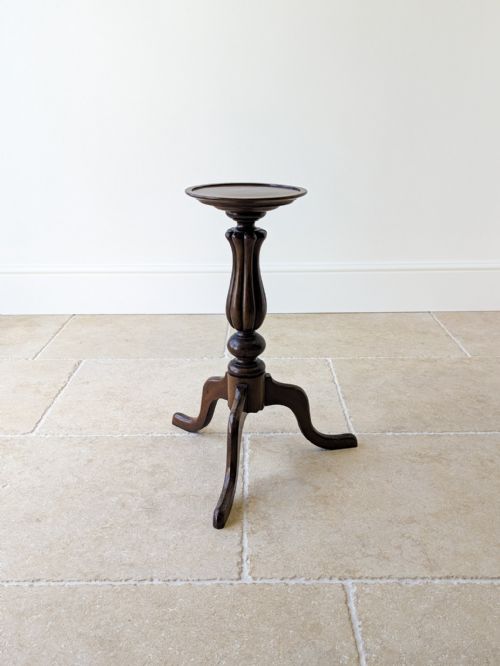
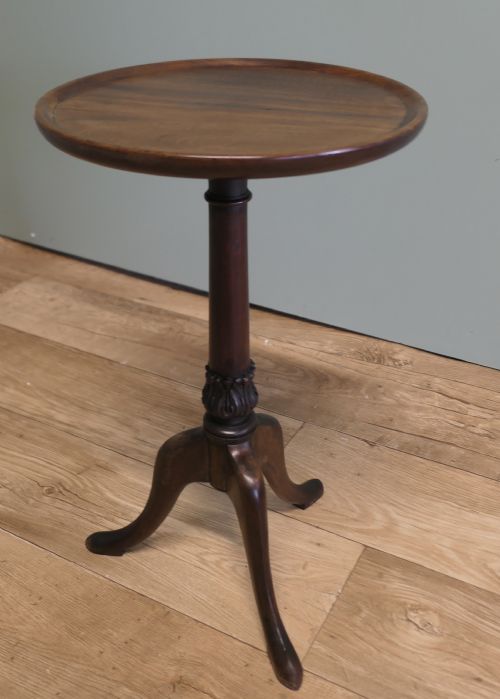
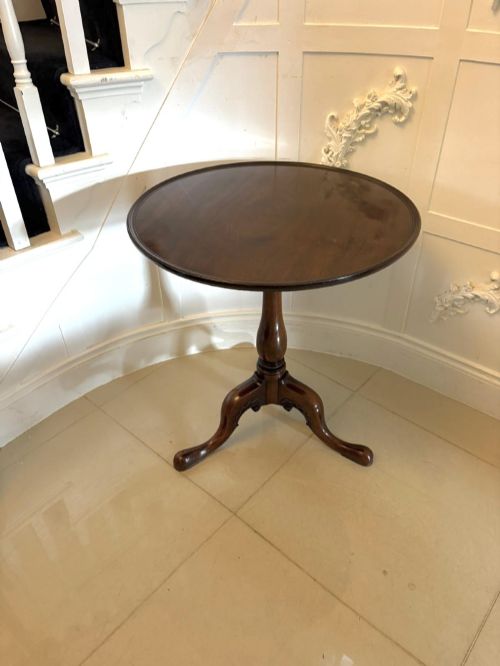
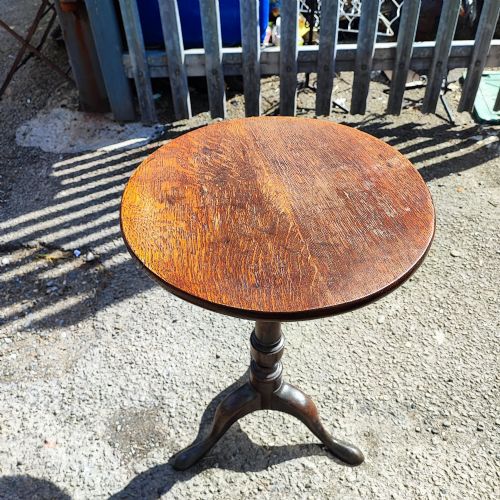
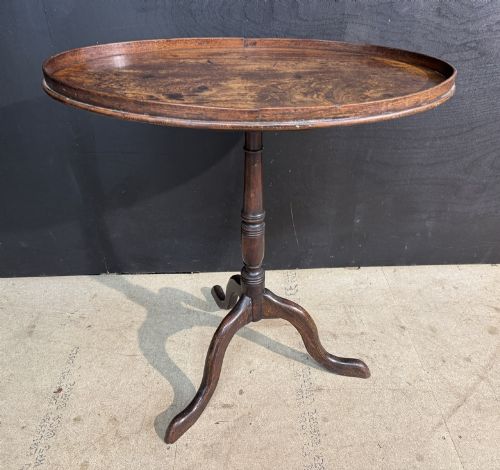
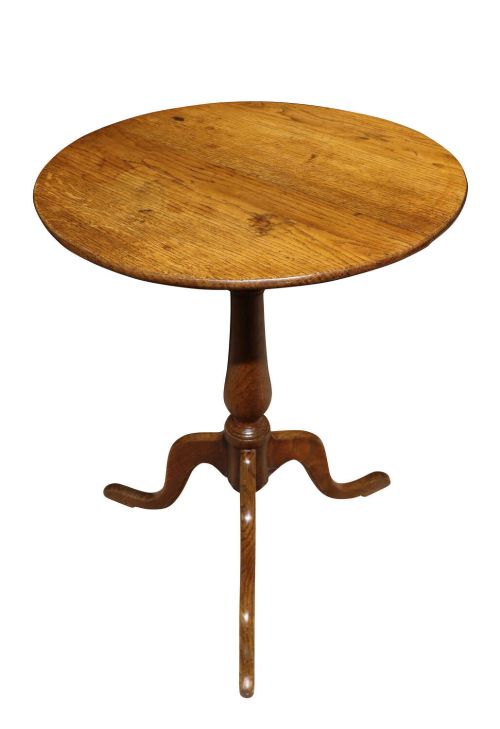
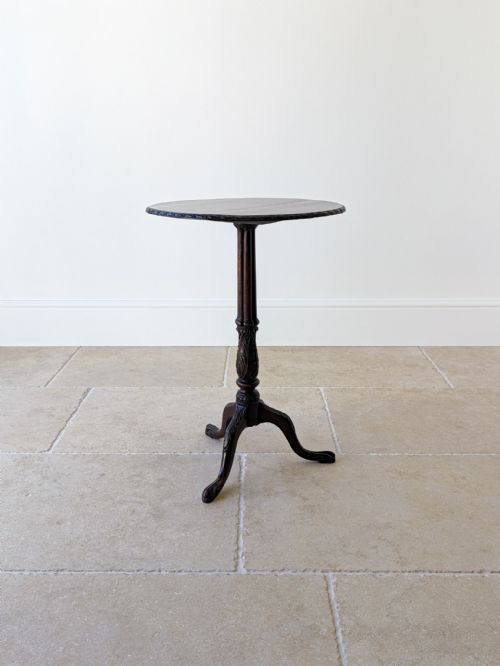
A cabriole leg wine stand is a sturdy small table raised on three curved legs, designed to hold a single bottle and glass close to a chair.
Cabriole Leg Wine Stand
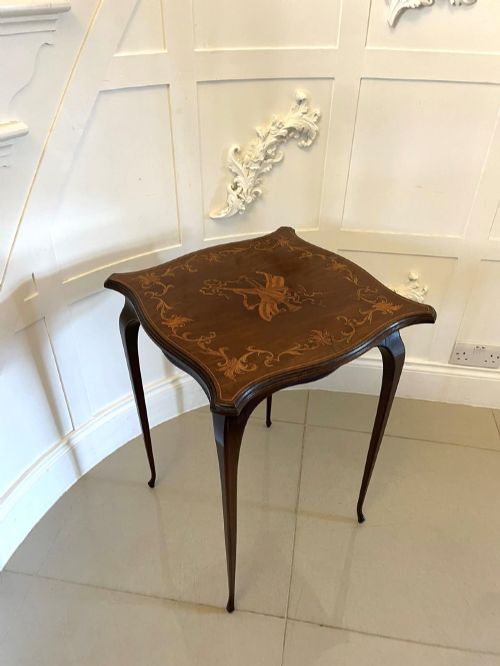
A cabriole leg wine stand is a compact occasional table built to support drinks or small objects within a room. When you examine this selection, you encounter pieces that date from the Georgian era through to the Edwardian period and the early twentieth century.
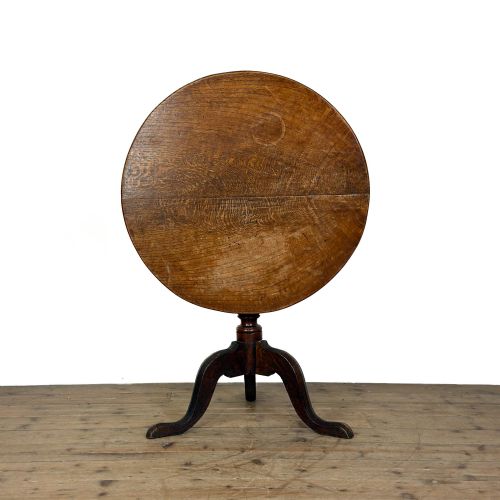
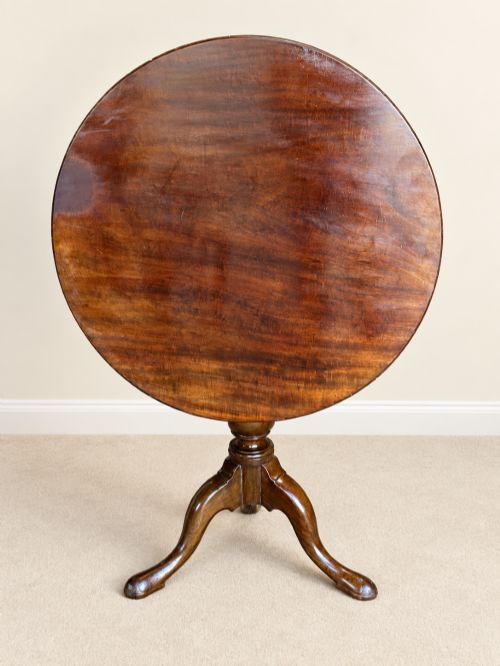
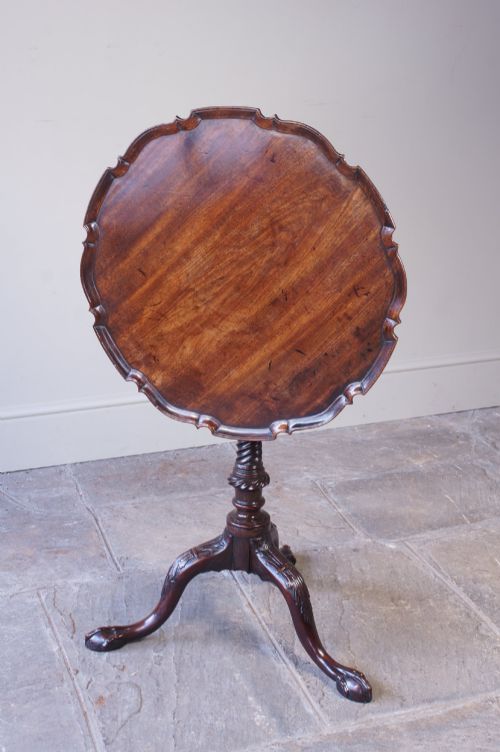
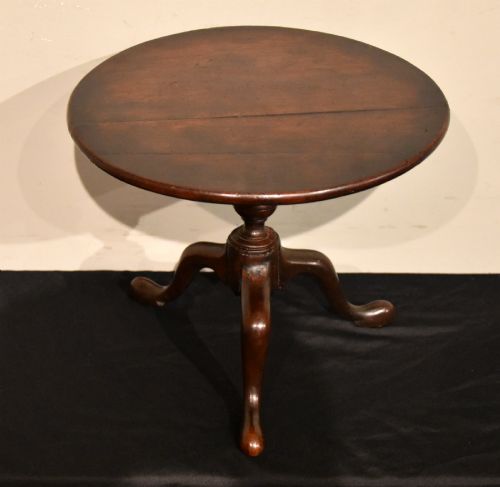
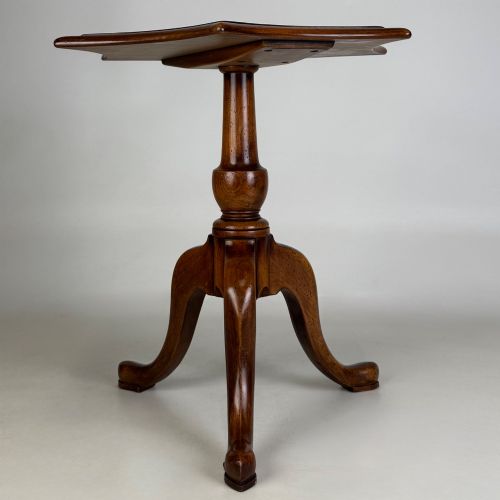
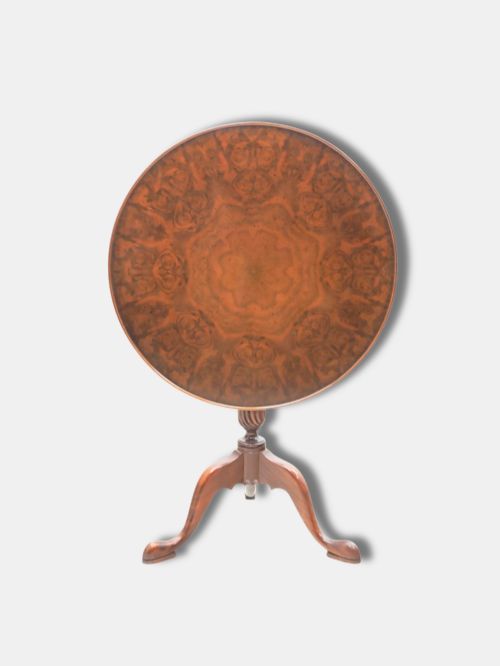
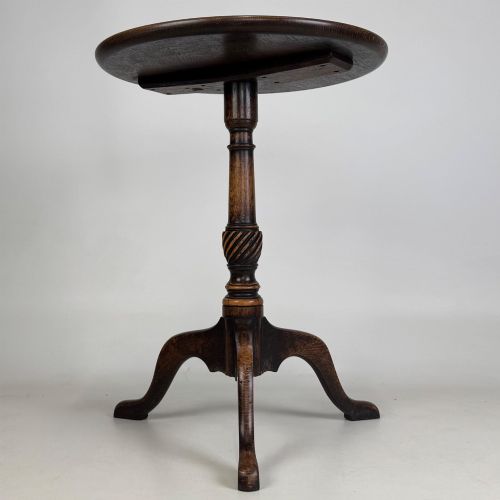
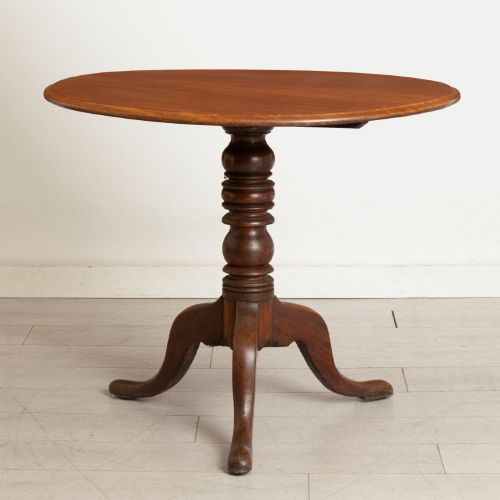
The form typically relies on a central pillar supported by three outward-curving legs, which frequently terminate in pad or claw-and-ball feet. Most examples you meet here are fashioned from timber such as mahogany, oak, or walnut, functioning as portable surfaces for domestic use.
Makers designed these small tables to be moved easily beside seating areas during social gatherings or quiet evenings. You will find variants featuring tilting tops, birdcage mechanisms, and raised pie crust rims intended to keep glassware secure.
How they were made
Cabinetmakers constructed these pieces using solid timbers including mahogany, oak, walnut, elm, and fruitwood, often selecting dense woods that could withstand the stress of turned columns and slender legs. Grain orientation was critical when shaping the cabriole legs, ensuring the curved wood retained its structural strength without snapping along the natural lines of the growth rings.
The junction where the central pillar meets the tripod base required careful joinery, frequently employing dovetails or tenons secured with wooden pegs. Tabletops were sometimes mounted on birdcage mechanisms or tilt-top blocks, allowing the surface to swivel or pivot flat against the pillar when not in use.
What varies in quality
The refinement of the carving upon the knees and feet of the cabriole legs largely separates standard examples from finer work. Crisp detailing on shell motifs, acanthus leaves, or claw feet indicates a maker with greater skill and more time invested in the piece.
Proportion and stability dictate the overall merit of a tripod table. A well-balanced column, smooth tilting action, and tightly fitted joints demonstrate superior craftsmanship from the original workshop.
Shapland and Petter
The Cabriole Leg Wine Stand Glossary
- Cabriole leg
- A furniture leg that curves outward at the knee and tapers inward toward the foot, mimicking the shape of an animal's leg. This design gained prominence during the eighteenth century.
- Tilt-top
- A tabletop mounted on a hinged mechanism that allows the surface to pivot into a vertical position. This feature enabled the table to be stored flat against a wall when not in service.
- Birdcage
- A wooden framework beneath the tabletop that permits the surface to both rotate and tilt. It consists of small vertical spindles enclosed between horizontal plates.
- Pie crust rim
- A raised, scalloped edge carved directly into the perimeter of a circular tabletop. The undulating profile resembles the crust of a traditional pastry pie.
- Snap top
- A spring-loaded catch mechanism that locks a tilting tabletop securely into the horizontal position. It prevents the surface from tipping accidentally during use.
Cabriole Leg Wine Stand: Frequently Asked Questions
What was a wine stand used for?
These small tables served as movable surfaces for holding decanters, glasses, or candles beside seating areas during evening gatherings.
Their compact size allowed servants to reposition them easily around the room as guests shifted their positions.
How do I identify a Georgian wine table?
Georgian examples typically feature hand-turned central columns, tripod bases with pad or snake feet, and dense timbers like mahogany or oak.
Look for construction details such as pegged joints, hand-cut dovetails, and patination acquired through centuries of polishing.
What is a tilt-top mechanism?
A tilt-top mechanism uses a hinged block beneath the surface that allows the table top to pivot ninety degrees vertical.
This clever design saved valuable floor space in period drawing rooms by letting the table stand flat against the perimeter wall.
Are these tables sturdy enough for daily use?
Tripod tables are inherently stable on three points, though their slender legs and central columns mean they are not suited for heavy weight.
Placed carefully on a level floor, they easily support drinks, books, or lamps without wobbling.