




Cabriole Leg Bedside Chest
A cabriole leg bedside chest brings small-scale storage with sweeping, curved supports into a bedroom, combining practical surfaces with ornamental lineage.
Cabriole Leg Bedside Chest
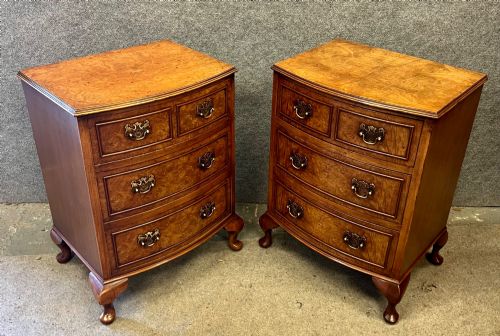
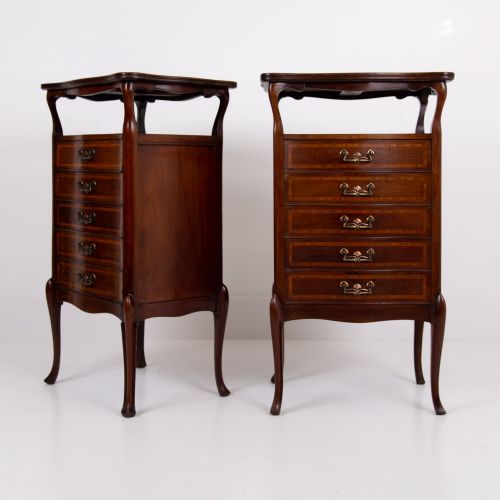
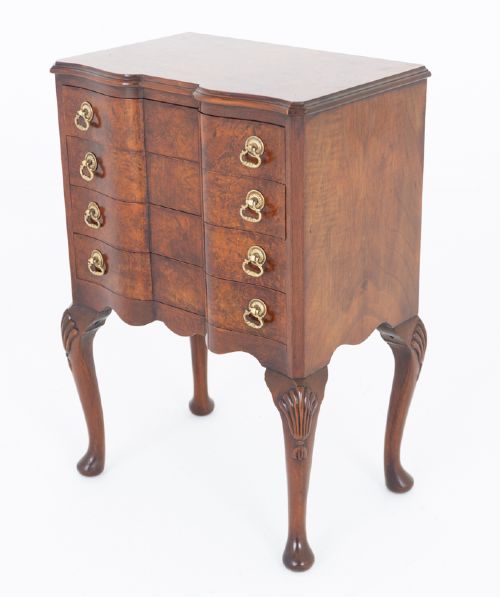
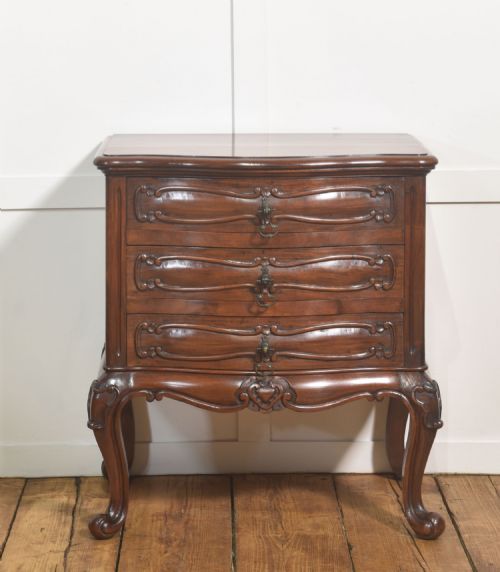
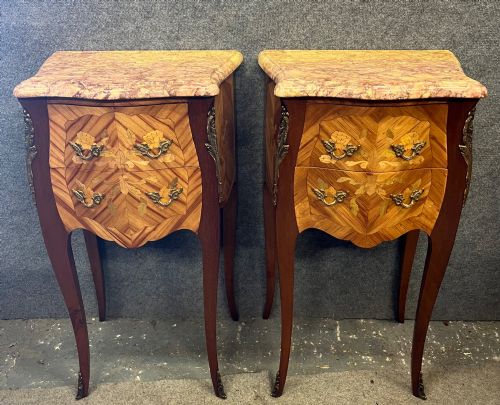
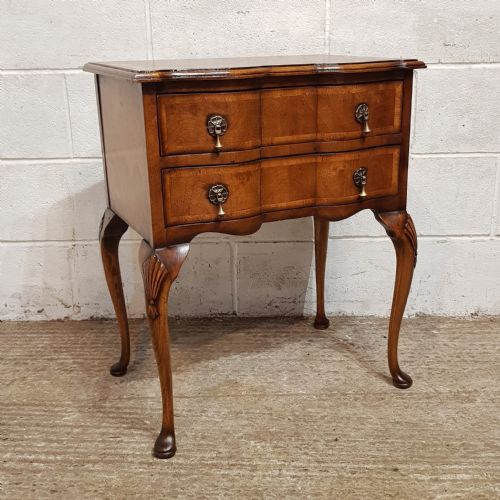
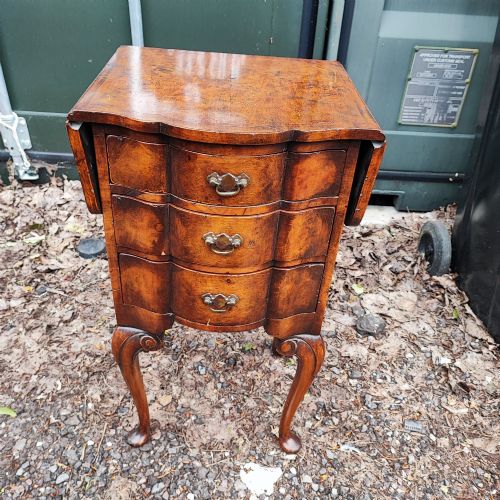
When you search for a cabriole leg bedside chest, you encounter compact bedside tables, small chests of drawers, and cabinets designed to stand beside a bed or function as lamp tables. These pieces emerge predominantly from the early twentieth century, Edwardian period, and nineteen-twenties, alongside interpretations reaching back to the eighteenth and nineteenth centuries.
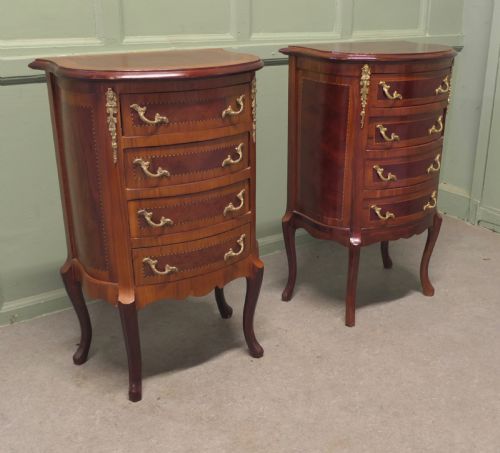
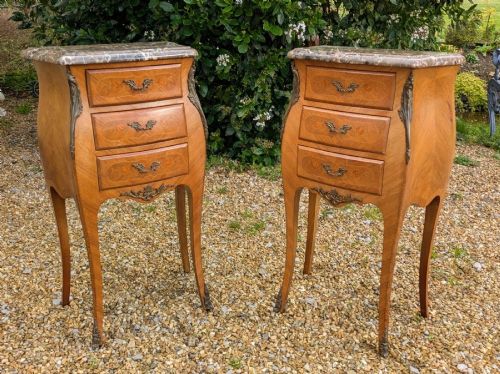
The prevalent forms draw heavily on French Provincial, Queen Anne Revival, and Louis XV styles, often appearing in pairs suited for flanking a bed. You meet bow fronts, serpentine shapes, and straight-sided cabinets fitted with drawers, cupboards, or open surfaces, reflecting European aesthetic influences from distinct historic eras.
How They Were Made
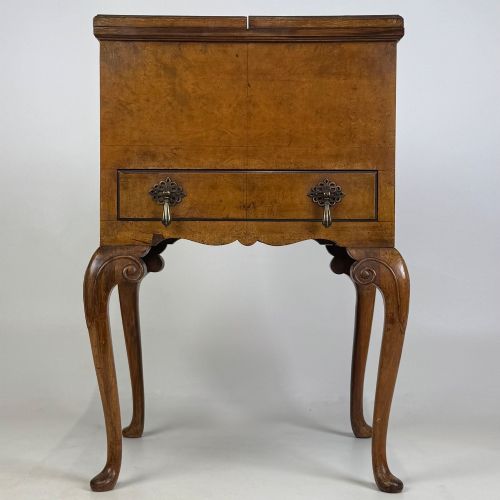
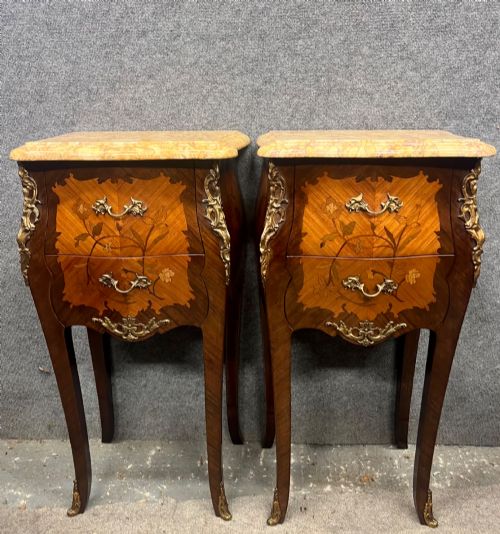
Cabinet makers utilised choice timbers such as walnut, burr walnut, mahogany, kingwood, and satin walnut, frequently applying fine veneer and parquetry or marquetry patterns to create decorative surfaces. The structural frames support shaped wooden tops or inset marble slabs, combining tactile organic grain patterns with cool stone elements.
Details such as cast brass handles, ormolu mounts, and carved wooden motifs accent the construction, while the signature curving legs flow downward from the apron to terminate in pad, scroll, or French feet.
Some chests arrive equipped with marble tops, ready to withstand spilled midnight tea without leaving a mark.
What Varies in Quality
The distinction between ordinary and superior pieces rests on the choice of timber figure, such as highly figured burr walnut or intricate floral marquetry, and the crispness of hand-carving along the knee and foot of the cabriole support. Finer examples display balanced proportions, seamless veneer matching, and tight joinery in the drawer framing.
Hardware selection and secondary detailing also set benchmarks, with heavy cast brass or ormolu mounts and substantial marble slabs indicating a higher grade of production than simpler utilitarian alternatives.
The Cabriole Leg Bedside Chest Glossary
- Cabriole leg
- A furniture support that curves outward at the knee and tapers inward toward the ankle, mimicking an animal's leg in motion. This form derives from classical design and anchors many eighteenth-century revival pieces.
- Marquetry
- Decorative veneer work forming pictures or geometric patterns using thin slices of wood, shell, or ivory. Craftsmen arrange these contrasting elements across table tops and drawer fronts.
- Ormolu
- Gilded bronze ornamentation applied to furniture mounts, feet, and handles. It provides a bright metallic contrast against dark woods like walnut and kingwood.
- Serpentine front
- A furniture facade shaped with a convex centre flanked by two concave curves, or vice versa. This undulating contour requires skilled shaping of the solid timber or core framing.
- Parquetry
- A geometric mosaic of wood pieces used for surface decoration on floors and cabinet tops. It creates repeating patterns such as cubes or chequers utilising contrasting grains.
Cabriole Leg Bedside Chest: Frequently Asked Questions
What is a cabriole leg bedside chest?
A cabriole leg bedside chest is a small storage unit or table raised on curving legs, designed to hold lamps and bedside items.
These pieces typically date from the Edwardian era and the early twentieth century, drawing on historical French and English styles.
How were marble topped cabinets used?
Marble topped cabinets provided a durable, heat-resistant surface beside the bed for placing candlesticks, water jugs, or lamps.
The stone top also added weight and a decorative contrast to the walnut or mahogany timber bodies.
Are these chests usually found in pairs?
Many of these pieces were manufactured and survive as matching pairs intended to flank a bed symmetrically.
Singular cabinets also appear frequently, serving equally well as small lamp tables or occasional side furniture.
How do I identify a Louis XV style piece?
Louis XV style items feature characteristic asymmetrical curves, floral marquetry, ornate ormolu mounts, and sweeping cabriole supports.
These design traits originate from eighteenth-century French aesthetics revived by later Victorian and Edwardian cabinet makers.