



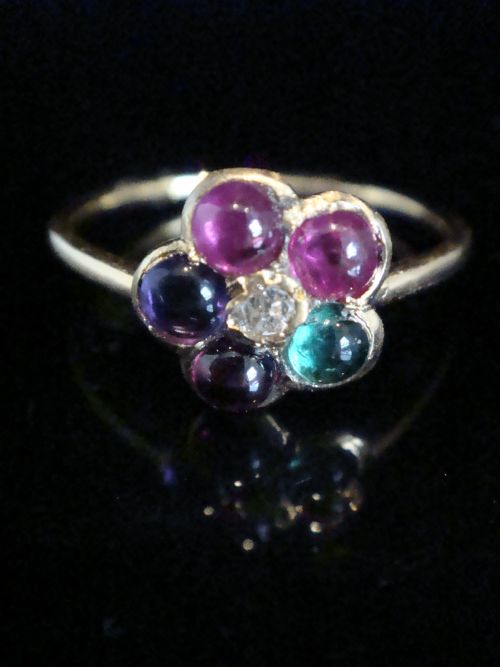


Cabochon Amethyst Jewellery
Cabochon amethyst jewellery brings together smooth rounded purple stones and precious metals across styles from Victorian revival to mid-century modern.
Cabochon Amethyst Jewellery
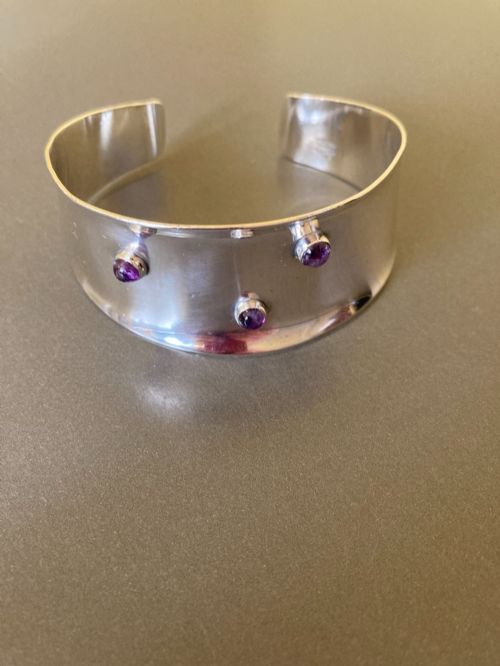
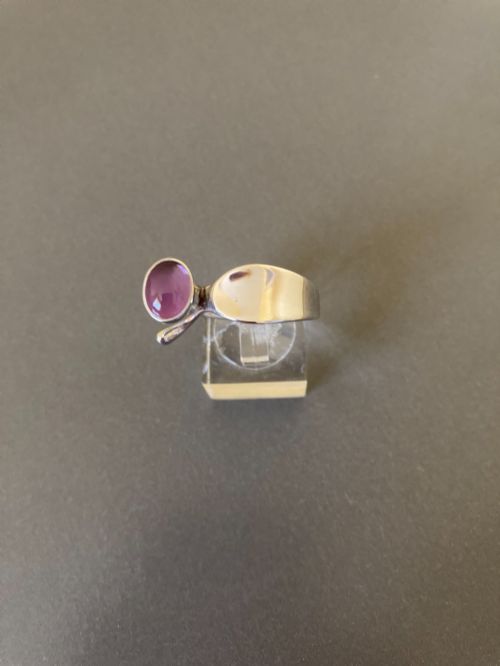
Cabochon amethyst jewellery comprises rings, earrings, necklaces, and bangles featuring polished domed quartz rather than faceted stones. These pieces span periods from the Victorian era and Edwardian times through to the Arts and Crafts movement, the 1930s, and 1960s Danish design.
The most common forms on this page include cluster rings in rose gold, drop earrings set with pearls, and silver modernist bangles. Buyers seek these items for their distinctive smooth purple cabochons paired with silver, 9ct gold, and 18ct gold settings.
How they were made
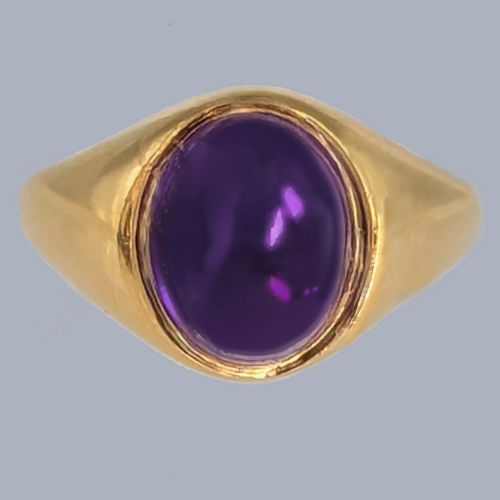
Makers shaped amethyst quartz into smooth, rounded cabochons rather than cutting facets, setting the polished stones securely into mounts of sterling silver, 9ct gold, and 18ct white or rose gold. Many examples incorporate supporting gems such as seed pearls and diamonds to frame the central purple quartz.
Silver and gold work follows the stylistic demands of the period, from the hand-wrought details of Arts and Crafts festoon necklaces to the clean lines of mid-century Scandinavian bangles and rings.
Cabochon Amethyst Jewellery Retail Price Guide 2026
Typical asking prices for cabochon amethyst jewellery among the pieces listed under this phrase on Sellingantiques today, from the lower quarter to the upper quarter. They describe what is for sale here now, not the wider market.
Listings span the Victorian era, Edwardian period, Arts and Crafts movement, 1930s, and 1960s.
What varies in quality
Quality rests on the depth and saturation of the amethyst dome and the substantial weight of the precious metal mount. Solid gold constructions and heavy silver work distinguish superior pieces from lighter settings.
The integration of secondary stones like pearls and diamonds, alongside the distinct hand of a known designer, elevates an item above standard production.
N E From·Georg Jensen·Vivianna Torun Bulow Hube
The Cabochon Amethyst Jewellery Glossary
- Cabochon
- A gemstone shaped and polished with a smooth, convex domed surface rather than being faceted. This cut highlights the natural colour and clarity of the amethyst without angular light reflection.
- Festoon necklace
- A decorative necklace featuring a chain draped with suspended drops, links, or pendants. These often incorporate stones like amethyst alongside coral and moonstone in Arts and Crafts designs.
- Cluster ring
- A ring style featuring a central stone surrounded by a tighter group of smaller gems, such as pearls or diamonds. Victorian examples frequently utilise this arrangement in 18ct rose gold.
- Shepherd hook
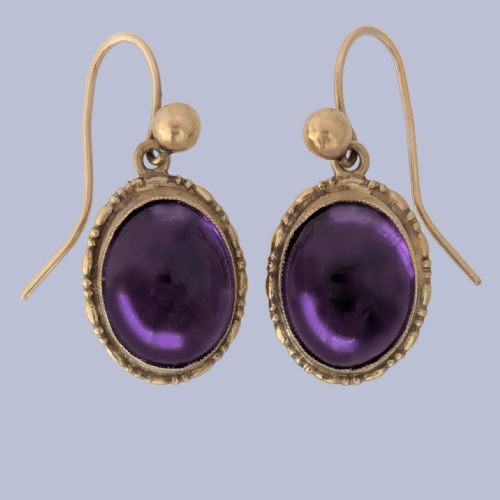
- A curved wire fastening used for drop earrings that slips easily through the ear piercing. This finding appears on mid-century gold earrings paired with cabochon stones.
Cabochon Amethyst Jewellery: Frequently Asked Questions
What is cabochon amethyst jewellery?
Cabochon amethyst jewellery consists of rings, necklaces, and earrings featuring smooth, unfaceted purple quartz stones.
These pieces utilise settings in silver, 9ct gold, and 18ct gold across multiple historical periods.
How do I style these pieces?
These items pair easily with both casual daytime wear and evening attire depending on the metal and scale.
A modernist silver bangle or a Victorian cluster ring adds a distinct focal point to an outfit.
How are different periods distinguished?
Victorian and Edwardian items often feature rose gold, clusters, and seed pearls around the central amethyst.
Mid-century and 1960s examples lean towards clean silver lines, Scandinavian design signatures, and unadorned cabochons.
What metals are used?
Makers set these amethysts in sterling silver, 9ct gold, and 18ct white or rose gold.
Silver predominates in Arts and Crafts and mid-century Danish pieces, while gold appears across Victorian and later twentieth-century rings.