

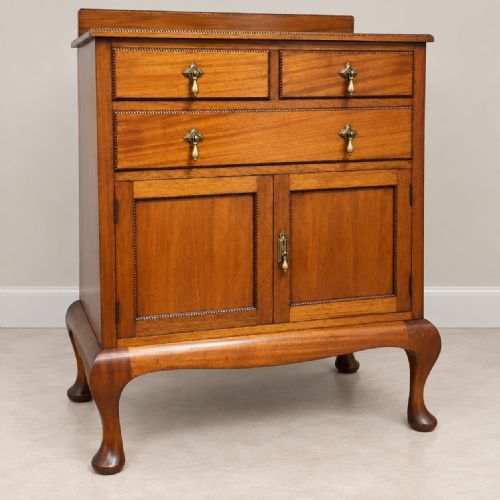
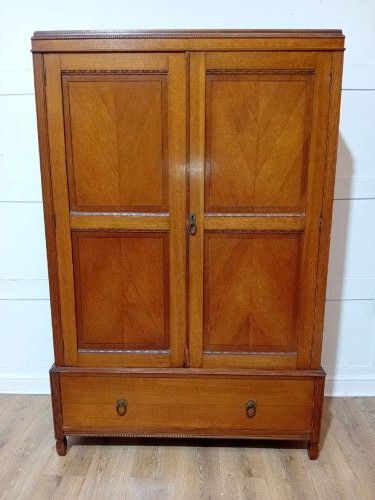
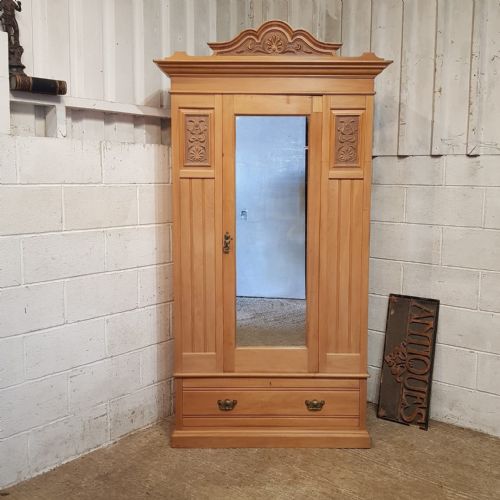
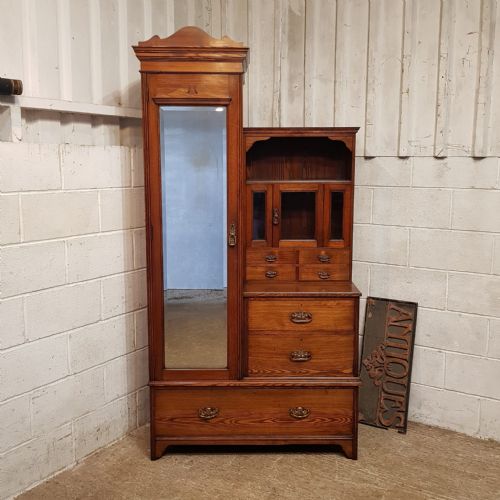


C1900 Wardrobe
A c1900 wardrobe provides substantial storage with period character, anchoring a bedroom through quality timbers.
C1900 Wardrobe
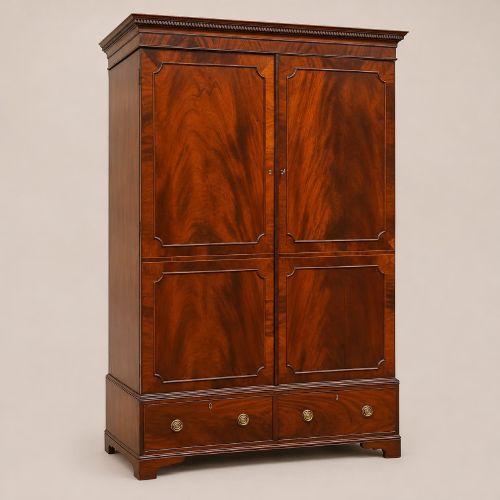
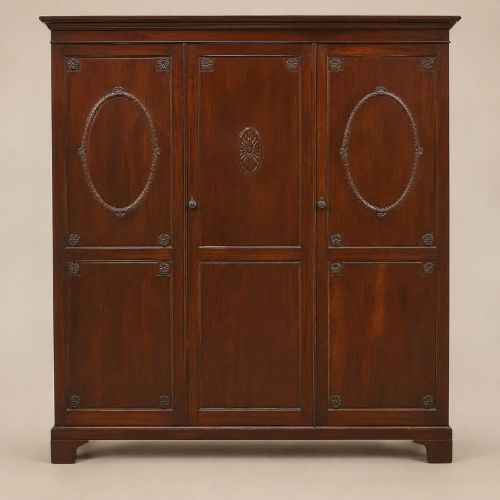
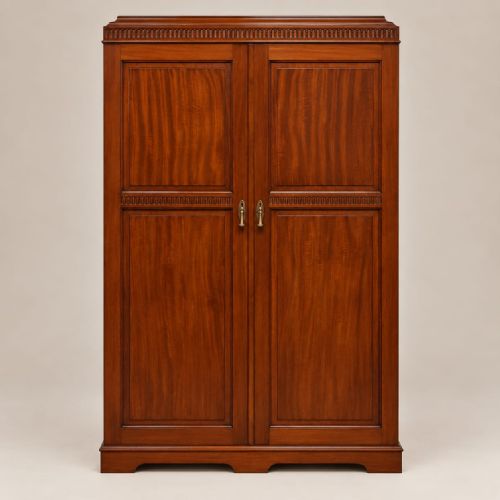
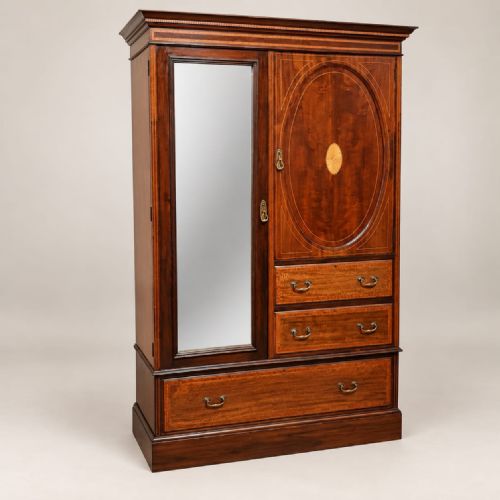
A c1900 wardrobe encompasses large storage furniture built around the turn of the twentieth century during the Edwardian and late Victorian eras. These pieces typically take the form of double or triple wardrobes, tallboys, and combination units that integrate drawers and cupboards.
Buyers encountering this selection will most frequently meet Edwardian mahogany double and triple wardrobes, alongside combination pieces in walnut, ash, and oak. Forms range from simple single door units to expansive bow-fronted and compactum designs.
Originating in periods spanning late Victorian to early twentieth century, these items reflect the domestic storage needs of their time through fitted hanging space and internal compartmentalisation. They bring traditional craftsmanship and substantial timber presence into modern interiors.
How they were made
Makers of the period utilised a broad spectrum of hardwoods, constructing frames and panels primarily in mahogany, walnut, oak, and ash. Cabinetmakers combined these primary timbers with secondary woods, applying polished finishes that highlighted natural grain patterns.
Hardware and functional elements relied on brass for handles and hanging rails, whilst glazed doors and mirror glass panels were integrated into door designs. Construction techniques accommodated large proportions through sectional builds, allowing these heavy pieces to be transported and assembled on site.
C1900 Wardrobe Retail Price Guide 2026
Typical asking prices for c1900 wardrobe among the pieces listed under this phrase on Sellingantiques today, from the lower quarter to the upper quarter. They describe what is for sale here now, not the wider market.
Some Edwardian wardrobes hide internal tie racks and boot pullers, proving that Victorian morning routines required serious preparation.
What varies in quality
The choice of timber underpins the distinction between standard and superior pieces, with figured mahogany and finely grained walnut representing higher manufacturing ambitions. More elaborate designs incorporate decorative elements from specific stylistic movements rather than relying on plain surfaces.
Internal configuration and architectural complexity also divide the range, moving from basic single door pine or walnut cupboards to expansive combination wardrobes featuring integrated drawers and multiple compartments. The sophistication of joinery and hardware integration marks the upper tier of production.
Harris Lebus
The C1900 Wardrobe Glossary
- Combination wardrobe
- A piece of bedroom furniture that integrates hanging space with drawers and shelving units within a single carcass. This layout provides multi-purpose storage for various garments.
- Compactum
- A large fitted wardrobe or multi-compartment cupboard designed for maximum storage efficiency in a compact footprint. These units often combine hanging sections with internal trays and drawers.
- Tallboy
- A tall chest of drawers or a wardrobe elevated over a chest base, maximising vertical storage capacity. The form combines drawer space with upper cupboard doors.
- Art Nouveau
- A decorative art style characterised by organic, flowing lines and stylised natural motifs, emerging around 1900. Pieces in this style feature distinctive hardware and carved detailing.
- Arts and Crafts
- A design movement promoting handcraftsmanship, simple construction, and natural materials in reaction to industrial mass production. Furniture from this tradition showcases plain oak surfaces and honest joinery.
C1900 Wardrobe: Frequently Asked Questions
How do I assemble a large wardrobe?
Many turn of the century wardrobes were constructed in modular sections to facilitate delivery into domestic rooms. Cornices, plinths, and side panels typically bolt together around a central backboard.
Enlisting professional help ensures the heavy timber components align correctly without straining the original joints or mirror glass.
What is a combination wardrobe?
A combination wardrobe integrates hanging compartments with banks of drawers and smaller cupboards within one unified frame. This design offered Victorian and Edwardian households a complete bedroom storage solution.
Buyers often select these for their internal versatility, which accommodates folded garments alongside long coats and dresses.
How do I date a turn of the century wardrobe?
Dating relies on observing stylistic markers, hardware styles, and timber choices that transition from late Victorian heaviness to lighter Edwardian aesthetics. Pieces built around 1900 frequently exhibit Arts and Crafts or early Art Nouveau influences alongside traditional mahogany or walnut construction.
Comparing the overall proportions and decorative carving against documented period catalogues helps narrow down the decade of manufacture.
Will a large wardrobe fit in my bedroom?
Turn of the century wardrobes are notably tall and deep, requiring careful measurement of both floor space and ceiling height before purchase. Consideration must also be given to stairway clearances and doorway widths for delivery.
Checking internal hanging depth ensures modern padded coat hangers will fit comfortably inside the enclosed space.