



C1880 Writing Table
A c1880 writing table is a solid Victorian workspace or a French revival bureau plat designed to anchor a study with genuine period presence.
C1880 Writing Table
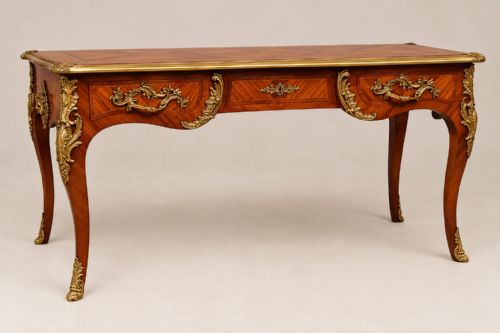
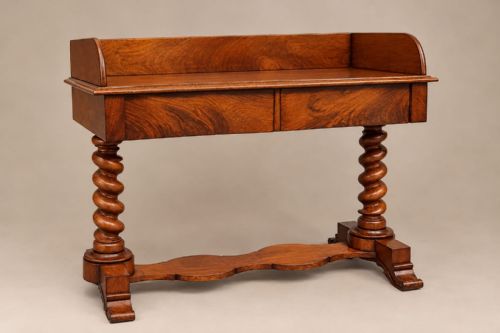
When you search for a c1880 writing table, you encounter a diverse group of nineteenth-century desks, pedestals, and bureau plat forms shaped by Victorian and revival aesthetics. These pieces range from substantial oak partners desks designed for heavy study to refined French tables veneered in kingwood and mounted with ormolu.
The version you are most likely to meet on this page is the Victorian oak or mahogany desk, alongside French influenced serpentine forms and inlaid kidney shapes. Makers of this decade utilised rich timbers like burr walnut and rosewood to create functional surfaces equipped with drawers and drop leaves.
Materials and construction
Cabinet makers of this period constructed carcases using robust timbers such as oak and mahogany, often applying decorative veneers of kingwood, burr walnut, or rosewood to primary display surfaces. These woods were frequently combined with solid brass handles, escutcheons, and leather writing inserts.
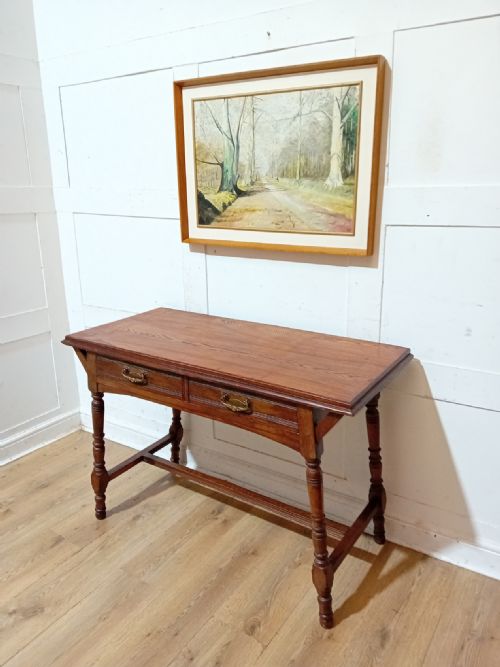
French revival pieces incorporated cast ormolu and gilt bronze mounts secured to serpentine frames, whilst Arts and Crafts examples relied on simpler ash construction. Joinery techniques ensured sturdy pedestals and drop leaf mechanisms capable of withstanding daily administrative use.
C1880 Writing Table Retail Price Guide 2026
Typical asking prices for c1880 writing table among the pieces listed under this phrase on Sellingantiques today, from the lower quarter to the upper quarter. They describe what is for sale here now, not the wider market.
This selection includes oak, mahogany, walnut, rosewood, and kingwood pieces spanning the Victorian period and various continental revival styles.
Evaluating quality and execution
The distinction between standard utility furniture and finer examples rests upon the selection of timber veneers and the precision of decorative carving. Tables featuring finely figured burr walnut, intricate mahogany inlay, or chased ormolu mounts represent a higher tier of nineteenth-century craftsmanship.
Structural integrity also dictates worth, separating robust pedestal partners desks with well-fitted drawers from simpler side tables. The sophistication of revival styling, from restrained Victorian Gothic to elaborate Louis XV curves, guides the overall character of each piece.
Liberty
The C1880 Writing Table Glossary
- Bureau plat
- A freestanding French writing table featuring a rectangular top, typically inset with leather, and one or more drawers in the frieze.
- Ormolu
- Gilded bronze mounts and decorative ornaments applied to the corners, legs, and aprons of French revival furniture.
- Partners desk
- A large pedestal desk designed with matching drawer configurations on both sides to accommodate two users facing each other.
- Bonheur du jour
- A light lady writing desk featuring a small cabinet or set of drawers superstructure on top of the main writing surface.
- Serpentine front
- A furniture front characterised by a wavy contour with a convex centre flanked by concave curves.
C1880 Writing Table: Frequently Asked Questions
What is a bureau plat?
A bureau plat is a formal French writing table that stands away from the wall, finished decoratively on all four sides.
They often display gilt bronze or ormolu mounts and serpentine wooden frames typical of Louis XV and XVI revivals.
Where should I place a writing table?
These tables function well as freestanding centrepieces in a study or library, or positioned against a wall beneath a window.
Their finished backs allow them to sit in the middle of a room without losing decorative impact.
How do I care for leather inserts?
Leather writing surfaces benefit from gentle dusting and occasional conditioning with specialised leather balms to prevent drying and cracking.
Avoid placing damp items directly onto the leather to protect the original material.
What distinguishes Arts and Crafts furniture?
Arts and Crafts pieces emphasise honest construction, visible joinery, and simpler timbers like ash rather than heavily veneered exotic woods.
This movement valued handmade qualities over mass-produced industrial ornamentation.