

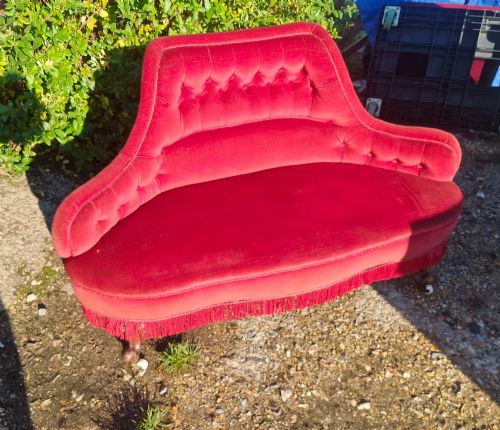
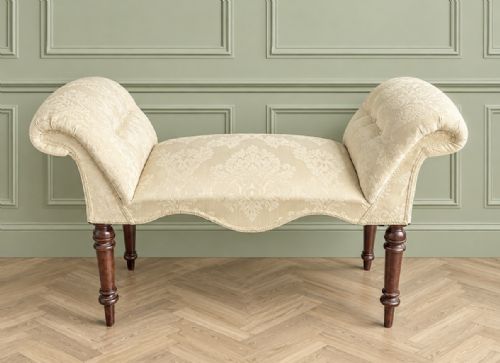
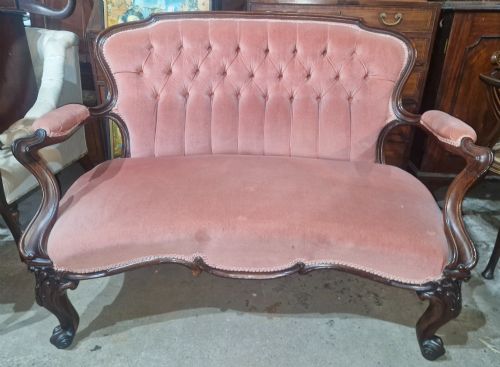


Buttoned Window Seat
A buttoned window seat brings low, comfortable seating to a bay or alcove, combining deep upholstery with robust timber frames.
Buttoned Window Seat
A buttoned window seat is a low form of seating designed specifically to sit beneath sills, appearing across the nineteenth and twentieth centuries in various regional tastes. The pieces on this page span the Victorian, Regency, and Edwardian periods, taking the form of long stools, benches, and padded settees.
The most typical examples encountered here are nineteenth-century creations in rosewood or mahogany, often featuring tailored upholstery secured with deep tufting. Makers built these forms to match specific salon or drawing room interiors, resulting in long, narrow profiles suited to architectural recesses.
Judging quality and character
Quality rests in the crispness of the timber carving and the architectural balance of the frame, where fluted legs or curved rails demonstrate proper proportion. Finer examples display carefully selected grain patterns in the rosewood or mahogany rather than relying solely on surface paint.
The execution of the upholstery defines the finish, requiring precise pleating and secure buttoning that holds its form firmly. Pieces signed by documented firms like James Shoolbred carry an inherent distinction through documented workshop standards.
Buttoned Window Seat Retail Price Guide 2026
Typical asking prices for buttoned window seat among the pieces listed under this phrase on Sellingantiques today, from the lower quarter to the upper quarter. They describe what is for sale here now, not the wider market.
Makers occasionally built these seats extra long so tired Victorian guests could stretch out fully while pretending to watch the street.
James Shoolbred
The Buttoned Window Seat Glossary
- Buttoning
- A method of upholstery where twine is pulled through the padding and secured with buttons to form a geometric grid. This technique keeps internal stuffing from shifting and creates a firm, decorative surface.
- Long stool
- A bench-like seat without a back, built long and narrow. These items often function interchangeably with window seats in period interiors.
- Fluted leg
- A column leg carved with vertical parallel grooves. It appears frequently on Regency and Victorian seating frames.
- Upholstery
- The padded and fabric-covered components of a seat. In antique pieces, this relies on traditional animal hair, webbing, and textile layers.
Buttoned Window Seat: Frequently Asked Questions
How were window seats used historically?
Historically, these seats provided practical places to sit near natural light for reading or needlework in large reception rooms.
Their elongated proportions allowed them to fit neatly into architectural alcoves and window bays without blocking views.
How do I style a window seat at home?
Position your seat beneath a low window, in a narrow hallway, or at the foot of a bed to make use of awkward spaces.
Keep the surrounding decor simple to let the historic timber frame and textile upholstery remain the visual focus.
How do I tell Victorian from Regency seats?
Regency frames often display classical elements like fluted legs and clean lines derived from neoclassical taste.
Victorian pieces tend to use heavier timbers such as rosewood and feature denser carving or more elaborate upholstery treatments.