
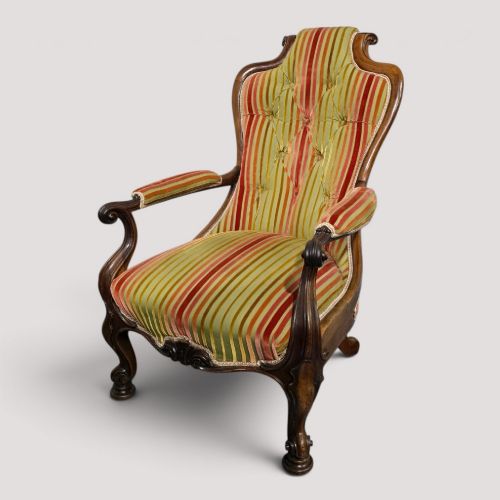
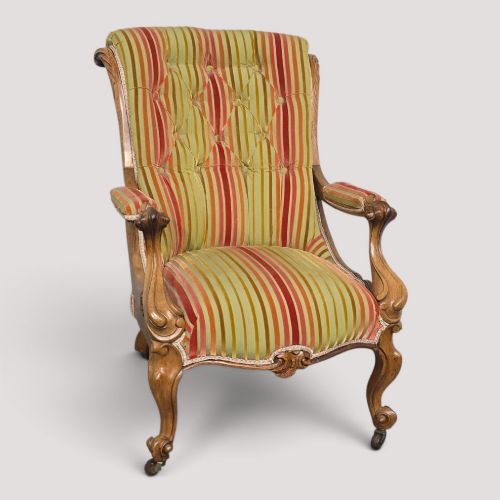
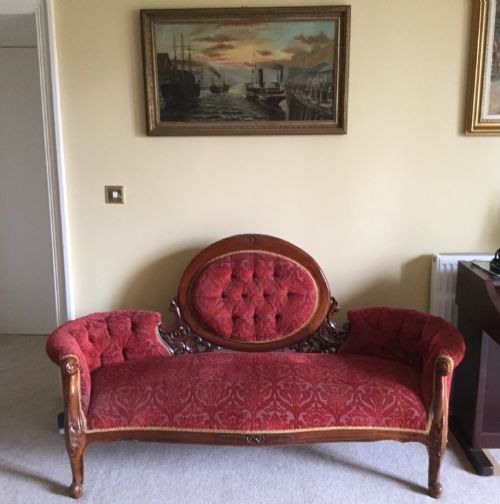
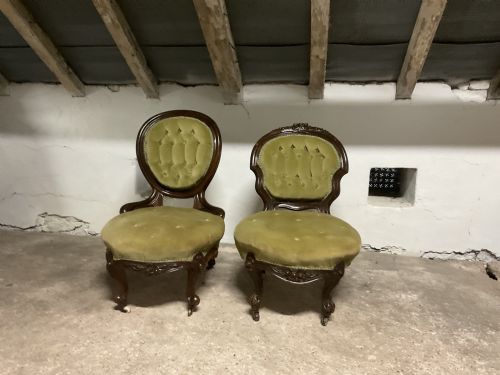
Buttoned Velvet Chair
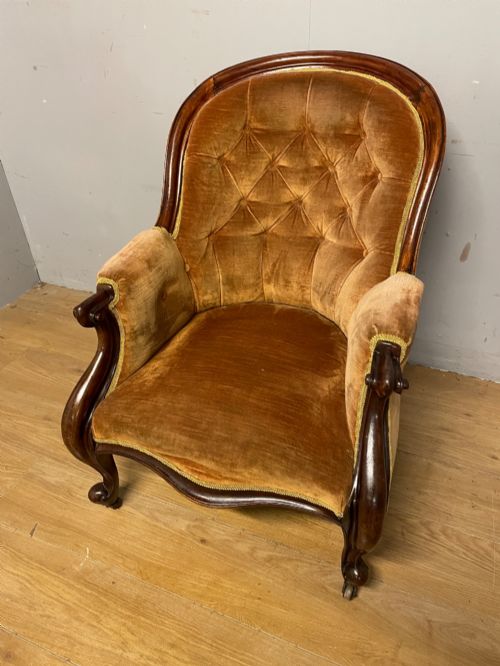
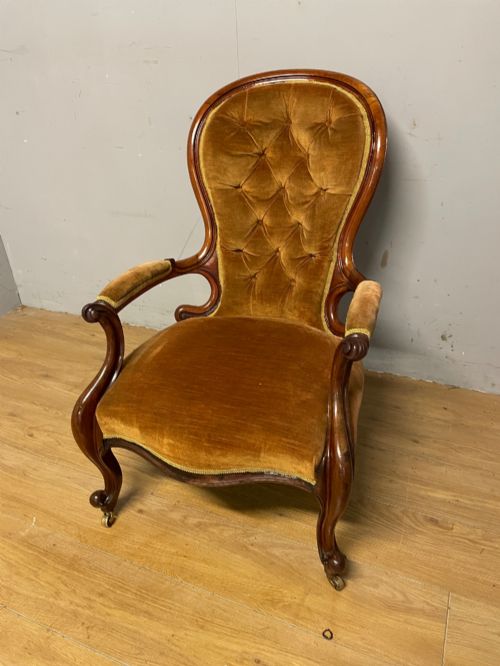
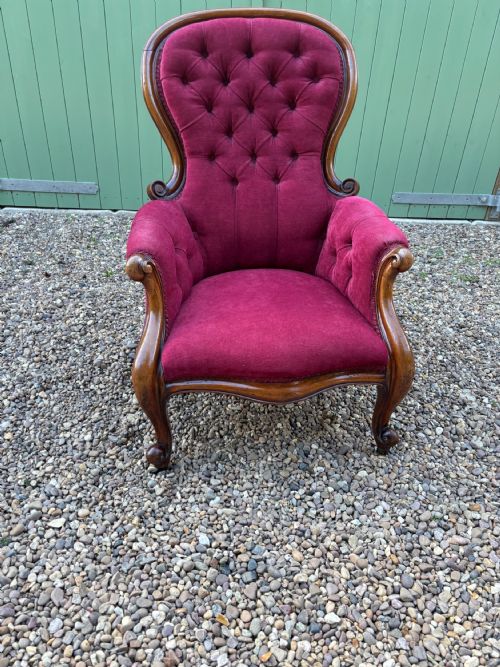
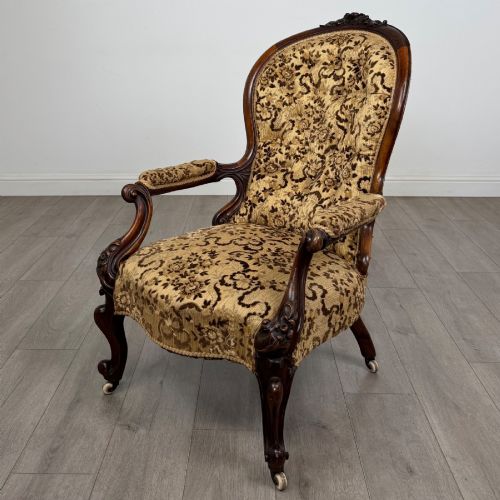
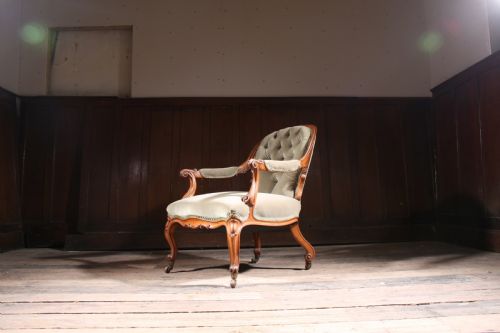
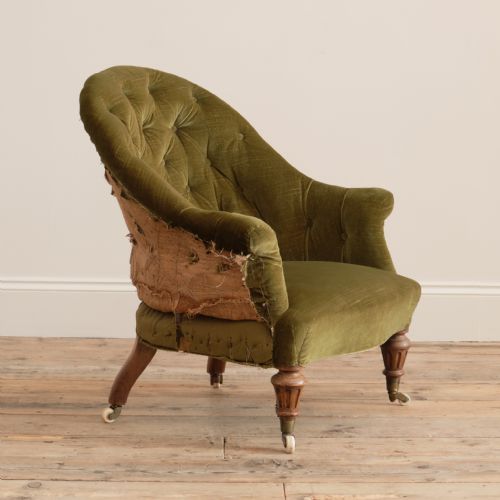
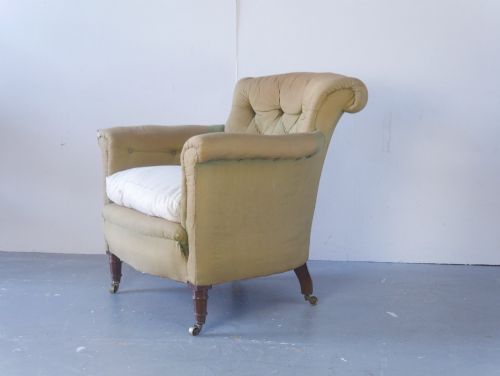
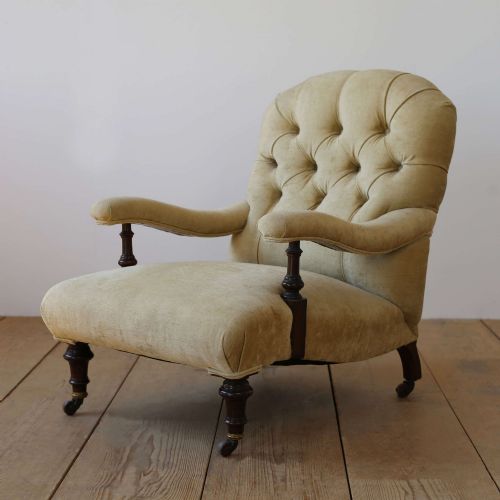
A buttoned velvet chair brings tactile warmth and deep upholstery to a room, drawing on Victorian and Edwardian forms.
Buttoned Velvet Chair
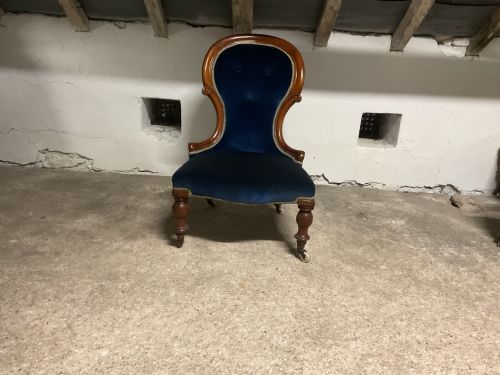
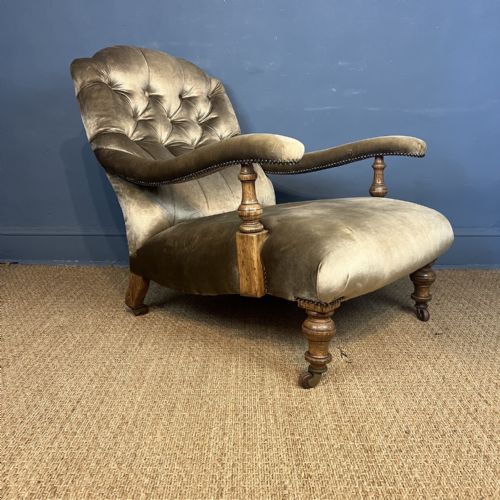
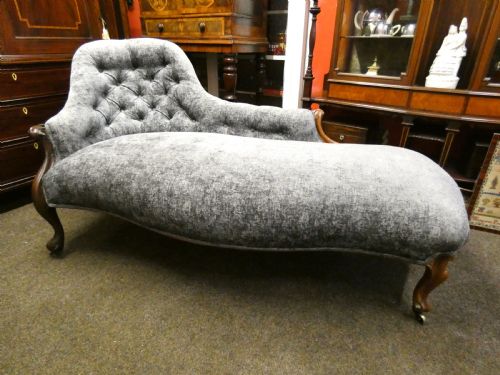
The objects span armchairs, nursing chairs, occasional chairs, and chaise longues, constructed primarily during the Victorian and 19th-century periods. Walnut, mahogany, rosewood, and hardwood frames support deep pile fabrics and soft upholstery.
Nursing chairs and low bedroom seats appear frequently, alongside library armchairs and conversation sofas. These pieces reflect the domestic seating habits of the 1850s through to the 1920s, combining turned or carved timber frames with plush textiles.
How they were made
Cabinetmakers shaped frames from dense hardwoods like mahogany, walnut, rosewood, and oak, often employing barley twist turnings, carved details, or brass framing. These timbers provided the rigid structural support necessary to bear the tension of deep upholstery.
Craftsmen applied heavy velvet and brocade textiles over sprung seat bases and webbed backs, securing the fabric with deep tufting and buttons. This method created a resilient, padded surface that held its shape under regular use.
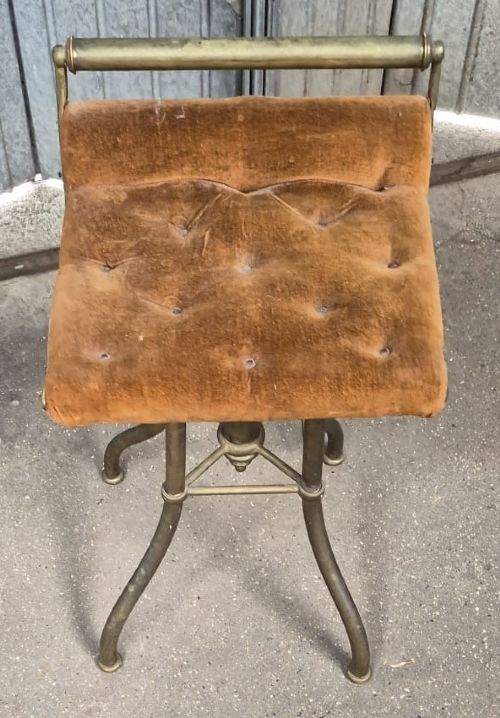
Victorian harpists enjoyed specialised brass-framed upholstered seats designed to accommodate musicians without tangling their instruments.
What varies in quality
The integrity of the timber frame dictates the baseline excellence of each piece, distinguishing solid rosewood or mahogany structures from simpler hardwood builds. Carved or turned embellishments executed with precision signal superior workshop output.
The execution of the deep buttoning and the density of the velvet upholstery determine tactile and visual success. Original frames retaining their structural rigidity and harmonious proportions stand above those with compromised timber or unsympathetic later recovering.
Gillows·Shoolbred
The Buttoned Velvet Chair Glossary
- Button back
- A style of upholstery where depressions are formed in the padding by stitching through to secure buttons at regular intervals. This technique creates a tufted surface that keeps internal stuffings evenly distributed.
- Nursing chair
- A low-seated armchair designed in the nineteenth century to allow a person to sit comfortably while tending to an infant or dressing. They typically feature low seats and supportive, high backs.
- Chaise longue
- An elongated upholstered seat intended for reclining, combining the backrest of a chair with the seat of a daybed. Nineteenth-century examples often display carved mahogany or walnut frames.
- Bergère
- An enclosed armchair with upholstered sides and back, originating in France. The frame is commonly exposed timber, paired with a soft seat cushion.
- Spoon back
- A chair back shaped like the bowl of a spoon, curved to fit the human spine. This form is characteristic of mid-nineteenth-century Victorian seating.
Buttoned Velvet Chair: Frequently Asked Questions
How do I identify a Victorian buttoned velvet chair?
Victorian examples typically feature dark timbers such as walnut or mahogany, often combined with deep pile velvet upholstery and traditional tufting. Look for characteristic nineteenth-century proportions and frame details like barley twist turnings.
Construction methods and stylistic markers from the 1850s to the 1900s help separate these pieces from later revival items. The weight of the hardwood frame also offers a reliable indicator of period origin.
Were these chairs used in bedrooms or parlours?
These seating forms served multiple domestic spaces, from formal libraries and drawing rooms to private bedrooms and boudoirs. Low nursing chairs were specifically designed for bedroom and nursery use.
Larger armchairs and library chairs belonged in reception rooms, while chaise longues and conversation sofas suited larger Victorian and Edwardian living spaces.
What is the difference between an occasional chair and a nursing chair?
Occasional chairs were lighter, moveable seats intended for intermittent use around a drawing room or parlour. They generally featured standard seat heights and decorative frames.
Nursing chairs were built much lower to the ground to facilitate specific domestic tasks. Their compact stature and supportive high backs distinguish them within nineteenth-century seating.
How should I care for vintage velvet upholstery?
Velvet requires gentle handling to preserve the pile and prevent crushing of the fibres. Regular light brushing helps maintain the nap and removes surface dust.
Keep these chairs away from direct sunlight to prevent fading of the velvet dye. Professional cleaning is recommended for any deeper maintenance.