
Buttoned Sofa
A buttoned sofa brings tactile depth to a room through deep tufting, offering firm support and classic Victorian presence.
Buttoned Sofa
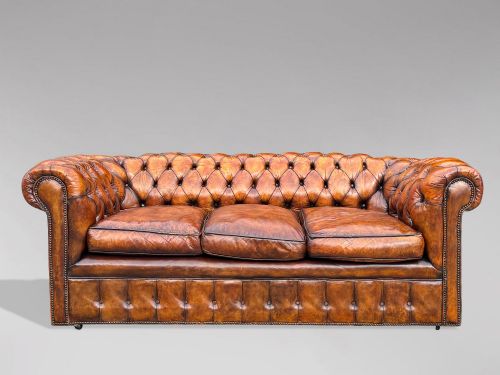
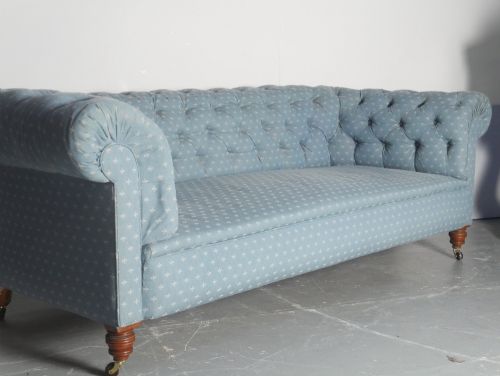
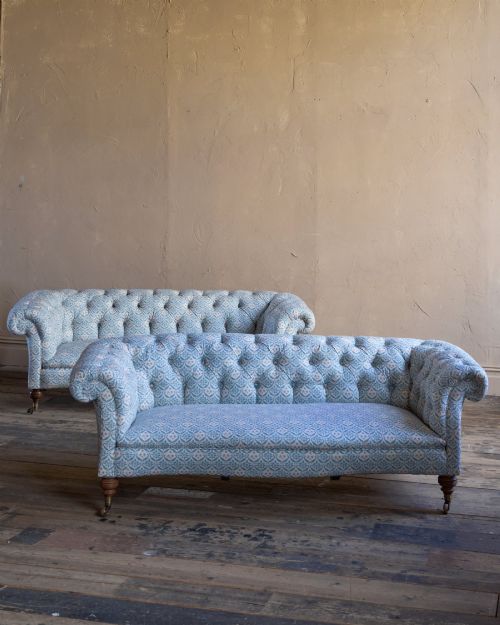
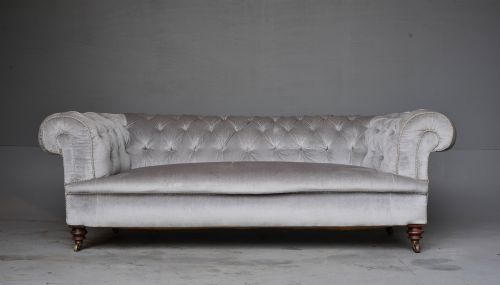
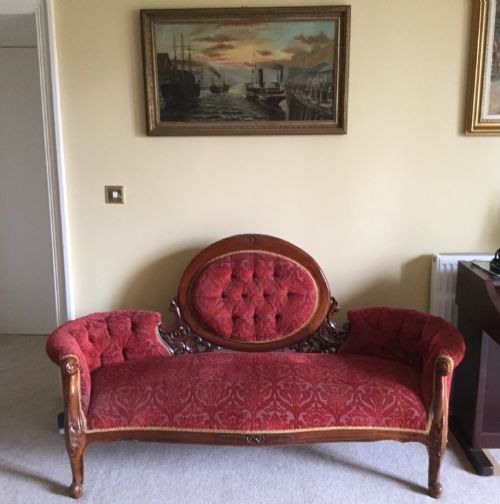
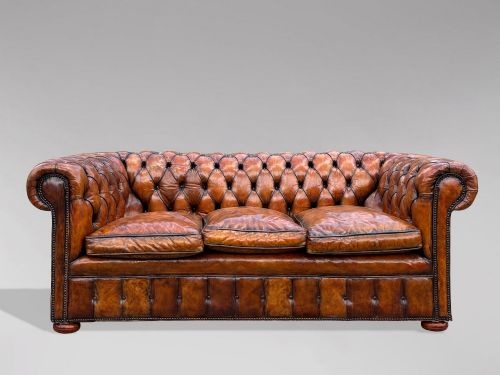
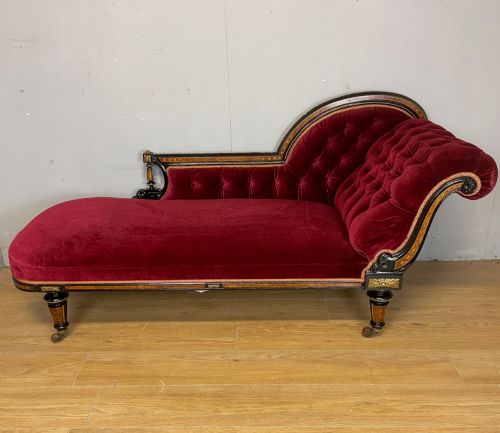
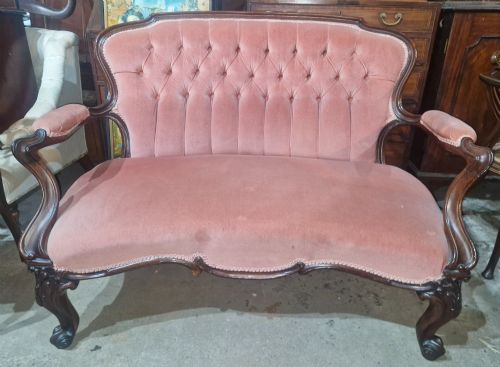
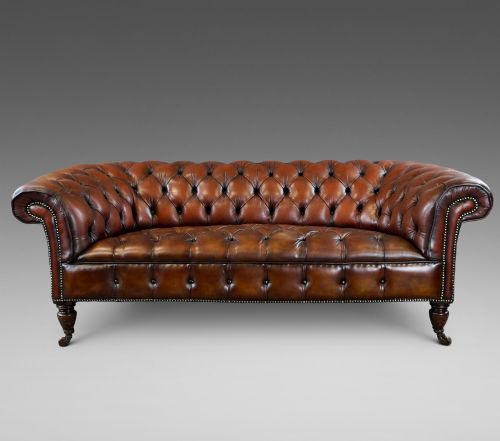
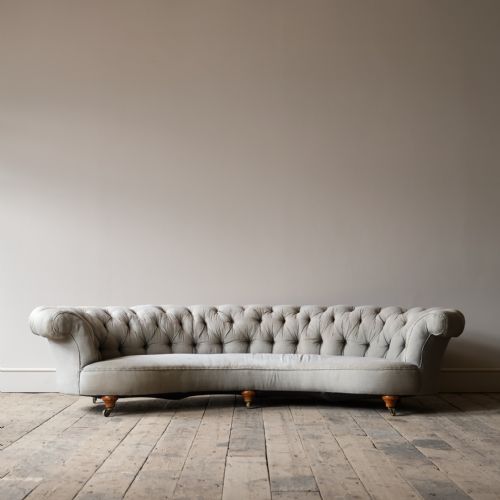
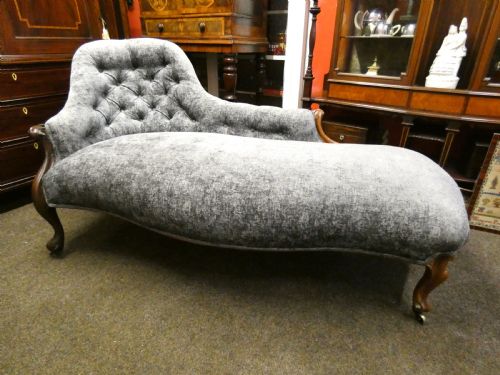
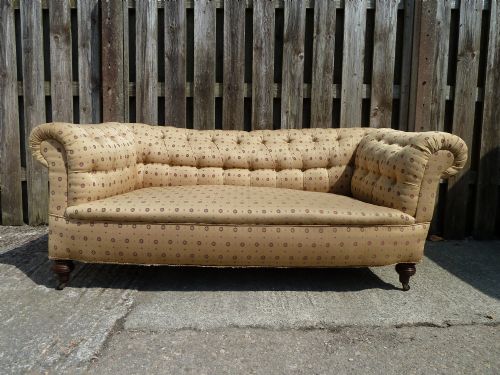
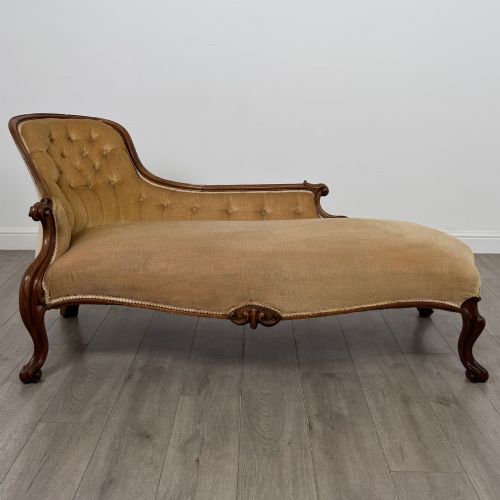
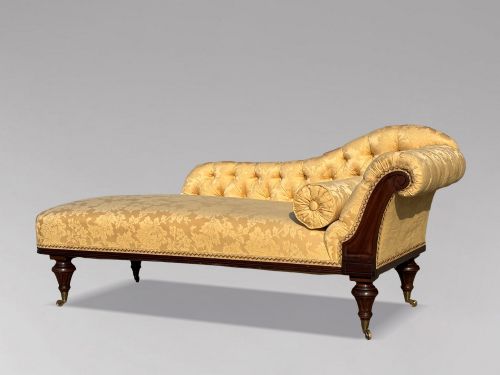
When searching for a buttoned sofa, buyers encounter substantial seating rooted primarily in the nineteenth century and the Victorian era. These pieces range from classic leather Chesterfields to carved rosewood and mahogany settees, chaise longues, and corner configurations.
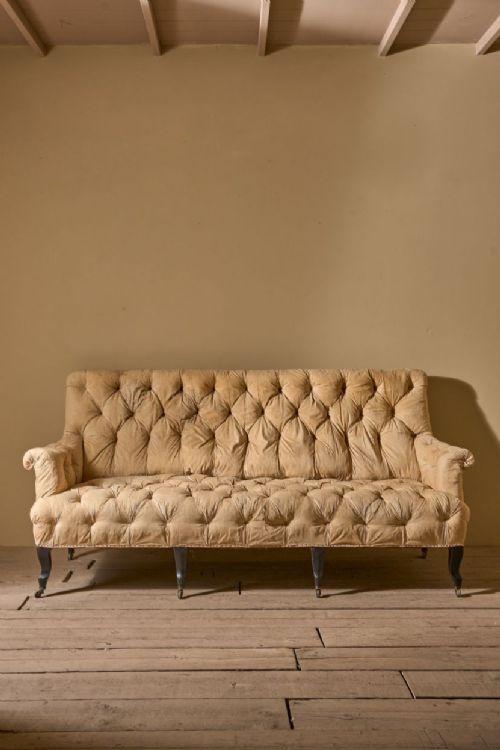
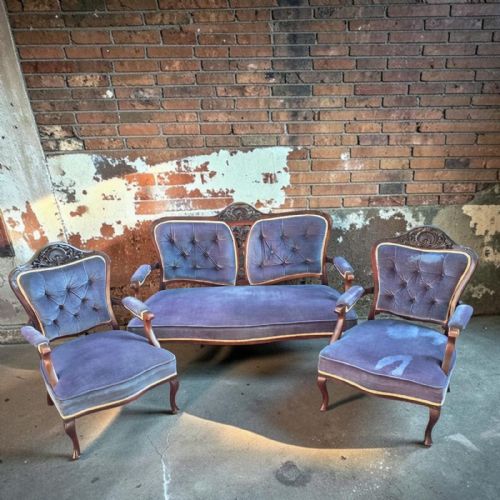
The version most commonly met on this page is the Victorian Chesterfield, upholstered in brown leather or deep pile velvet, alongside salon suites and daybeds reflecting Napoleon III, Edwardian, and Rococo Revival influences.
Materials and Construction
Timbers such as mahogany, walnut, rosewood, and ebonised wood form the sturdy structural frames, occasionally accented with brass, ormolu, or inlaid panels. Hand-tied coil springing and horsehair stuffing provide the resilient interior support characteristic of the period.
Upholstery relies on heavy materials including leather, velvet, and brocade, secured with deep buttoning techniques that create distinct geometric patterns across the backrest and seat.
Horsehair stuffing provides the traditional bounce, meaning your vintage seat retains memories of Victorian livestock.
Assessing Quality
The distinction between tiers of quality rests in the integrity of the timber frame and the precision of the upholstery work. Pieces from notable workshops demonstrate superior carving detail and robust internal spring construction that maintain structural rigidity over decades.
A higher standard of finish is evident in the selection of high-grade leathers or rich textiles, alongside meticulous hand-tufting that ensures uniform tension and lasting resilience across the cushioned surfaces.
Howard and Sons·C. Hindley and Sons·Jackson and Graham
The Buttoned Sofa Glossary
- Chesterfield
- A large, deeply buttoned upholstered sofa traditionally finished in leather or velvet with arms and back of equal height. It remains a central fixture of traditional British interiors.
- Chaise longue
- An upholstered sofa in the shape of a chair that is long enough to support the legs. These pieces typically feature a single raised end for reclining.
- Ormolu
- Gilded bronze or brass applied as ornamental mounts on furniture. This decorative technique adds metallic contrast to dark timber frames.
- Brocade
- A class of richly decorative shuttle-woven fabrics, often made with coloured silks and sometimes with gold and silver threads. It appears on mid-Victorian salon seating.
- Coil springing
- A system of interconnected metal springs secured within the seat base to provide flexible support. Hand-tied versions indicate high craftsmanship in upholstered seating.
Buttoned Sofa: Frequently Asked Questions
How do I care for a leather buttoned sofa?
Leather upholstery requires regular dusting and occasional treatment with appropriate conditioners to prevent the hide from drying out around the deep tufts.
Keeping the piece away from direct sunlight and heat sources preserves the natural suppleness and rich tone of the material.
Where were these sofas placed originally?
These seating pieces occupied prominent spaces in nineteenth-century drawing rooms, libraries, and grand hallways as both functional furniture and statements of status.
Chaise longues typically rested in private parlours or bedrooms for daytime reclining, while large Chesterfields anchored social areas.
How can I tell a Victorian piece apart?
Victorian pieces are identified by dense timber frames, substantial proportions, and specific stylistic revivals such as Rococo curves or button-backed upholstery.
Construction methods like hand-turned legs, exposed mahogany or rosewood, and traditional horsehair stuffing further help date the seating.