


Buttoned Longue
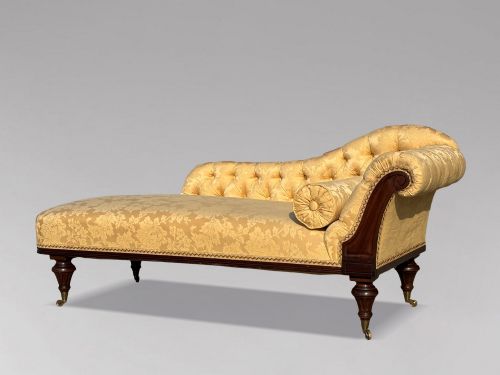
A buttoned longue brings nineteenth-century elegance into a room, offering a long, reclining seat designed for resting in an upright, semi-recumbent posture.
Buttoned Longue
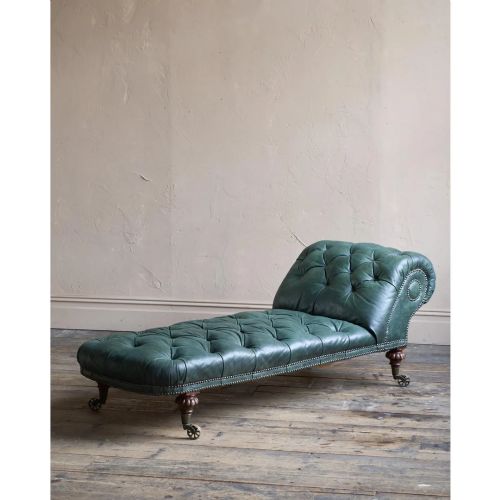
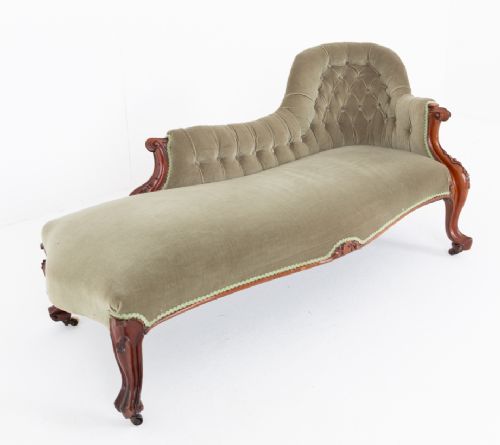
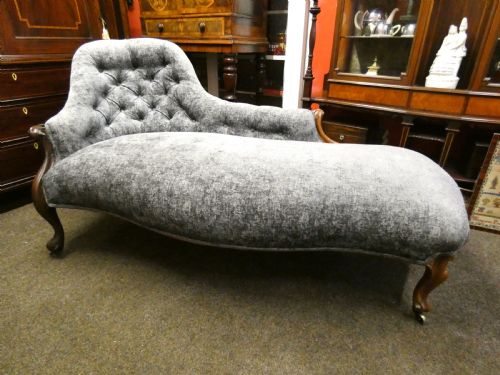
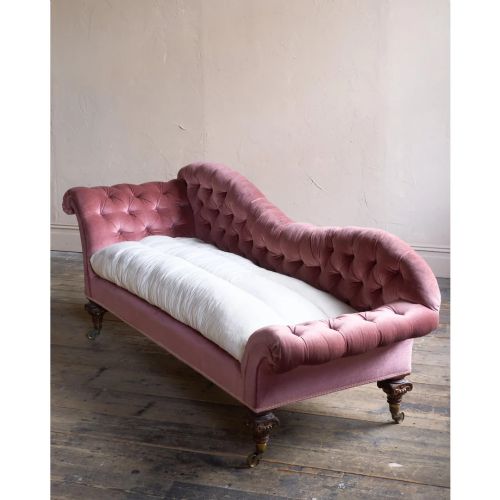
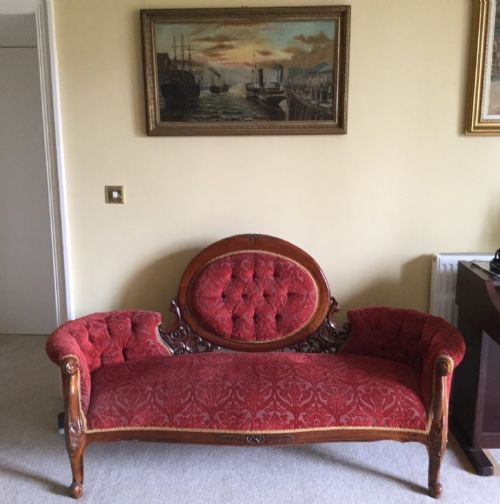
When searching for a buttoned longue, buyers encounter nineteenth-century chaise longues, daybeds, and scroll-end settees spanning the Regency, William IV, and Victorian eras. These pieces emerge from a period when domestic seating was designed for both formal display and comfortable, semi-reclined relaxation.
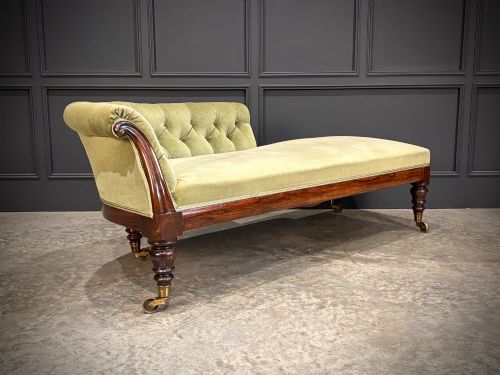
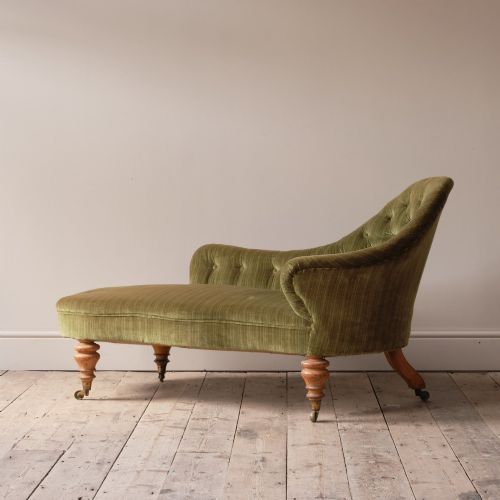
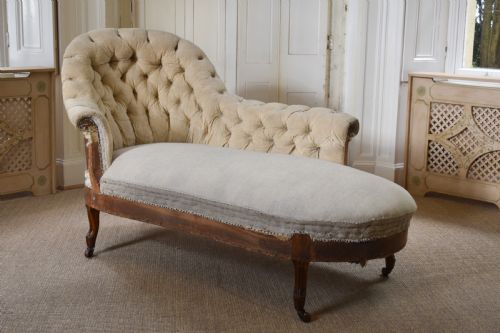
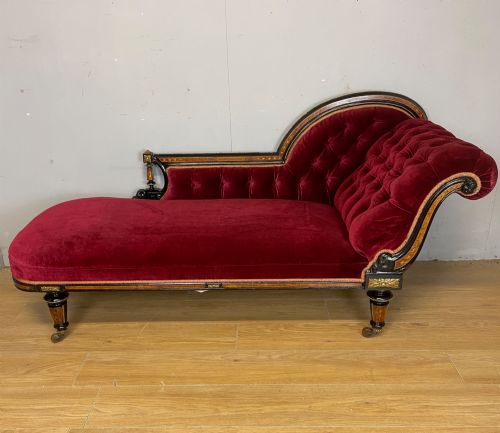
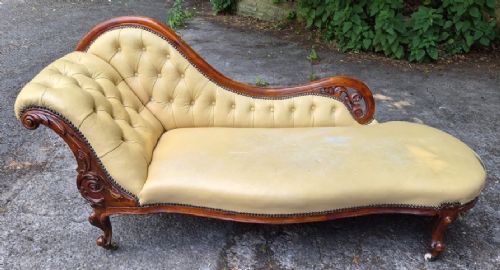
The most common examples on this page are Victorian mahogany and rosewood chaise longues featuring button-back upholstery and single scrolled ends. Makers constructed these items with generous proportions, allowing a person to stretch out comfortably while supporting the back and arm in one continuous curve.
Materials and Construction
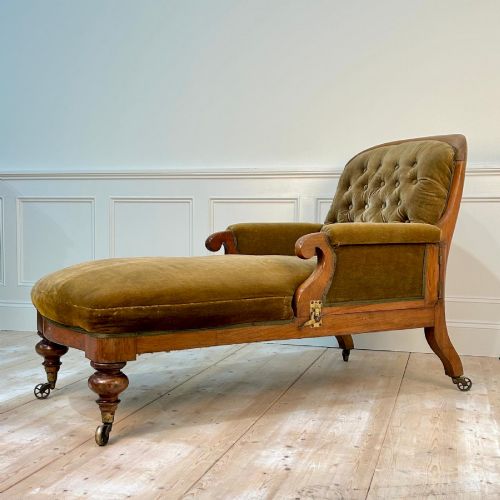
Frames rely on dense timbers such as mahogany, walnut, and rosewood, often carved with elaborate foliage or shaped with scrolled ends. Cabinet makers utilised brass fittings and occasional ormolu decoration to accent the rich grain of the wood.
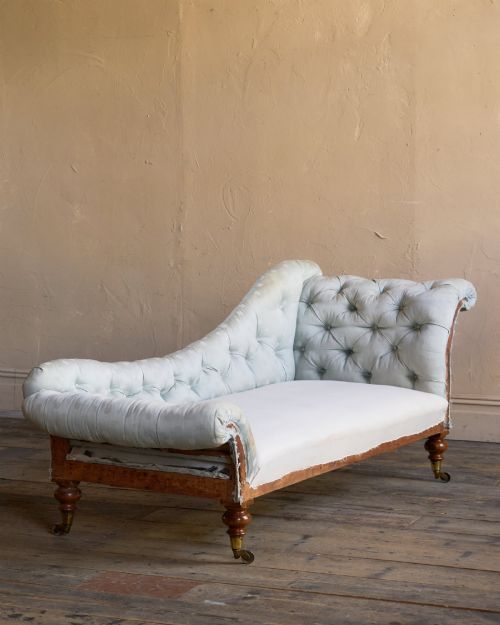
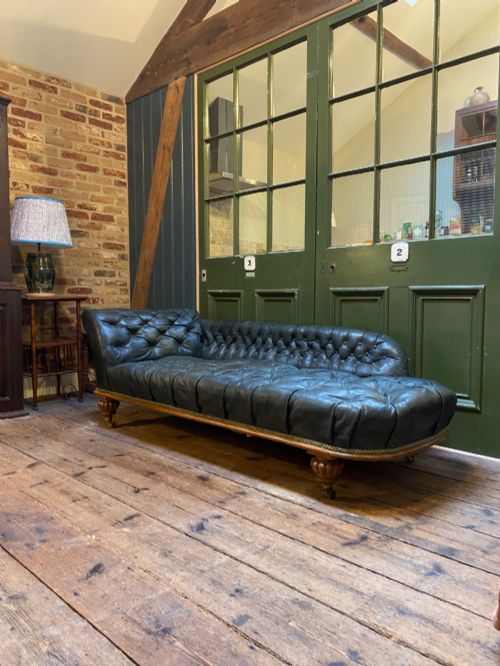
Upholstery techniques combined deep buttoning with sprung seats, finished in velvet, leather, brocade, or damask fabrics. Craftsmen secured the padding directly to the wooden frame to create a firm yet yielding surface suited for extended reclining.
Buttoned Longue Retail Price Guide 2026
Typical asking prices for buttoned longue among the pieces listed under this phrase on Sellingantiques today, from the lower quarter to the upper quarter. They describe what is for sale here now, not the wider market.
Miniature ebonised chaise longues appear among the listings, proving that nineteenth-century artisans occasionally indulged in seating specifically sized for pampered household pets.
Judging the Workmanship
Quality rests upon the crispness of the timber carving and the architectural balance of the scroll ends and column legs. Superior examples display seamless joinery and carefully matched wood veneers that integrate smoothly with the frame.
The execution of the upholstery work dictates the overall finish, particularly the symmetry of the deep buttoning and the tautness of the fabric. Finer pieces maintain original frame integrity while supporting modern reupholstery with traditional stuffing materials.
Howard And Sons·Holland And Sons·Jas Shoolbred·Miles And Edwards·H Goodall And Sons
The Buttoned Longue Glossary
- Chaise Longue
- An upholstered sofa in the form of a chair with a long seat that supports the legs. This term translates from French as long chair.
- Button-Back
- An upholstery style where depressions are formed in the padding by stitches or buttons pulled tight to the frame. This method secures the internal stuffing while creating a decorative tufted pattern.
- Scroll End
- A wooden frame terminal shaped into a sweeping, spiral scroll. It typically forms the raised headrest or arm of a nineteenth-century daybed.
- Double Spoonback
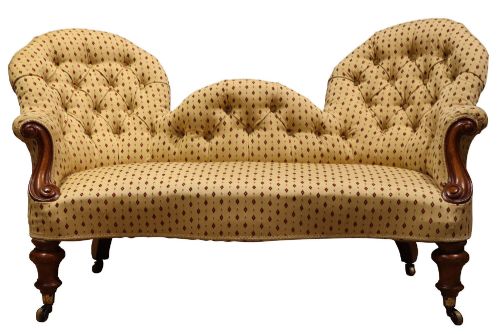
- A twin-backed chair or settee frame shaped like the bowl of a spoon. This Victorian design provides distinct lumbar support for two seated occupants.
Buttoned Longue: Frequently Asked Questions
How do I place a chaise longue in a room?
Position the piece against a long wall or floating in a spacious drawing room where the decorative back and carved frame remain visible. Ensure adequate clearance around the scrolled end so the furniture serves as both a focal point and a functional resting place.
Keep the piece away from direct sunlight to protect sensitive velvet, leather, or silk damask fabrics from fading. Pair it with a low table nearby to maintain the traditional nineteenth-century lounging arrangement.
Were these daybeds used for sleeping?
Nineteenth-century daybeds and chaise longues were primarily designed for daytime resting, reading, and receiving visitors in a semi-recumbent posture. They offered an intermediate seating option between a formal upright armchair and a full bedroom bed.
While comfortable for a brief afternoon nap, their shorter lengths and high scroll ends meant they were seldom employed for full overnight sleeping.
How do I distinguish Regency from Victorian examples?
Regency pieces dating from the early nineteenth century generally feature cleaner architectural lines, classical brass mounts, and understated mahogany or rosewood frames. Their forms often draw inspiration from classical Greek and French Empire designs.
Victorian items, produced from the mid-nineteenth century onward, tend to feature heavier carving, more exuberant scrolling, walnut or ebonised woods, and deep button-back upholstery. These later pieces embraced revival styles like Rococo and Louis XVI.
What is the purpose of the single raised arm?
The single raised scroll end supports the head and shoulders when the user reclines sideways with their legs extended along the seat. This asymmetric design eliminates the need for a full backrest along the entire length of the furniture.
By keeping one side open, the frame allows easy access to sit down from either the front or the foot of the longue while maintaining a secure barrier behind the head.