





Butterscotch Amber
Butterscotch amber pieces bring warm, opaque tones to your collection, offering distinct objects fashioned from natural resins and early plastics.
Butterscotch Amber
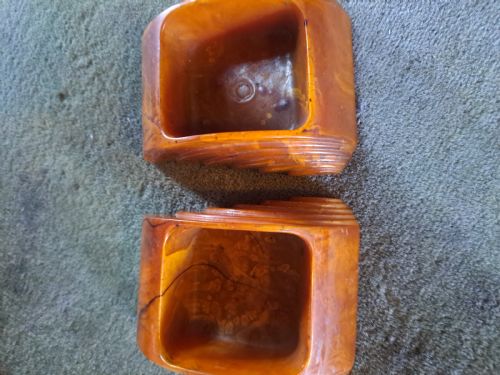
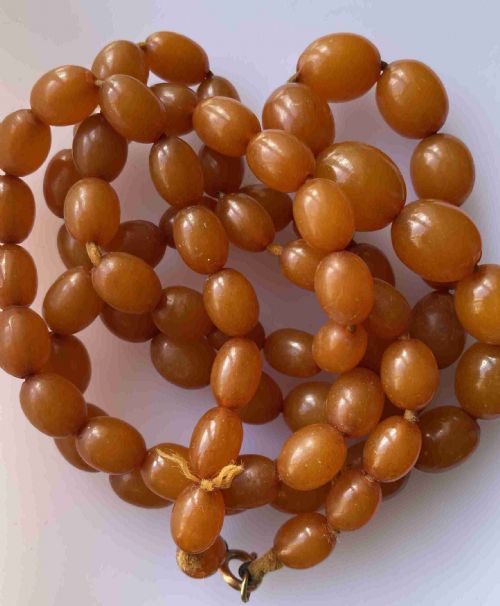
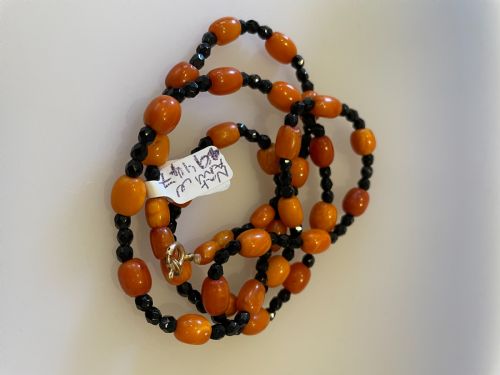
When you search for butterscotch amber, you encounter distinct items spanning the Edwardian era through the mid-twentieth century, including necklaces, desk accessories, and knife rests. The selections on this page feature both organic fossilised tree resin and early synthetic materials like Bakelite and Catalin that imitate the characteristic opaque yellow shade.
Necklaces dominate the offerings, appearing frequently as graduated bead strands alongside sterling silver jewellery sets and chrome-accented pieces. You also find desk accessories such as stamp wetters produced by Carvacraft, alongside Bohemian and Baltic folk items created during the nineteen-thirties.
The objects bridge natural materials and early industrial plastics, reflecting both Edwardian tastes and Art Deco styling. The range encompasses raw polish amber alongside manufactured phenolic resins, giving you diverse ways to bring these warm yellow hues into a home or jewellery collection.
How they were made
Makers shaped natural Baltic amber through cutting and polishing, creating graduated beads strung securely on thread alongside metal elements. Artisan workshops also utilised early plastics such as Bakelite, Catalin, and phenolic resin, moulding or carving them into desk accessories and knife rests.
Items incorporate metal components like sterling silver and chrome, pairing them directly with amber beads or moulded resin blocks. This combination of organic resin, turned plastic, and metal hardware defines the construction methods seen across the pieces.
Butterscotch Amber Retail Price Guide 2026
Typical asking prices for butterscotch amber among the pieces listed under this phrase on Sellingantiques today, from the lower quarter to the upper quarter. They describe what is for sale here now, not the wider market.
Listings span four distinct periods: the Edwardian era, nineteen-twenty, nineteen-thirty, and nineteen-fifty, incorporating both natural Baltic amber and synthetic Bakelite.
What varies in quality
Quality rests on the depth of the opaque yellow colour and the uniformity of bead graduation in necklaces. Pieces with consistent butterscotch tones and smooth, well-finished surfaces stand apart from simpler variations.
The refinement of the mounting also dictates the standard of the piece, whether seen in the secure stringing of amber beads or the precise moulding of chrome and phenolic resin desk accessories.
The Butterscotch Amber Glossary
- Bakelite
- An early thermosetting phenol formaldehyde resin used in various manufactured objects and decorative items. It appears frequently in twentieth-century jewellery and desk accessories.
- Baltic Amber
- Fossilised tree resin originating from the Baltic region, valued for its warm hues and organic inclusions. It forms the basis of many traditional necklaces.
- Catalin
- A cast phenolic formaldehyde resin that allows for brighter, more translucent colours than other early plastics. It is often utilised in Art Deco decorative items.
- Phenolic Resin
- A synthetic polymer class that includes early plastics like Bakelite and Catalin. These materials imitate natural substances through moulding and carving.
- Graduated Beads
- Beads arranged in size order, typically largest at the centre and tapering towards the clasp. This method is common in amber necklace design.
Butterscotch Amber: Frequently Asked Questions
How do I date a butterscotch amber necklace?
Dating relies on examining the manufacturing methods, hardware, and overall style associated with periods like the Edwardian era or the nineteen-thirties. Art Deco pieces often feature geometric clasps or chrome pairings.
Natural amber beads show organic variations, whereas synthetic alternatives like Bakelite display distinct moulding traits and chemical properties when tested.
Are these pieces made of real amber?
The selections include both natural Baltic amber and early synthetic substitutes such as Bakelite, Catalin, and phenolic resin. Listings specify the exact material used for each individual object.
Both organic resin and vintage plastics hold collectible value and share the characteristic warm opaque tone associated with the search phrase.
How should I care for amber jewellery?
Amber is a relatively soft organic resin that benefits from gentle handling and storage away from harsh chemicals, perfumes, and direct heat. Clean the surface gently with a soft cloth rather than abrasive liquids.
Threaded necklaces should be checked periodically to ensure the stringing remains secure between the beads.