




Butler Coffee Table
A butler coffee table brings domestic history into a modern room, offering a portable surface raised on a sturdy folding stand.
Butler Coffee Table
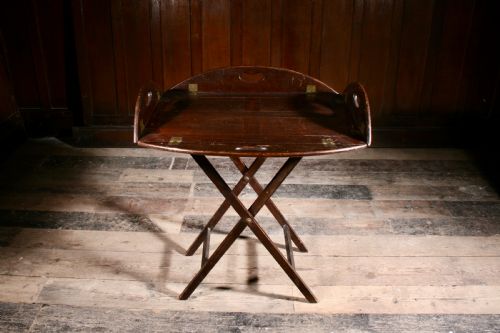
A butler coffee table originates from portable serving trays designed for domestic staff to carry provisions, which later found a permanent home on folding or fixed stands as low tables. The versions most commonly encountered on this page date from the eighteenth century through to the early twentieth century, spanning Georgian, Victorian, and Edwardian periods.
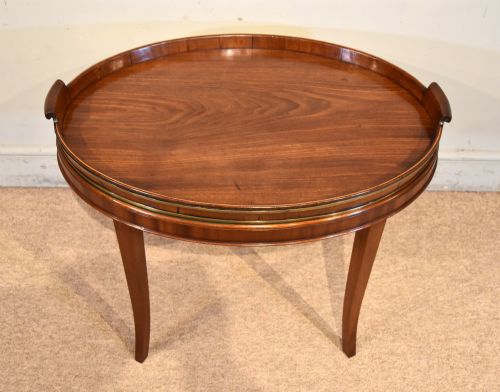
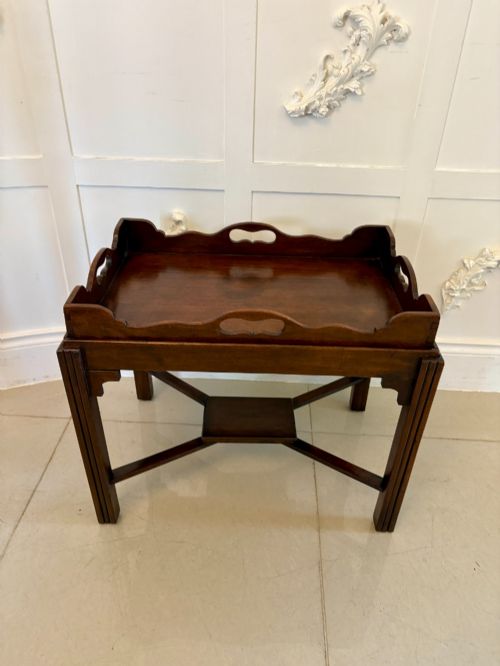
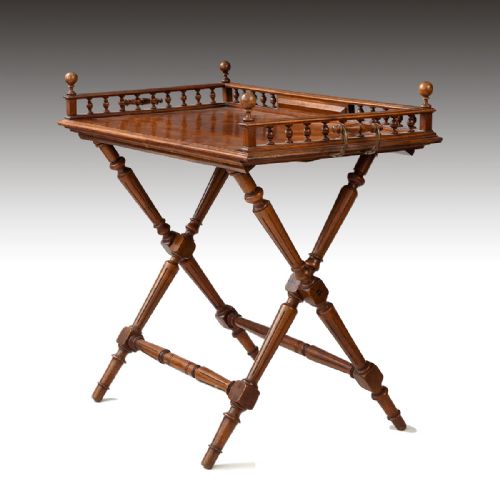
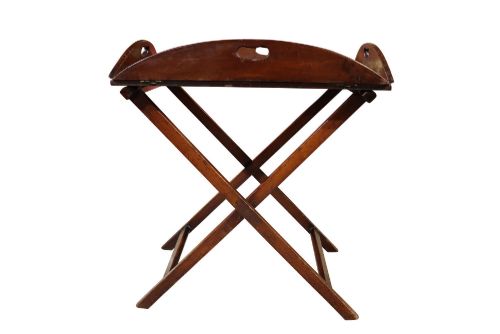
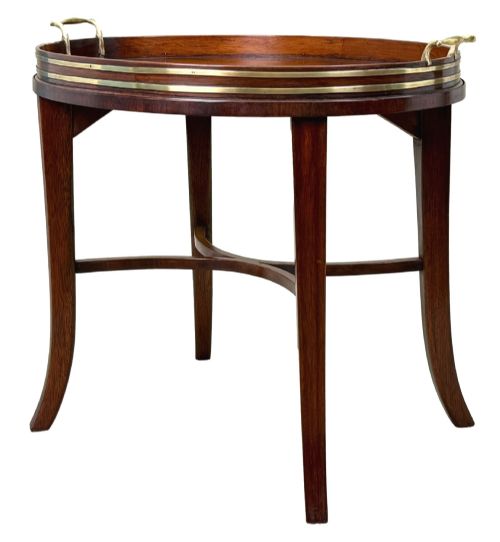
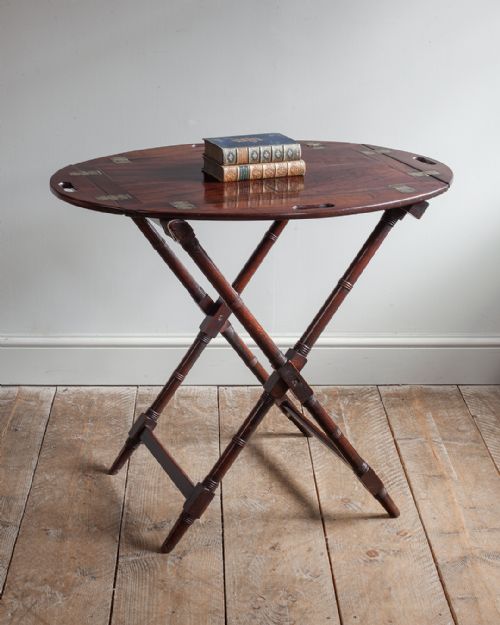
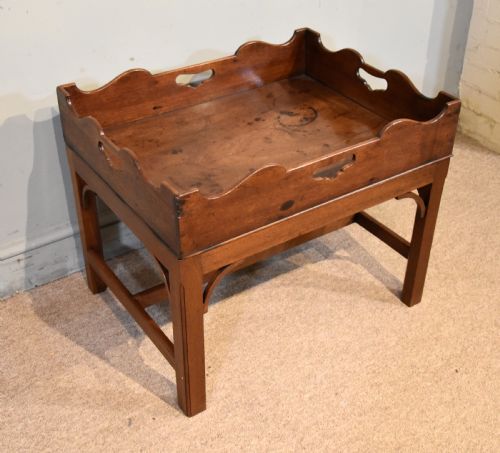
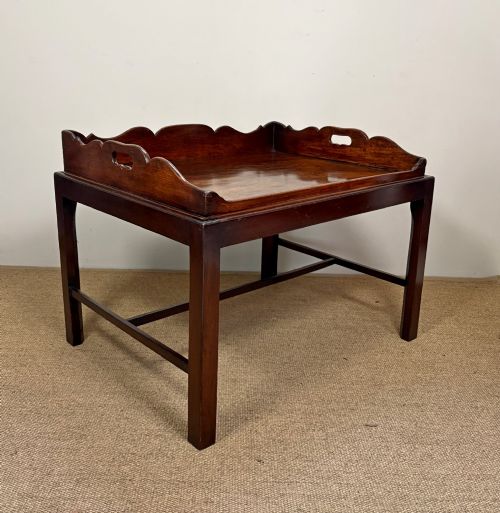
These pieces typically combine a removable tray top, often featuring shaped galleried edges or cut-out carrying handles, with a matching wooden stand. While many function as coffee tables today, their foundational forms derive from serving trays, occasional tables, and tray tables produced in mahogany, walnut, oak, and papier-mâché.
Materials and Construction
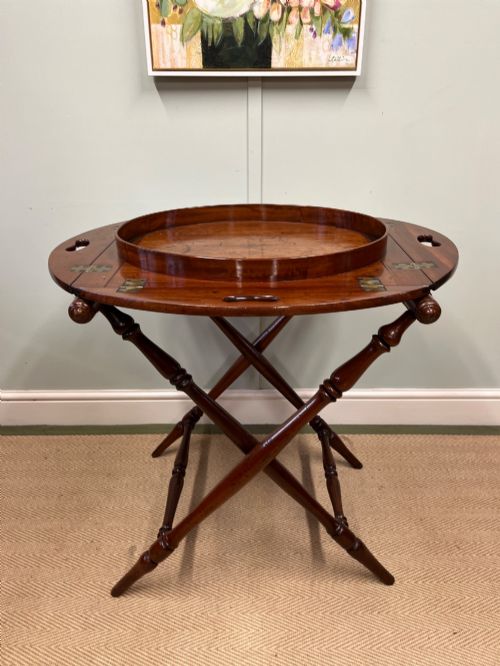
Cabinet makers constructed these trays and stands predominantly in solid hardwoods such as mahogany, walnut, and oak, occasionally incorporating satinwood or gold leaf for decorative effect. Trays frequently feature raised rims, dovetailed joints, or inlaid marquetry, supported by folding wooden X-frames or four-legged stands.
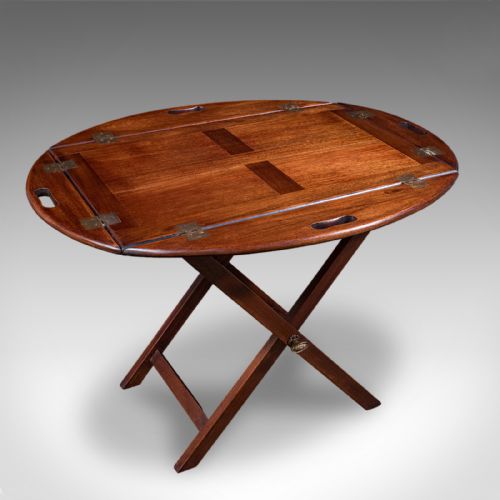
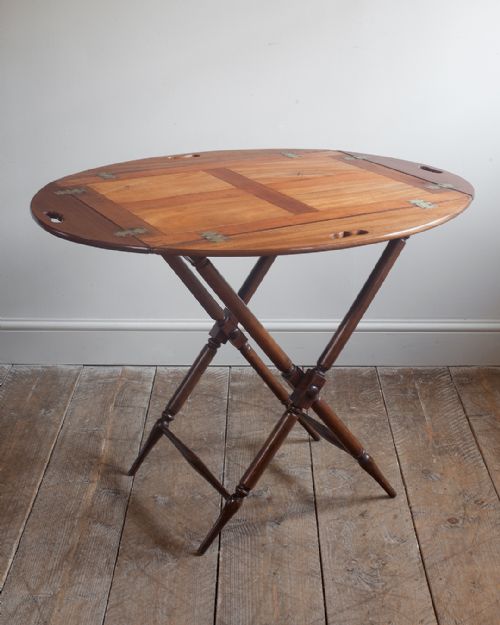
Alternative manufacturing traditions appear in papier-mâché examples, which showcase smooth painted surfaces and intricate Chinoiserie decoration. Brass hinges, corner brackets, and bound decorations frequently reinforce the folding mechanism and the junctions where handles meet the tray body.
Butler Coffee Table Retail Price Guide 2026
Typical asking prices for butler coffee table among the pieces listed under this phrase on Sellingantiques today, from the lower quarter to the upper quarter. They describe what is for sale here now, not the wider market.
Some trays retain faint cup ring scars, whispering tales of long-forgotten afternoon teas.
Distinctions in Quality
Quality rests on the selection of timber and the crispness of the carpentry, distinguishing pieces made with figured mahogany or dense walnut from simpler utility items. Original stands that match the exact proportions and timber of the tray command greater regard than later married pieces.
Surface preservation also separates examples, particularly where hand-polished patination remains intact across papier-mâché decoration or inlaid woodwork. Finer iterations display integrated handles, robust brass bound hardware, and structurally sound folding mechanisms.
The Butler Coffee Table Glossary
- Butler coffee table
- A serving tray placed upon a raised stand to function as a low table. This dual-purpose form allows the upper tray to be lifted off independently.
- Galleried edge
- A raised border fitted around the perimeter of a tray to prevent items from sliding off. These rims often incorporate shaped cut-outs to serve as handles.
- Papier-mâché
- A composite material made from paper pulp or layers of paper reinforced with glue, moulded and baked to form rigid trays. It provides a smooth base for painted Chinoiserie decoration.
- Folding stand
- A collapsible wooden support, often configured as an X-frame, designed to hold a removable tray. Original stands fold flat for storage when not in use.
Butler Coffee Table: Frequently Asked Questions
What is a butler coffee table?
A butler coffee table is a low table comprising a removable serving tray resting on a dedicated wooden stand. These pieces originated from household trays used by staff for carrying items.
Over time, many of these trays were paired with folding or fixed stands to serve as convenient living room surfaces. They retain the raised edges and carrying handles of their utilitarian past.
How do I tell an 18th century tray apart from a later one?
Eighteenth-century examples, such as those from the Georgian period, typically employ dense figured mahogany with hand-cut dovetailing and subtle patination. Later Victorian and Edwardian iterations often introduce contrasting inlay, satinwood details, or ebonised finishes.
Examination of the timber grain, fixing methods, and hardware style helps clarify the period of production. Original stands generally exhibit matching wood species and wear patterns consistent with the tray top.
Were these tables originally used for coffee?
These pieces were not originally built to serve as coffee tables, as tea and coffee drinking habits changed significantly between the Georgian era and the twentieth century. They functioned primarily as portable serving trays for dining rooms and drawing rooms.
Their low proportions and removable tops made them suitable for adaptation as coffee tables during later interior design shifts.
How do I care for a papier-mâché tray table?
Papier-mâché surfaces require protection from moisture, direct heat, and excessive sunlight to preserve the painted decoration and lacquer. Cleaning should be limited to a dry or very lightly damp cloth without abrasive chemicals.
Keeping the surface dry ensures the structural integrity of the compressed paper composite remains undisturbed over time.