




Burr Wood Writing Cabinet
A burr wood writing cabinet brings together dense, swirling natural grain and practical writing spaces for a room.
Burr Wood Writing Cabinet
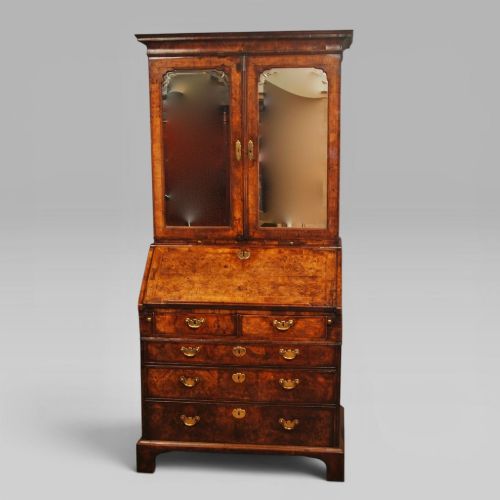
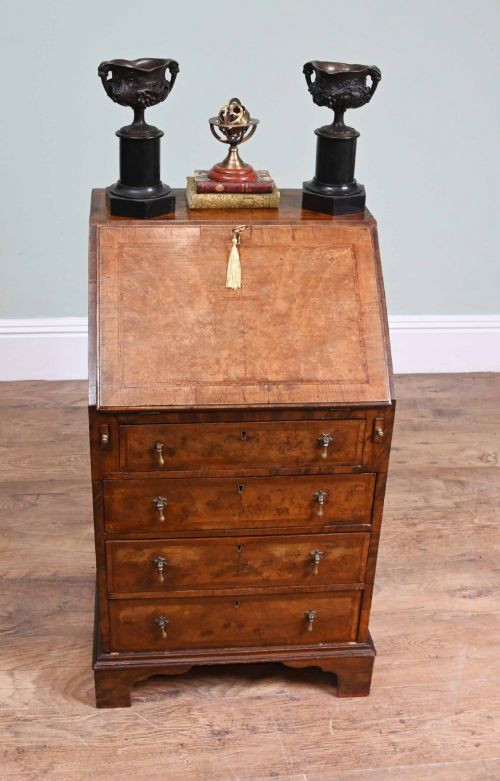
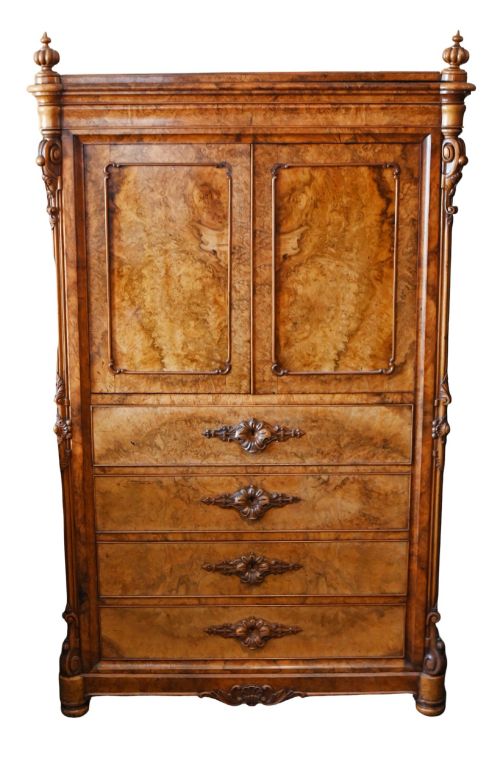
A burr wood writing cabinet is a fitted piece of furniture designed for correspondence and storage, appearing in forms such as bureau bookcases, secretaire chests of drawers, and davenports. When searching for a burr wood writing cabinet, buyers encounter examples ranging from 17th-century bureau cabinets to Victorian davenports and Edwardian writing desks.
The most common variants on this page utilise walnut, burr walnut, and burr elm, often shaped into compact writing boxes with sloping lids or pull-out writing surfaces. These pieces draw on styles from Queen Anne, George I, and the Victorian era, offering fitted interior compartments alongside display or storage sections below.
How they were made
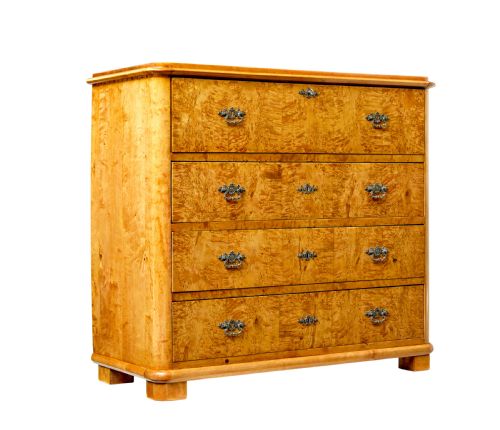
Cabinet makers constructed these pieces using solid timbers like oak or walnut as a carcase, overlaid with finely figured veneers of burr walnut, burr elm, birds-eye maple, or amboyna. The intricate, knotty patterns of the burr wood were sliced into thin veneers and arranged symmetrically to create striking patterns across the fall-fronts and drawer faces.
Internal components typically incorporate secondary woods, pigeonholes, and small secret drawers, while structural hardware relies on brass handles, escutcheons, and hinges. Writing surfaces were frequently inset with panels of leather, providing a durable and smooth plane for writing.
Burr Wood Writing Cabinet Retail Price Guide 2026
Typical asking prices for burr wood writing cabinet among the pieces listed under this phrase on Sellingantiques today, from the lower quarter to the upper quarter. They describe what is for sale here now, not the wider market.
Listings feature burr wood writing cabinets spanning the 17th, 18th, and 19th centuries, utilising walnut, burr elm, and amboyna veneer.
What varies in quality
The grade of the veneer work largely determines the distinction between ordinary and exceptional pieces, particularly the symmetry, depth, and continuity of the burr figuring across the entire facade. Superior examples display careful matching of the grain patterns where drawers meet and doors close, whereas lesser items show disjointed or patchy veneer placement.
The complexity and intactness of the interior fittings also separate standard items from the finest work, including the presence of original secret compartments, pigeonholes, and fine cockbeading around the drawers. Structural integrity in the mechanisms, such as the sliding action of pop-up davenports or the smooth drop of bureau falls, indicates the original standard of cabinet making.
Coxed and Woster
The Burr Wood Writing Cabinet Glossary
- Burr wood
- A growth deformity on a tree where grain grows in a deformed swirling pattern, producing highly decorative veneer when sliced. It yields rich, mottled patterns prized for cabinet fronts.
- Secretaire
- A piece of furniture containing a built-in writing drawer or a drop-front desk compartment. This term often describes cabinets that conceal a fitted writing space behind a drawer or door.
- Davenport
- A small compact desk featuring a sloping top and drawers opening to the side. Victorian examples often incorporate pop-up mechanisms for stationery storage.
- Bureau bookcase
- A writing cabinet combining a bureau desk base with an upper enclosed shelving or cabinet section with doors. These tall pieces often feature mirrored or panelled doors.
Burr Wood Writing Cabinet: Frequently Asked Questions
What is a burr wood writing cabinet?
A burr wood writing cabinet is a desk or bureau surfaced with knotty, highly figured veneer, designed for writing and storing papers.
These pieces range from tall bureau bookcases to compact davenports, featuring internal compartments and drop-fronts.
How do I use a bureau desk?
The front flap lowers to form a horizontal writing surface, supported by internal sliders or rule joints.
Inside, small drawers and pigeonholes organise correspondence and stationery while the main drawers below hold larger items.
Where should I place a davenport?
Because the drawers open to the side rather than the front, a davenport functions well freestanding or angled in a room.
Its compact footprint suits studies, bedrooms, or reception rooms where floor space is limited.
How do I identify the period?
Dating relies on the combination of structural wood, handle styles, carcass construction, and decorative veneer choices.
Earlier pieces from the 17th and 18th centuries show different proportions and carcase joinery compared to 19th-century Victorian and Edwardian examples.