




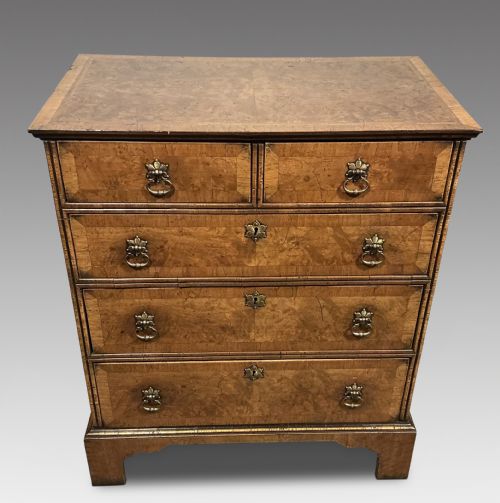
Burr Wood Dresser
A burr wood dresser or related chest offers swirling, knot-figured timber that turns practical storage into a commanding focal point.
Burr Wood Dresser
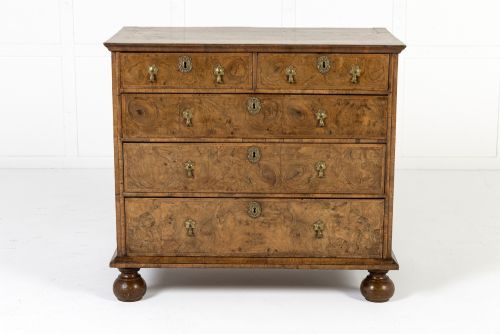
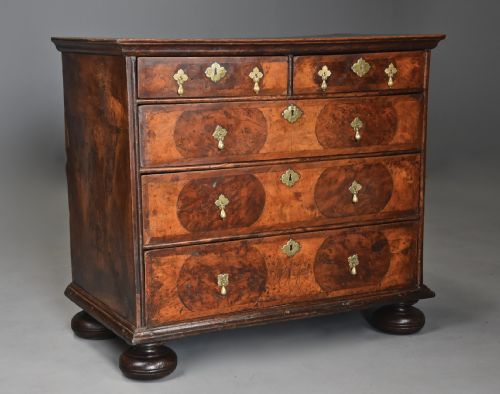
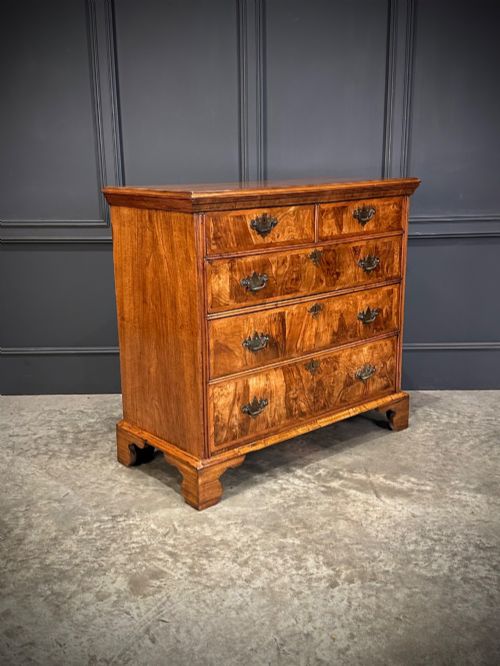
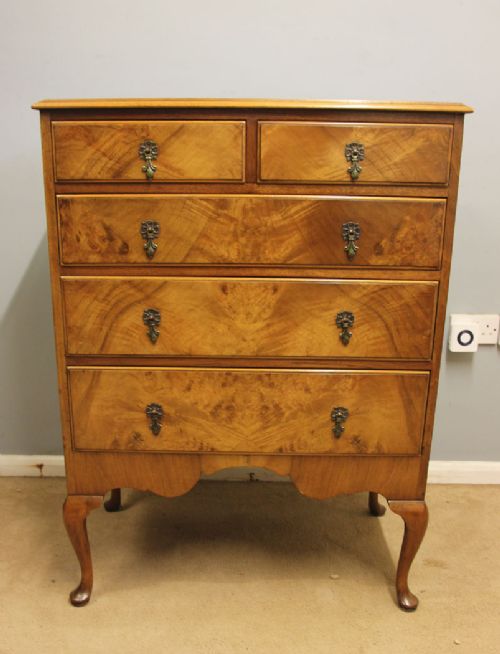
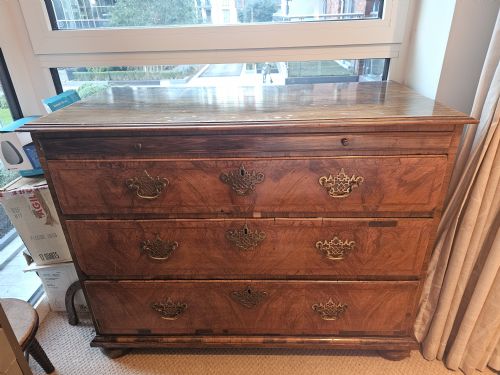
A burr wood dresser or chest of drawers brings together centuries-old cabinetmaking and the wild, organic patterns of tree growths. When searching for a burr wood dresser, buyers typically encounter walnut, elm, ash, and yew pieces spanning the seventeenth century through the twentieth century.
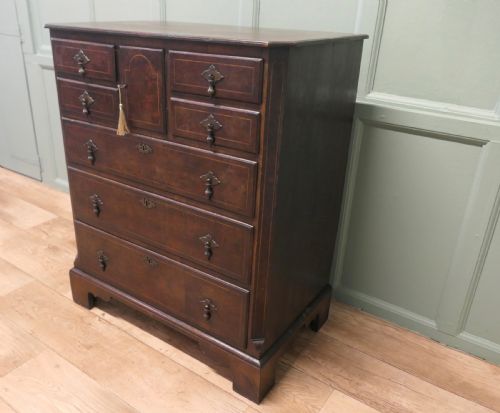
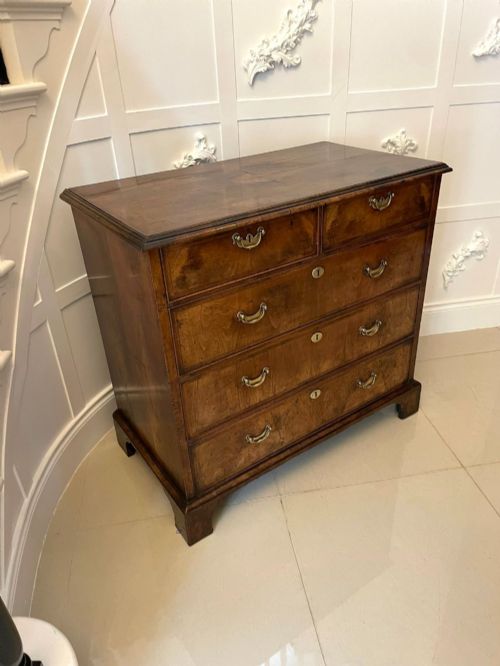
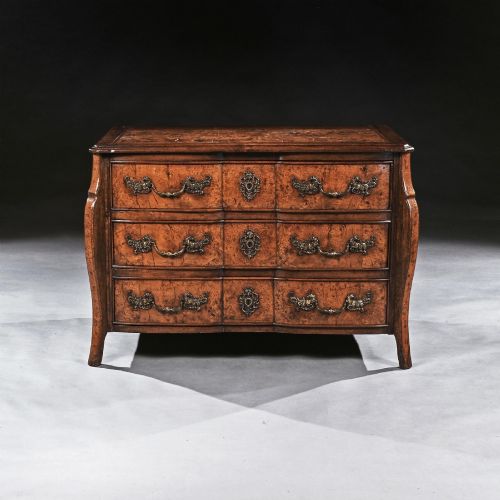
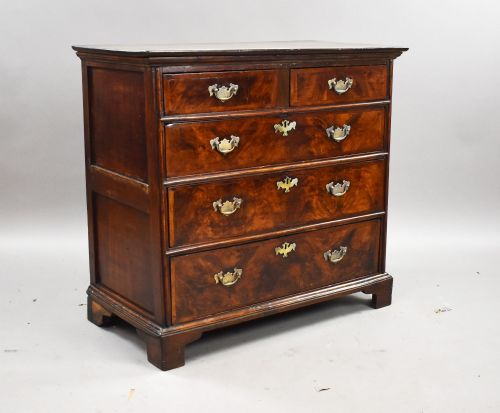
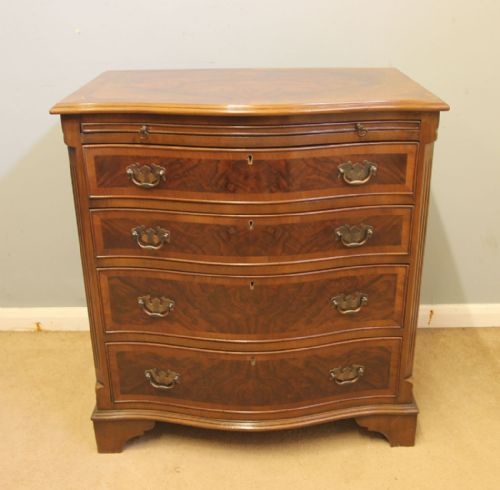
The form usually takes the shape of a chest of drawers, commode, or dresser base with deep horizontal drawers. English Georgian and William and Mary iterations appear alongside French provincial commodes and Biedermeier designs.
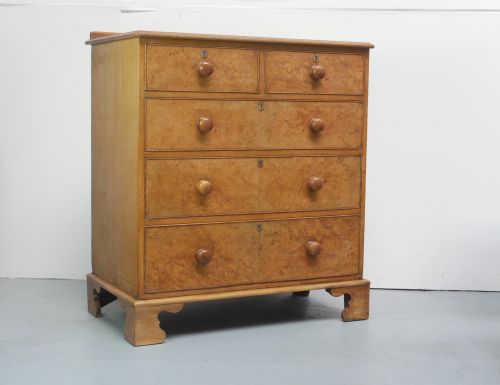
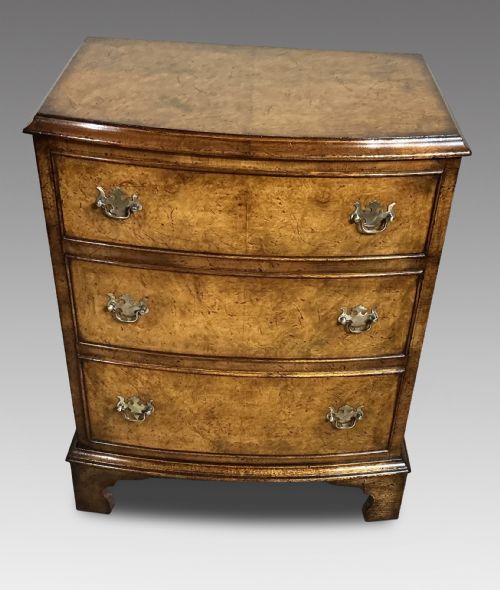
Makers utilised the irregular grain of burr timber to cover drawer fronts and top panels, creating dramatic movement and rich visual depth. These pieces served primarily for domestic storage in bedrooms and reception rooms, prized then as now for their striking natural decoration.
Materials and construction methods
Cabinetmakers constructed these pieces using solid foundational timbers like oak or pine, applying thin veneers of burr walnut, elm, ash, or yew to the primary surfaces. Cross-banding and stringing in contrasting woods often framed the figured panels to emphasise the geometric layout of the drawers.
Drawer construction relied on hand-cut dovetails, while brass drop handles and escutcheons secured the hardware to the timber. Finishing involved multiple layers of polish and oil that deepened the natural amber and brown tones of the burr grain.
Burr Wood Dresser Retail Price Guide 2026
Typical asking prices for burr wood dresser among the pieces listed under this phrase on Sellingantiques today, from the lower quarter to the upper quarter. They describe what is for sale here now, not the wider market.
Listings span the 17th century to the 1930s, featuring walnut, elm, ash, and yew timbers across English and continental styles.
Factors that distinguish quality
The richness and density of the burr figuring dictate much of the visual appeal, with tightly knotted patterns commanding greater attention than plain grain. The integrity of the veneer work and the survival of original surface patination also separate superior examples from heavily restored ones.
Proportion and scale matter greatly, as smaller chests and commodes retain a more delicate presence than standard proportions. The retention of period brass hardware and clean interior drawer construction further indicate a higher standard of original craftsmanship.
The Burr Wood Dresser Glossary
- Burr wood
- Timber harvested from tree growths or burls, yielding swirling, knotty grain patterns prized for decorative veneer.
- Veneer
- A thin slice of figured wood applied over a sturdier secondary timber base to create decorative surfaces.
- Commode
- A low chest of drawers or cabinet, frequently associated with French or continental provincial designs.
- Dovetail
- A joint formed by interlocking wedge-shaped fingers, commonly used in period drawer construction.
- Patina
- The surface sheen and softening of tone developed by wood and polish through age and handling.
Burr Wood Dresser: Frequently Asked Questions
What is burr wood?
Burr wood comes from tree excrescences where the grain grows in a deformed, swirling manner rather than straight. Cabinetmakers slice this timber into thin veneers to highlight the dramatic natural patterns on drawer fronts and tabletops.
This distinct figuring makes each piece entirely unique, as no two sections of burr growth share the same knot formation.
How do I care for a burr walnut chest?
Keep wooden furniture away from direct sunlight and strong heat sources to prevent the underlying veneer from drying or lifting. Regular dusting with a soft, dry cloth maintains the surface without the buildup of modern silicones.
Applying a traditional beeswax polish occasionally helps nourish the aged timber and preserve its natural sheen.
How do I spot period veneer work?
Early veneer work is thicker than modern machine-cut sheets and often shows slight undulating irregularities across the surface. Close inspection of the edges reveals hand-tooled joints and traditional animal glues rather than synthetic adhesives.
Secondary timbers behind the veneer, such as oak or pine, should match the expected manufacturing period of the piece.
Where were these pieces used?
These chests and dresser bases originally stood in principal bedchambers, withdrawing rooms, and parlours to store linens and personal valuables. Their decorative presence ensured they were placed in prominent areas rather than hidden away.
Today they function equally well as statement storage pieces in modern hallways, living rooms, and bedrooms.