





Burr Wood Card Table
Burr wood card tables bring rich timber figuring and clever folding leaves to any room, offering surface space that turns for games.
Burr Wood Card Table
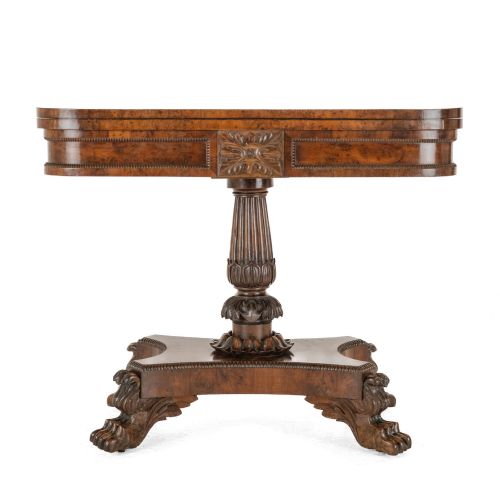
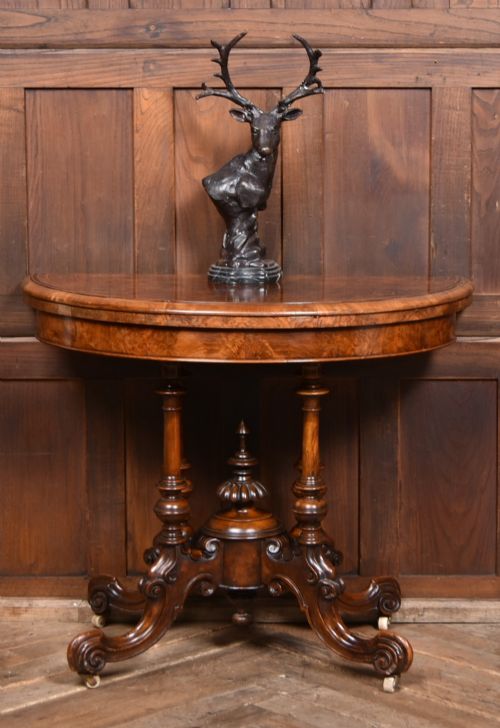
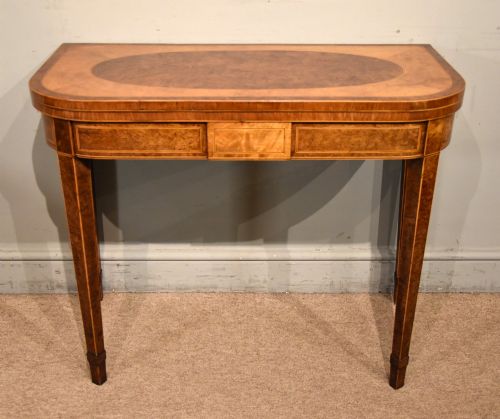
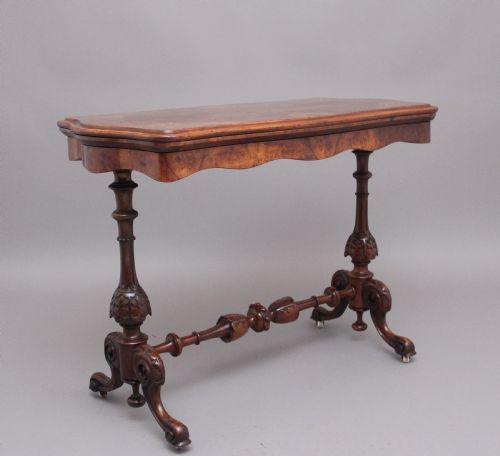
A burr wood card table is a piece of furniture designed for leisure and display, most frequently encountered here in Victorian or nineteenth-century incarnations with folding tops.
The selections span various forms such as games tables, centre tables, and side tables, reflecting the diverse domestic needs of past centuries.
Originating across periods like the George III, Regency, and Victorian eras, these tables showcase the enduring appeal of figured timber in domestic interiors.
Materials and construction methods
Craftsmen utilised timbers such as burr walnut, burr yew, and burr birch, applying veneers to showcase intricate natural grain patterns.
Decoration often involved boxwood inlay, marquetry, and Tunbridge Ware details, requiring precise handiwork alongside brass accents.
Structural stability was achieved through pedestal bases, carved supports, and folding mechanisms designed to reveal baize-lined playing surfaces.
Burr Wood Card Table Retail Price Guide 2026
Typical asking prices for burr wood card table among the pieces listed under this phrase on Sellingantiques today, from the lower quarter to the upper quarter. They describe what is for sale here now, not the wider market.
Several tables manage to double as stereoscopes or desks, proving that past generations loved furniture that could multitask.
Distinctions in quality and execution
The fineness of a burr wood card table rests on the density and symmetry of the timber figuring across the folding top.
Cabinet-making standards appear in the crispness of carved elements, the precision of boxwood inlay, and the smooth action of the pivoting or folding leaf.
Attribution to recognised workshops or the presence of elaborate marquetry and serpentine shapes elevates certain examples above standard production.
Edwards & Roberts·William Trotter
The Burr Wood Card Table Glossary
- Burr wood
- Timber harvested from tree growths that produce complex, swirling grain patterns. This highly decorative material is sliced into thin veneers for furniture surfaces.
- Fold-over
- A table top hinged to double in size when opened. This mechanism conceals a lined compartment or gaming surface underneath.
- Marquetry
- The art of applying small pieces of veneer to form decorative patterns or pictures. Craftsmen use various woods to create contrasting pictorial designs.
- Tunbridge Ware
- A type of woodworking featuring small mosaic tiles made from differently coloured woods. These tiny pieces form geometric or floral motifs.
- Pedestal base
- A central column supporting a table top, often branching into carved feet. This design allows maximum legroom for seated players.
Burr Wood Card Table: Frequently Asked Questions
How do I open the table?
Most burr wood card tables feature a top that lifts and rotates on a pivot, or folds out like a book. The swinging section rests on a gateleg or pivots over the frame to create a stable surface.
Take care when moving the top to avoid straining the original hinges. Once opened, the interior often reveals a compartment for storing playing cards and counters.
What were these tables used for?
These pieces served primarily for card games, chess, and draughts in nineteenth-century drawing rooms. When closed, they functioned as console, side, or occasional tables against a wall.
The dual purpose made them essential for entertaining guests while maintaining an elegant appearance during daytime hours.
How do I care for the veneer?
Keep the burr walnut or yew veneer away from direct sunlight and heat sources to prevent the wood from drying out. Dust regularly with a soft, dry cloth rather than using liquid polishes.
Maintaining a stable room humidity helps protect the delicate veneers and boxwood inlay from lifting over time.
How can I tell the period?
Dating relies on stylistic clues such as the form of the pedestal base, the type of wood figuring, and the presence of marquetry or inlay. Regency and George III examples often show simpler architectural lines, while Victorian pieces lean towards serpentine shapes and carved basket bases.
Examining the construction methods underneath and inside the frame provides further confirmation of the manufacturing era.