





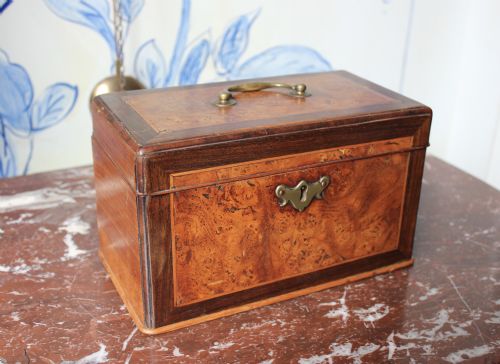


Burr Wood Caddy
A burr wood caddy brings richly figured timber and tactile luxury to a room, holding tea or small treasures with centuries of quiet elegance.
Burr Wood Caddy
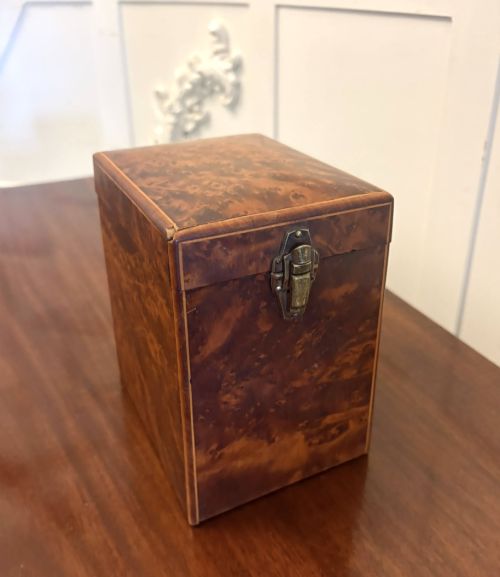
A burr wood caddy is a small lidded vessel designed to store dried tea leaves, often taking the form of a tea caddy, teapoy, or decorative box. These pieces emerge primarily from Georgian, Regency, and Victorian periods, showcasing domestic utility elevated by skilled cabinet making.
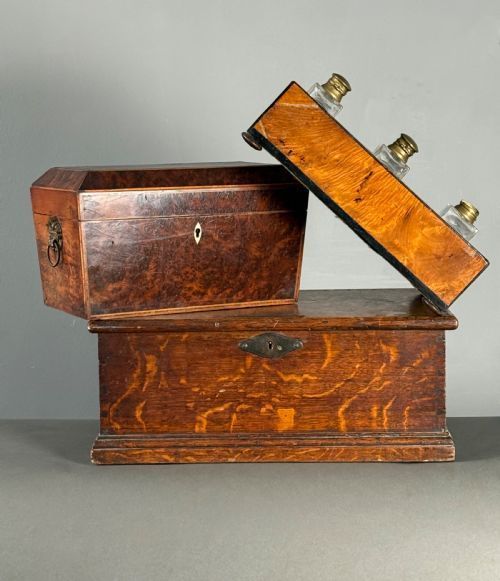
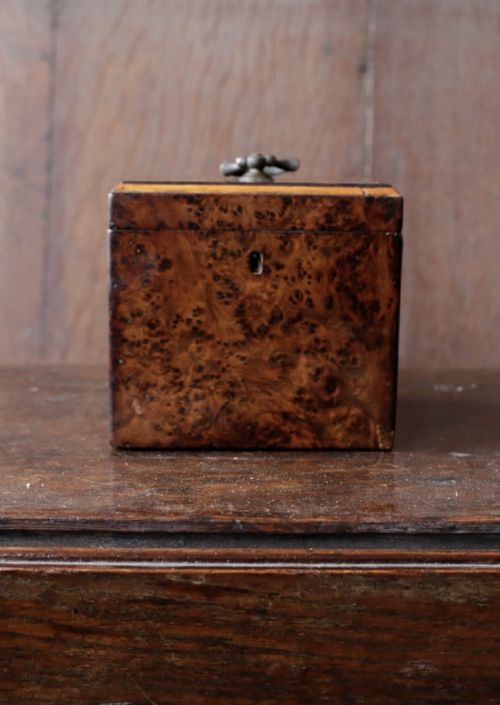
The version most commonly encountered on this page is the tea caddy, shaped as cubes, ovals, hexagons, or semi-circular boxes. Makers utilised distinct growths of timber to create swirling patterns that catch the light.
Originating across Britain, France, and Sweden, these containers reflect changing social rituals around tea consumption. They survive as compact cabinets of curiosity that sit easily upon side tables and desks.
How they were made
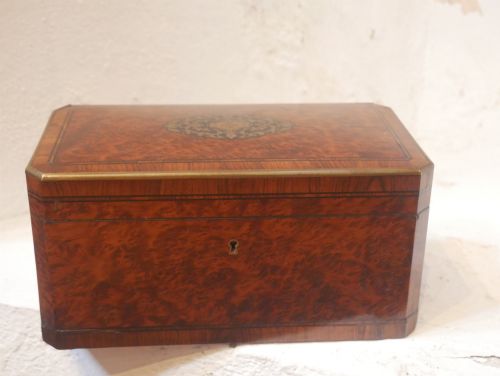
Craftsmen built these vessels using solid woods or pine carcases veneered with highly figured slices of burr yew, burr maple, burr elm, burr thorn, amboyna, walnut, and satinwood. The growth knots in the timber created complex, swirling grain patterns that demanded precise sawing and matching.
Construction frequently incorporated contrasting inlay, marquetry, and banding in light and dark woods to frame the main panels. Internal fittings often included mixing bowls, secondary lids, and compartments lined for keeping tea fresh.
Metal elements such as brass hinges, escutcheons, handles, and lock plates provided functional security and decorative contrast. Bone and mother of pearl details sometimes appeared in small inlay motifs or key escutcheons.
Burr Wood Caddy Retail Price Guide 2026
Typical asking prices for burr wood caddy among the pieces listed under this phrase on Sellingantiques today, from the lower quarter to the upper quarter. They describe what is for sale here now, not the wider market.
Listings feature burr wood caddies from the 18th, 19th, and early 20th centuries, spanning Georgian, Regency, William IV, Victorian, and Napoleon III styles.
What varies in quality
The distinction between tiers rests upon the choice of timber figure and the harmony of its arrangement across the surfaces. Dense, symmetrical burr patterns hugging all sides demand greater skill than plain timber or interrupted grain.
Tahan
The Burr Wood Caddy Glossary
- Burr wood
- Timber taken from a tree growth or knot where the grain has grown in a deformed, swirling mass. This produces highly decorative patterns prized by cabinet makers.
- Teapoy
- A larger tea caddy mounted on a central pillar with feet, or a standalone table designed to hold tea canisters. These pieces often doubled as small work tables.
- Escutcheon
- A flat plate of brass or bone surrounding a keyhole. It protects the surrounding wood from wear and adds a decorative focal point.
- Marquetry
- The art of applying pieces of veneer to a structure to form decorative patterns and pictures. Makers used contrasting woods to create geometric designs on the lids and sides.
Burr Wood Caddy: Frequently Asked Questions
What is a burr wood caddy used for today?
While originally designed to lock away expensive tea leaves from household servants, these boxes now serve as decorative containers for modern trinkets, jewellery, or desk accessories. Their compact size makes them versatile display pieces for sideboards and bookshelves.
Collectors also appreciate them as standalone sculptures of woodcraft that introduce natural texture and historic warmth into contemporary interiors.
How can I tell the difference between periods?
Georgian and Regency examples tend to feature geometric shapes like cubes, ovals, and hexagons with disciplined marquetry and yew or satinwood veneers. Victorian pieces often employ exotic timbers like amboyna and heavier proportions suited to mid-nineteenth-century tastes.
Examining the internal construction, hinges, and lock mechanisms helps confirm the era of manufacture alongside the prevailing furniture styles of the time.
Are these boxes missing their original interiors?
Many surviving examples have lost their internal crystal mixing bowls or secondary foil-lined tea canisters over the centuries. This is a common aspect of their long history of use and adaptation.
Buyers often find interiors modified for general storage, though complete setups with original matching lids remain desirable survivals.
How do I care for burr wood?
Burr wood benefits from stable room temperatures away from direct sunlight and radiators, which can dry out ancient veneers. Occasional gentle dusting with a soft, dry cloth preserves the polished surface.
Avoiding excessive moisture and harsh cleaning products ensures the historic polish and delicate wood grains remain stable for decades to come.