

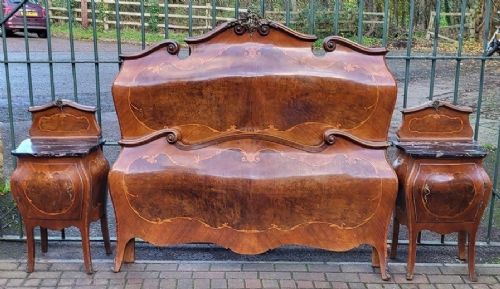
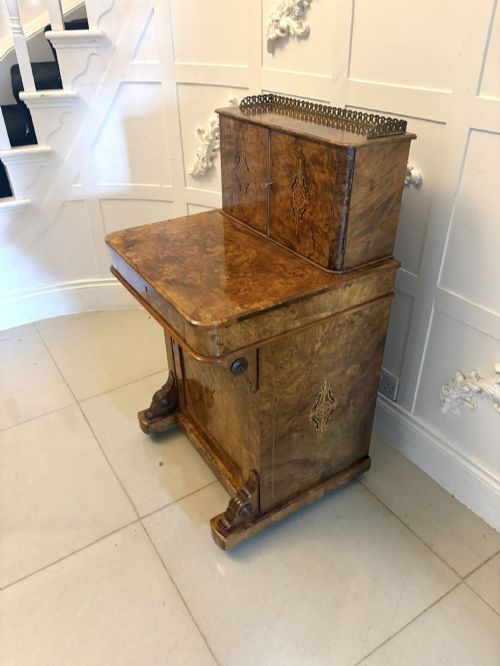
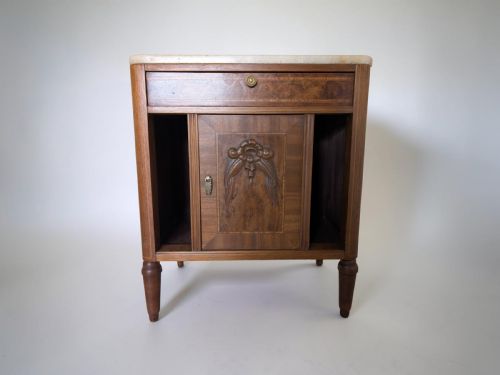


Burr Walnut Table Top Cabinet
These burr walnut table top cabinet examples and related pieces offer remarkable figured timber and compact utility, satisfying any desk or tabletop.
Burr Walnut Table Top Cabinet
Buyers seeking a burr walnut table top cabinet encounter a focused selection of compact Victorian and earlier forms, alongside related writing desks, credenzas, and music boxes sharing similar materials. These pieces range from 18th-century escritoires to 19th-century davenports with cabinet tops and miniature apprentice chests.
The material identity centres on figured burr walnut, frequently paired with inlaid wood, brass, leather, and mirror glass. Pieces spanning the 18th century through the 1920s demonstrate how cabinetmakers applied these rich veneers to tabletop formats, writing surfaces, and bedside furniture.
Materials and construction methods
Makers constructed these cabinets using solid walnut foundations overlaid with highly figured burr walnut veneers to create striking surface patterns. Wood inlay, brass mounts, and occasional marble tops completed the exterior ornamentation.
Internal configurations incorporate leather writing surfaces, fitted stationery compartments, and small drawers. Structural joins rely on traditional cabinetmaking techniques appropriate to the 18th and 19th-century periods.
Burr Walnut Table Top Cabinet Retail Price Guide 2026
Typical asking prices for burr walnut table top cabinet among the pieces listed under this phrase on Sellingantiques today, from the lower quarter to the upper quarter. They describe what is for sale here now, not the wider market.
Object forms on this page include davenports, bedside cabinets, credenzas, music boxes, and miniature apprentice chests of drawers.
Distinctions in craftsmanship and finish
The visual impact of the burr walnut veneer dictates much of the distinction between pieces, particularly the symmetry and depth of the grain patterns across the primary surfaces. Finer examples display meticulous matching of the veneer figures across drawers and fall fronts.
Integration of secondary materials such as brass mounts, fine wood inlay, and fitted leather interiors reveals the level of ambition in the workshop. The precision of joinery in miniature drawers and pop-up mechanisms further separates standard items from exceptional ones.
The Burr Walnut Table Top Cabinet Glossary
- Burr walnut
- A veneer sliced from the gnarled growth of a walnut tree, prized for its swirling, intricate grain patterns. It provides the primary decorative surface on these cabinets.
- Escritoire
- A small writing cabinet featuring a fall-front or sloping lid that conceals internal compartments. Eighteenth-century examples represent the earlier end of this form.
- Davenport
- A compact writing desk incorporating a sloping desktop and a set of side drawers. Victorian iterations frequently include upper stationery cabinets.
- Inlay
- The technique of embedding contrasting woods or materials into the walnut surface to form decorative motifs. This ornamentation appears across many Victorian pieces.
- Tabernacle
- A central architectural feature or compartment within a desk interior, often revolving in specific tabletop escritoire designs.
Burr Walnut Table Top Cabinet: Frequently Asked Questions
What is a burr walnut table top cabinet?
These items are small-scale furniture pieces veneered in highly figured burr walnut, designed to sit on larger tables or desks.
They encompass compact writing desks, tabletop escritoires, and miniature drawer chests originating primarily from the Victorian era and earlier centuries.
How were these small cabinets used?
Original owners utilised them for storing correspondence, writing letters, and keeping valuable documents secure in domestic settings.
Tabletop formats allowed individuals to write or organise papers without requiring a full-sized freestanding desk.
How do I date a burr walnut cabinet?
Dating relies on observing construction methods, internal drawer dovetails, hardware styles, and the overarching design period such as Victorian or 18th century.
Materials like original leather inserts and specific veneer thicknesses also offer clues to the decade of manufacture.
Where should I place one at home?
These compact pieces fit well on top of sideboards, large tables, or sturdy chests where the figured wood grain remains visible.
Their smaller dimensions allow them to function as decorative display surfaces or practical stationery holders in living rooms and studies.