





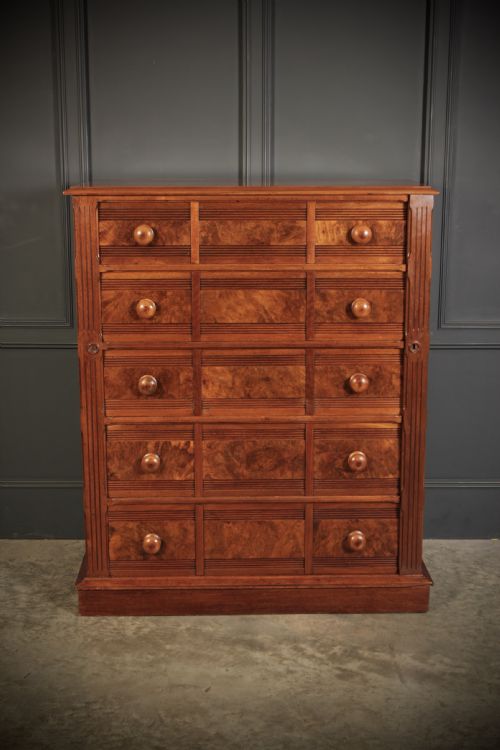


Burr Walnut Drawer Units
Burr walnut drawer units bring warmth and striking grain patterns to a room, ranging from compact bedside cabinets to full chests.
Burr Walnut Drawer Units
When you search for burr walnut drawer units, you enter a field dominated by chests of drawers, bookcases with integrated drawers, and compact cabinets. These pieces span several centuries, reaching from the 18th century through the Victorian era into various revival periods of the early 20th century.
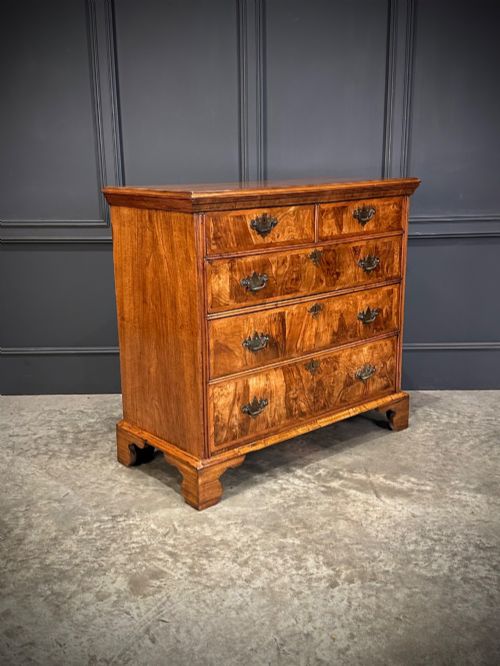
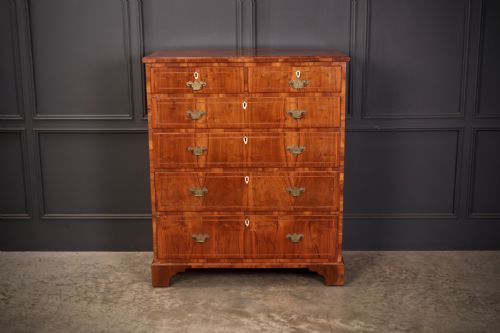
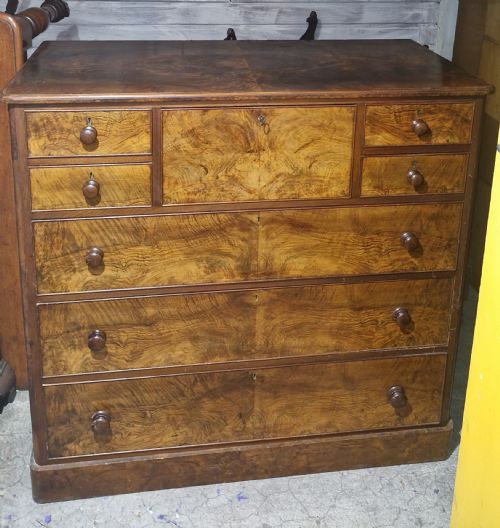
The version you are most likely to meet on this page is the traditional chest of drawers or smaller table cabinet finished in rich walnut veneers. Georgian and Victorian examples sit alongside Queen Anne revival pieces, showing how cabinet makers continually returned to these classic forms.
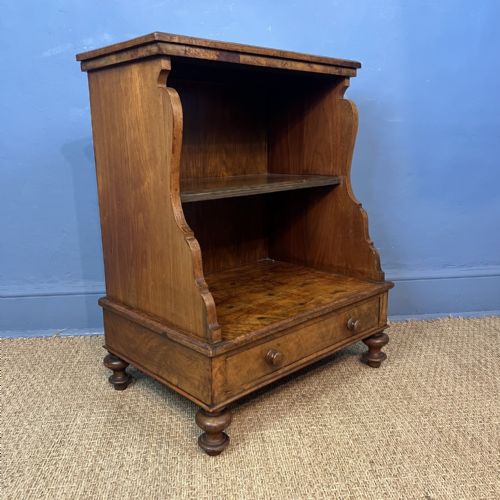
Beyond standard chests, the selection includes open bookcases with drawers, whatnots, and bedside cabinets. Each object combines practical storage with the decorative appeal of figured timber.
How they were made
Cabinet makers utilised choice veneers sliced from the knotty growths of walnut trees, applying these intricate grain patterns over solid secondary woods such as oak and pine. This technique required immense skill to match the figured sections symmetrically across drawer fronts.
Metalwork played a functional and decorative role, with brass handles and escutplements fitted to secure the drawers. Carcass construction relied on traditional joinery, ensuring stability for the heavy timber sections.
Burr Walnut Drawer Units Retail Price Guide 2026
Typical asking prices for burr walnut drawer units among the pieces listed under this phrase on Sellingantiques today, from the lower quarter to the upper quarter. They describe what is for sale here now, not the wider market.
Some Victorian whatnots combine multiple display tiers with hidden compartments, keeping treasured trinkets within arm's reach.
What varies in quality
The visual impact of a piece depends heavily on the choice and matching of the burr walnut veneer. Superior examples display lively, highly figured grain patterns that wrap harmoniously around the corners and across multiple drawers.
Construction standards also set pieces apart, from the weight and quality of the brass hardware to the smoothness of the drawer runs. Pieces showing careful timber selection and tight joinery represent the finest tier of production.
The Burr Walnut Drawer Units Glossary
- Burr walnut
- A veneer taken from the wart-like growths on walnut trees, prized for its swirling and highly decorative grain patterns. It creates a striking surface texture on fine cabinetry.
- Figured walnut
- Timber that exhibits patterns other than straight grain, often resulting from branching or growth irregularities. This wood was selected for prominent exterior surfaces.
- Whatnot
- A piece of open shelving designed for displaying ornaments, frequently incorporating one or more small drawers at the base. These emerged as popular display furniture in the 19th century.
- Escutcheon
- A protective plate surrounding a keyhole, usually made of brass. It prevents the timber around the lock from sustaining wear and damage.
- Carcass
- The main structural body or frame of a piece of furniture before drawers and doors are fitted. It forms the solid foundation for decorative veneers.
Burr Walnut Drawer Units: Frequently Asked Questions
Can I use these in a modern room?
These compact cabinets and chests adapt easily to contemporary interiors due to their warm tones and rich textures. They provide functional storage while introducing historical character to minimalist spaces.
Pair them with neutral backgrounds to let the natural grain patterns stand out as focal points. Their modest proportions make them practical for bedrooms and living areas alike.
How do I spot a revival piece?
Revival items, such as those from the Edwardian or 1930s periods, often exhibit machine-cut dovetails and standardised interior construction methods. They imitate earlier Queen Anne or Georgian styles while utilising contemporary manufacturing techniques.
Examine the secondary woods inside the drawers, as pine and modern hardwoods frequently point towards a later date of manufacture. The consistency of the veneer can also indicate a 20th-century interpretation of an antique design.
What is a table cabinet?
A table cabinet is a small, portable storage unit designed to sit on top of a desk or surface rather than stand on the floor. These compact pieces contained multiple internal drawers for letters, documents, or valuables.
Craftsmen lavished attention on these smaller items, applying choice burr walnut veneers to their exterior surfaces. They served as both functional organizers and decorative objects in period rooms.