

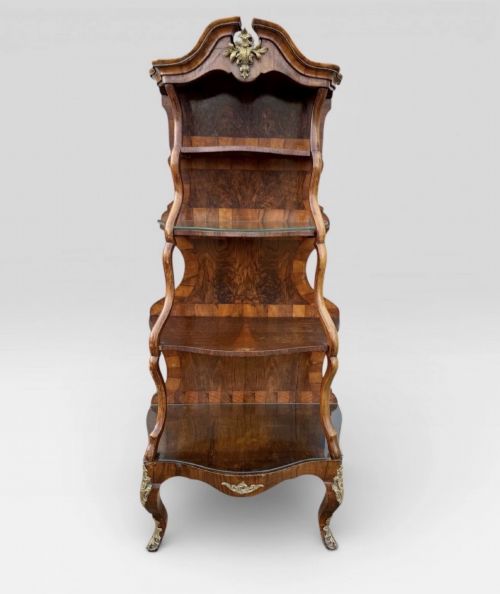


Burr Walnut Corner Whatnot
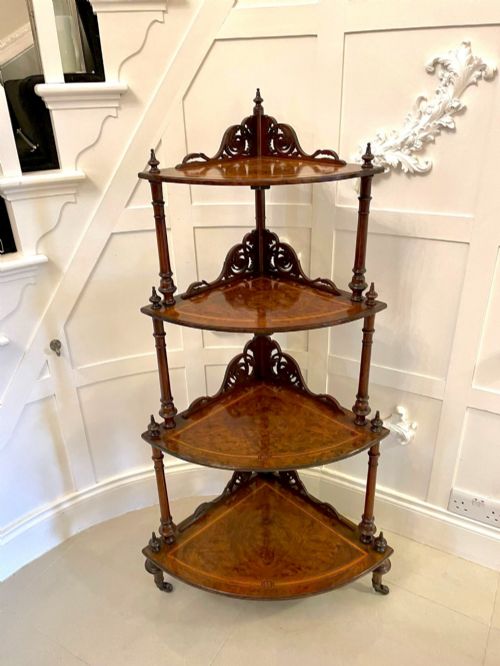
A burr walnut corner whatnot is a multi-tiered display piece designed to utilise overlooked room junctions, offering open shelving with distinctive timber figuring.
Burr Walnut Corner Whatnot
When you search for a burr walnut corner whatnot, you enter a field dominated by nineteenth-century Victorian examples. These open display stands and etageres utilise right-angled room space with tiered shelving supported by turned columns or uprights. The form frequently appears as a four-tier structure designed to fit snugly into a corner.
The pieces on this page span the mid-to-late nineteenth century, notably emerging across the eighteen-fifties, sixties, and seventies. Alongside dedicated corner whatnots, related forms such as demi-lune display console tables and sideboards appear in the record. The prevailing aesthetic draws on Victorian taste, with occasional excursions into Rococo Revival and inlaid decoration.
Materials and construction
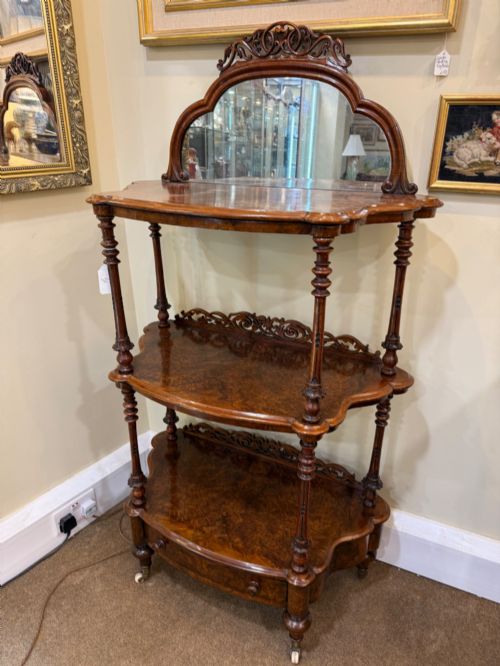
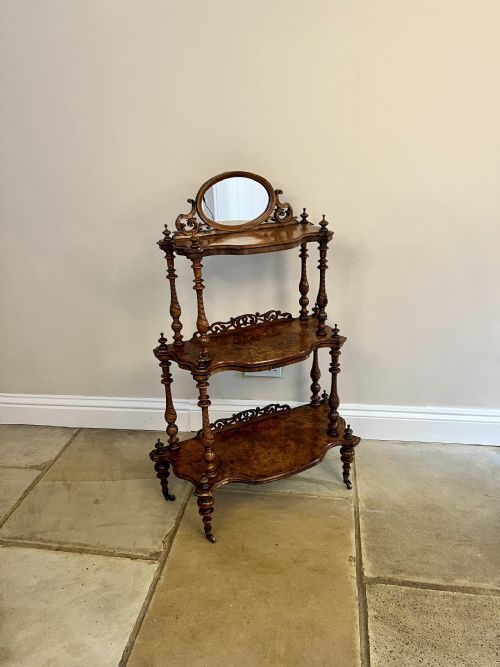
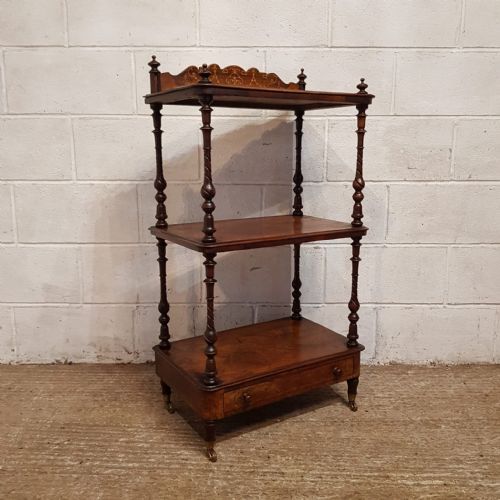
Makers built these pieces primarily using walnut and burr walnut veneers, prized for their complex swirling grain patterns. Structural elements incorporate inlay, brass, glass, ceramic, and mirror glass details to accent the multi-tiered framework. Gilt metal and metal mounts occasionally appear on serpentine and console variants.
Four-tier open shelving dominates the construction methods seen in the archive and current listings. Joinery supports tiered platforms meant for display, sometimes incorporating side cabinets or lower cupboards in larger sideboard combinations.
Burr Walnut Corner Whatnot Retail Price Guide 2026
Typical asking prices for burr walnut corner whatnot among the pieces listed under this phrase on Sellingantiques today, from the lower quarter to the upper quarter. They describe what is for sale here now, not the wider market.
Listings show Victorian pieces dated from eighteen-fifty to eighteen-eighty, constructed in walnut, burr walnut, brass, glass, and inlay.
Judging the range
The distinction between standard domestic pieces and exhibition quality stands rests upon the selection of timber veneers and the intricacy of the inlay. Pieces designated as superior or exhibition quality display highly figured burr walnut grain across prominent surfaces. Finer examples also integrate refined turning on the upright supports and more complex geometric or floral inlay.
Scale and proportion influence the tier arrangements, with large outstanding examples providing greater presence in a room. The integration of auxiliary materials like brass fittings and mirror glass elevates the visual complexity of the construction.
The Burr Walnut Corner Whatnot Glossary
- Burr walnut
- A timber harvested from walnut tree growths, producing intricate, swirling grain patterns highly valued for veneering furniture surfaces. It provides the dominant visual texture on these nineteenth-century pieces.
- Whatnot
- A piece of furniture consisting of several open shelves for books or ornaments, popular throughout the Victorian era. The form evolved to serve as both a display stand and an etagere.
- Corner whatnot
- A specialised multi-tiered shelving unit engineered to fit directly into the ninety-degree angle of a room. This configuration maximises floor space while providing vertical display capacity.
- Etagere
- A piece of furniture with a set of open shelves for displaying small objects or ornaments. It shares functional similarities with the whatnot.
- Demi-lune
- A half-moon or semicircular shape utilised in the design of console tables and display pieces. This curved profile softens room lines compared to strict right angles.
Burr Walnut Corner Whatnot: Frequently Asked Questions
What is a corner whatnot?
A corner whatnot is a multi-tiered open shelving unit designed to fit into the corner of a room for displaying small objects. The form emerged strongly in the nineteenth century.
These pieces use vertical space efficiently while adding decorative timber grain to room junctions.
How were these shelves used?
Owners placed books, ceramic ornaments, and decorative items across the open tiers of these stands. They functioned primarily as display furniture in Victorian parlours and reception rooms.
Some variants combined open shelves with enclosed cabinets or console surfaces for varied storage.
How do I date a Victorian whatnot?
Dating relies on stylistic markers, construction methods, and recorded dates spanning the mid-to-late nineteenth century. Specific decades such as eighteen-fifty or eighteen-sixty appear frequently in historical listings.
Inlay styles and the presence of Rococo Revival details help narrow the period of manufacture.
What is burr walnut?
Burr walnut is a specialised wood veneer taken from the growth excrescences of walnut trees. It yields dense, swirling patterns that decorators prized for surface ornamentation.
This timber defines the visual character of the pieces on this page.