



Burr Walnut Carver
These burr walnut carver chairs combine figured timber with traditional seating forms, offering distinct character for a period interior.
Burr Walnut Carver
A burr walnut carver is an armchair typically found within larger dining sets or as part of a matching suite. When searching for a burr walnut carver, a buyer is looking for sturdy armchairs finished in highly figured timber veneers.
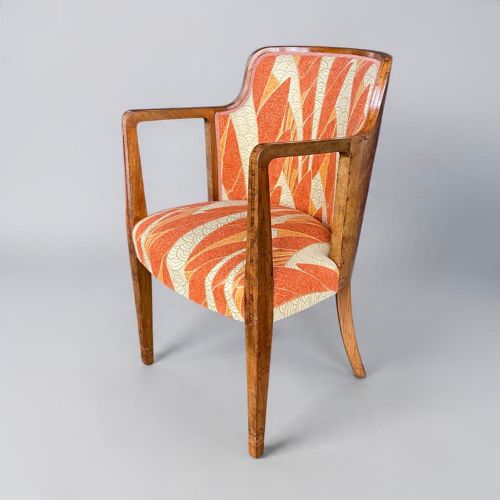
The examples seen on this page span several distinct periods, reaching from the eighteenth century through Victorian and Edwardian iterations to the Art Deco era and the 1930s. Queen Anne Revival and Queen Anne styles dominate the listings, frequently displaying scroll arms and cabriole legs.
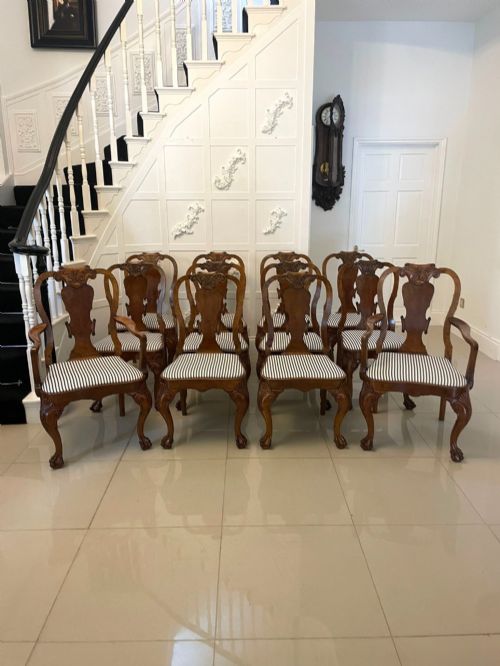
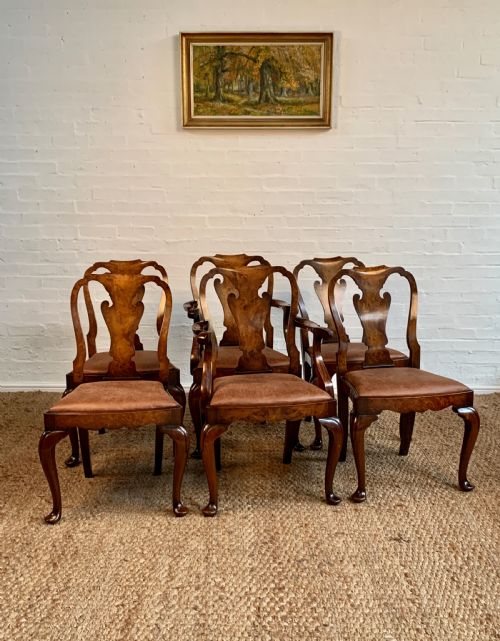
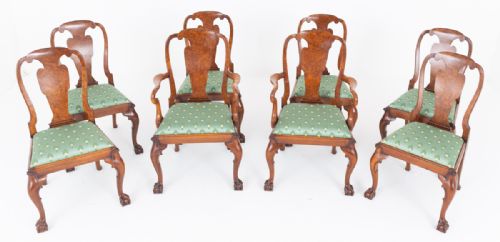
Most pieces appear as part of larger sets comprising six or eight single chairs alongside matching carvers. Buyers frequently encounter Edwardian and 1930s interpretations alongside older nineteenth-century craftsmanship.
How they were made
Cabinetmakers constructed these frames using solid wood carcasses overlaid with burr walnut veneer, a material prized for its intricate, swirling grain patterns. Walnut and secondary timbers formed the underlying structure, providing stability for the chair frames and carved details.
Upholstery forms an integral part of the construction, with seats and backs finished in fabric, leather, or velvet. Brass fittings occasionally appear on castors or hardware, while traditional joinery secures the joints of the armchairs and dining sets.
Burr Walnut Carver Retail Price Guide 2026
Typical asking prices for burr walnut carver among the pieces listed under this phrase on Sellingantiques today, from the lower quarter to the upper quarter. They describe what is for sale here now, not the wider market.
A solitary child's chair in walnut sits among the heavy dining sets, proving that miniature dignitaries also required proper armrests.
What varies in quality
The visual impact of a carver rests heavily on the grain selection of the burr walnut veneer across the back splat and seat rail. Finer examples display symmetrical, richly figured patterns that catch the light, whereas lesser pieces show plain or interrupted grain.
Proportion and carving depth differentiate standard production from superior craftsmanship. Crisp execution on the knees of cabriole legs and well-balanced scroll arms elevate the visual presence of the chair.
Epstein
The Burr Walnut Carver Glossary
- Carver
- An armchair, usually designed with armrests to match a set of smaller dining chairs. These pieces typically sat at the head of the dining table.
- Burr walnut
- Wood taken from the abnormal growth of a walnut tree, producing highly decorative, swirling grain patterns. Cabinetmakers sliced this timber into thin veneers to adorn prominent surfaces.
- Queen Anne style
- A design movement originating in the early eighteenth century and frequently revived later, characterised by cabriole legs and spoon-backed chairs. This aesthetic appears across multiple decades in the current selection.
- Cabriole leg
- A furniture leg that curves out and then narrows inward, typically ending in a pad or claw foot. The shape imitates the leap of an animal and is common on walnut seating.
Burr Walnut Carver: Frequently Asked Questions
What is a burr walnut carver?
A burr walnut carver is an armchair featuring decorative burl veneer on its wooden frame, historically positioned at the head of a dining table.
These armchairs usually match a set of smaller dining chairs, sharing the same period style and upholstery treatment.
How do I date a burr walnut chair?
Dating relies on examining the construction methods, the timber thickness, and the stylistic details such as leg shape and back splat design.
Eighteenth-century examples differ significantly in construction from the Queen Anne Revival pieces produced during the Edwardian era and the 1930s.
Are carvers comfortable for daily use?
Carvers provide extra width and support through their armrests, making them suited for extended periods at the dining table.
Many pieces feature updated upholstery fabrics, velvet, or leather that improves the daily seating experience while preserving the antique frame.
How do I match a carver to existing chairs?
Matching a carver involves comparing the wood tone, the grain pattern of the walnut, and the specific revival style, such as Queen Anne or Art Deco.
Upholstery can be easily unified by recovering the seats in matching fabric, velvet, or leather across the entire dining set.