




Burr Walnut Bonheur Du Jour
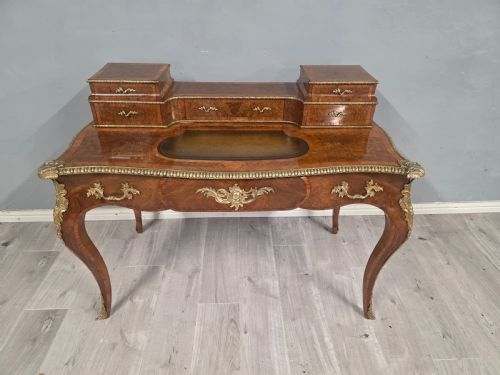
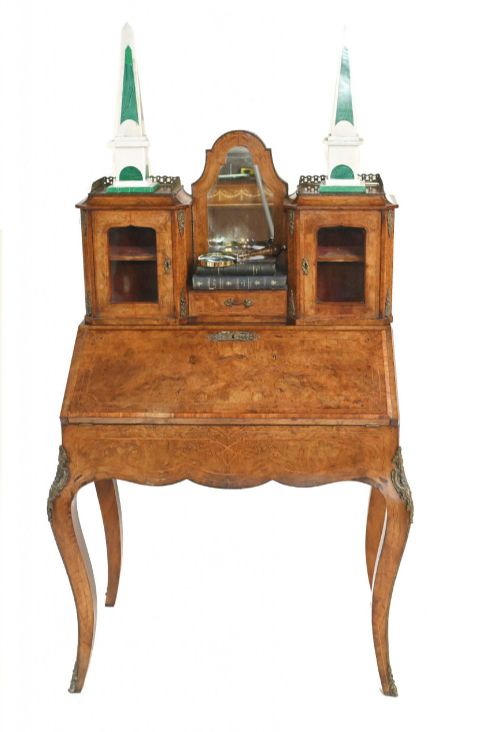
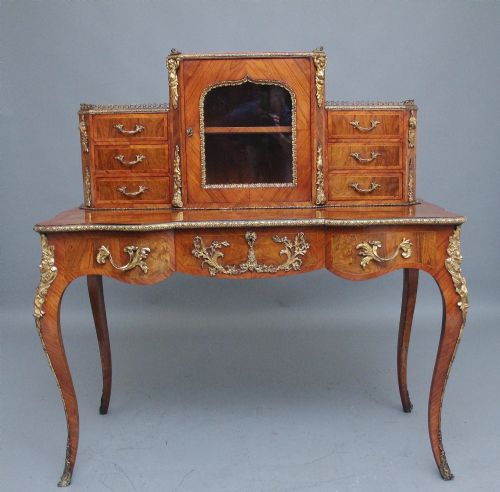
These burr walnut bonheur du jour desks are compact ladies writing tables offering fitted writing surfaces and delicate superstructure compartments.
Burr Walnut Bonheur Du Jour
A burr walnut bonheur du jour is a small ladies writing desk designed during the Victorian era for correspondence and private paperwork. These refined pieces typically combine a writing surface with a raised upper section featuring small drawers, pigeonholes, or a cabinet door.
The examples found here originate from the nineteenth century, spanning decades such as eighteen sixty, eighteen seventy, and eighteen eighty. They appear in styles including Victorian, French Revival, Louis XV Revival, and Rococo Revival.
Makers and cabinetmakers of the period utilised figured timbers and decorative mounts to create these sophisticated items of furniture. They serve as both functional desks and decorative centerpieces for a drawing room or boudoir.
How they were made
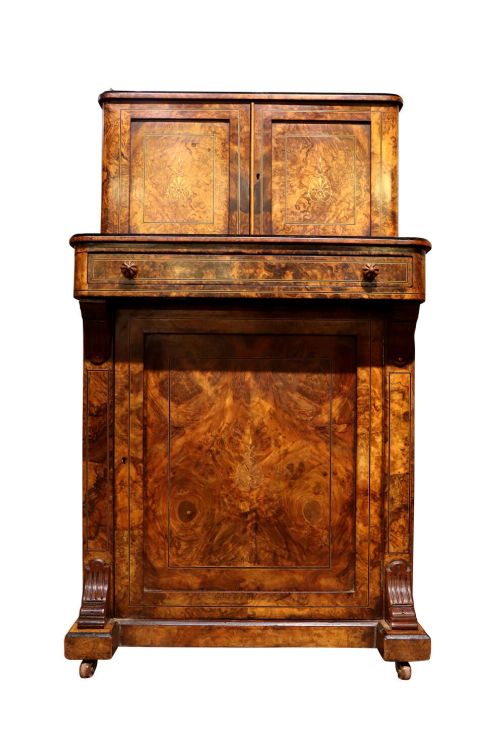
Cabinetmakers constructed these desks using solid walnut frameworks overlaid with highly figured burr walnut veneers to create striking grain patterns on the writing surfaces and drawer fronts. Ebonised wood often provides contrasting dark borders or framing.
Makers embellished the structures with brass inlay, gilt bronze or ormolu mounts, and fitted glass panels. Writing surfaces frequently incorporate inset panels of tooled leather to provide a suitable medium for pen and paper.
Burr Walnut Bonheur Du Jour Retail Price Guide 2026
Typical asking prices for burr walnut bonheur du jour among the pieces listed under this phrase on Sellingantiques today, from the lower quarter to the upper quarter. They describe what is for sale here now, not the wider market.
Listings feature Victorian pieces from eighteen sixty, eighteen seventy, and eighteen eighty, incorporating burr walnut, ormolu, brass, and leather.
What varies in quality
The choice of burr walnut veneer dictates much of the visual appeal, with tightly knotted and richly figured grain patterns marking out finer examples. The symmetry and precision of the veneer matching across drawers and lids signal superior craftsmanship.
The intricacy of subsidiary materials such as hand-chased ormolu mounts, delicate brass stringing, and well-executed ebonising separates standard production from exhibition quality pieces. Interior fitments, including secret drawers and custom pigeonhole arrangements, also reflect the maker's investment of time.
Gillows
The Burr Walnut Bonheur Du Jour Glossary
- Bonheur du jour
- A small lady's writing desk featuring a raised superstructure with compartments, drawers, or a cabinet on the desktop. The name translates from French as day's good fortune.
- Burr walnut
- A specialised timber veneer harvested from the wart-like growths on walnut trees, prized for its swirling, highly figured grain patterns. It requires careful cutting and laying by skilled cabinetmakers.
- Ormolu
- Gilt bronze ornamentation applied to furniture, popular during the nineteenth century revival periods. It provides metallic contrast against dark wood and burr veneers.
- Ebonised wood
- Timber treated with chemical finishes or stains to imitate expensive ebony. It supplies sharp dark framing and linear contrast on Victorian cabinetry.
- Bureau de dame
- A feminine desk form similar in function to the bonheur du jour, often incorporating a sloping writing flap or specialised stationery compartments.
Burr Walnut Bonheur Du Jour: Frequently Asked Questions
What is a bonheur du jour used for?
These desks were designed for light correspondence, reading, and keeping small personal papers in Victorian sitting rooms. The upper shelves and tiny drawers held stationery, inkwells, and letters.
Today they function effectively as compact writing desks or decorative display tables in bedrooms and studies where space is limited.
How do I date a Victorian desk?
Dating relies on stylistic clues, construction methods, and materials recorded across the nineteenth century. Pieces from the eighteen sixties and eighteen seventies often display French Revival influences or specific brass inlay techniques.
Exhibition quality markers and distinct revival styles help narrow down the period of manufacture within the broader Victorian era.
How should I care for burr walnut?
Burr walnut veneer requires protection from direct sunlight and excessive heat to prevent the wood from drying out or splitting. Gentle dusting with a dry cloth maintains the polished surface without damaging the delicate grain.
Applying specialised furniture wax occasionally helps preserve the depth and lustre of the nineteenth century polish.
Are these desks suitable for modern laptops?
Many nineteenth century ladies desks offer sufficient surface area for compact modern laptops and tablets. Buyers should check the specific dimensions of the writing platform and kneehole clearance before use.
Interior compartments also provide convenient storage for modern stationery, chargers, and small electronic accessories.