




Burr Walnut Bombe Bureau
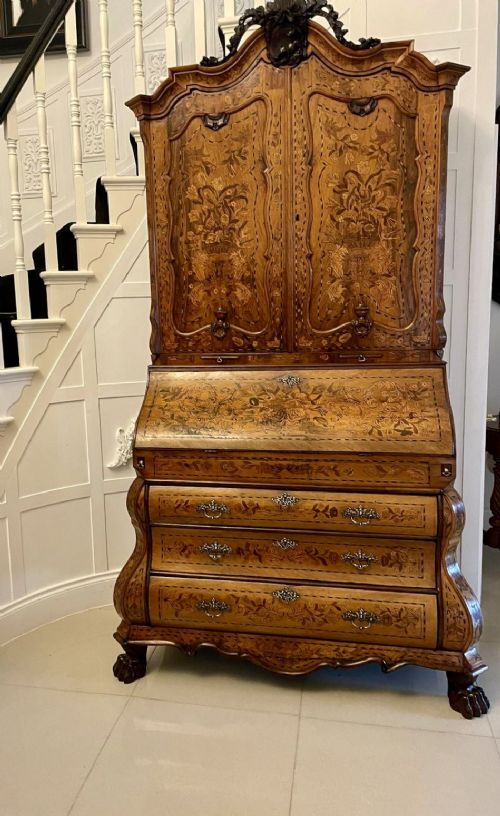
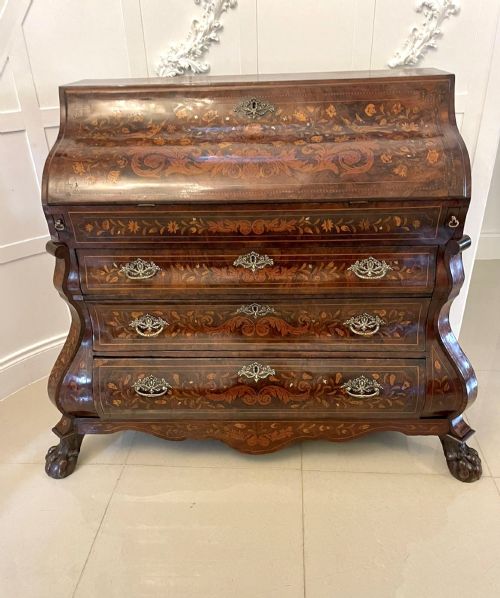
These burr walnut bombe bureau pieces bring rich figured grain and sweeping curved fronts to a room, offering both a functional writing desk and a striking display of period craftsmanship.
Burr Walnut Bombe Bureau
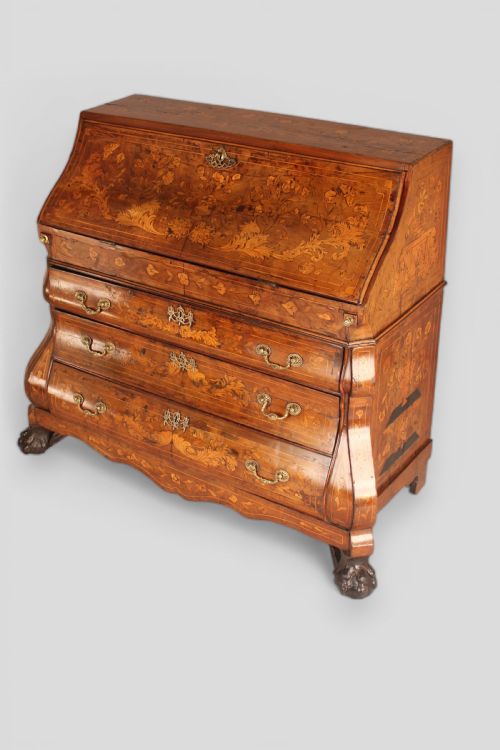
A burr walnut bombe bureau combines a sloping writing flap with a swollen, outward-curving lower section, creating a distinct silhouette rooted in eighteenth-century cabinet making. The pieces found here span the eighteenth century and the Georgian period, alongside occasional later interpretations from the nineteenth century and nineteen-twenty.
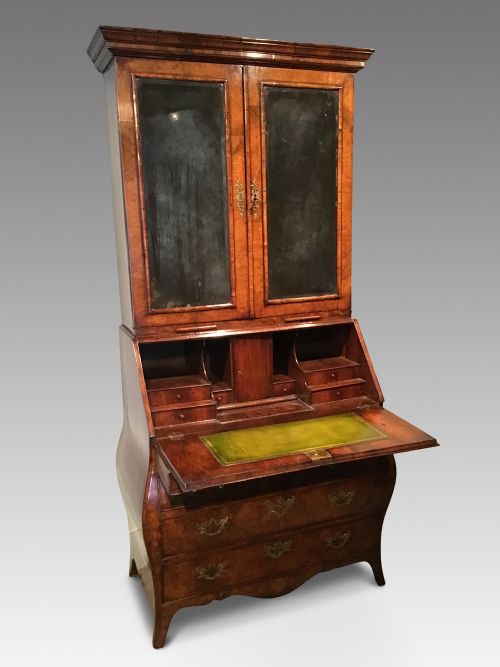
Buyers will encounter various forms, ranging from standard writing desks and bureau desks to towering bureau bookcases fitted with upper shelving. Many examples originate from Dutch workshops, displaying characteristic baroque and rococo influences through their substantial proportions and curved forms.
Surface decoration frequently defines these objects, with floral marquetry and fruitwood inlay embellishing the figured timber. Whether searching for a compact three-drawer writing bureau or a grand bookcase variant, the core appeal lies in the dramatic swell of the timber grain.
Materials and construction
Cabinet makers utilised burr walnut veneers to cover primary carcases, selecting timber sections with intricate knot patterns that created rich visual movement across the curved surfaces. Fruitwood inlay and marquetry were carefully set into the walnut ground, forming detailed floral motifs that required considerable precision from the maker.
Brass hardware, including escutcheons and drop handles, was fitted to the drawers to complement the deep tones of the polished wood. Leather writing surfaces were also incorporated into the fall-front interiors, providing a durable platform for correspondence within the fitted compartments.
Burr Walnut Bombe Bureau Retail Price Guide 2026
Typical asking prices for burr walnut bombe bureau among the pieces listed under this phrase on Sellingantiques today, from the lower quarter to the upper quarter. They describe what is for sale here now, not the wider market.
Listings feature walnut, burr walnut, fruitwood, and brass across eighteenth-century, Georgian, and nineteenth-century periods.
Assessing quality and craftsmanship
Quality in a burr walnut bombe bureau rests upon the selection and matching of the veneer across the sweeping contours of the bombe shape. Superior examples display symmetrical grain patterns that follow the outward curve of the timber without buckling or distortion.
The precision of the floral marquetry and fruitwood inlay further distinguishes finer pieces, showing tight joints and crisp botanical details. The execution of the carcass joinery, particularly how the curved drawer fronts meet the frame, separates standard production from exceptional cabinet work.
The Burr Walnut Bombe Bureau Glossary
- Bombe
- A swelling or outward-curving shape found on the front and sides of furniture, requiring advanced woodworking techniques to construct. This sculptural profile defines the characteristic silhouette of the pieces.
- Burr Walnut
- Timber taken from the warted growths on walnut trees, prized for its swirling, highly figured grain patterns. It provides the decorative surface seen across these desks.
- Marquetry
- The art of applying small pieces of veneer to a structure to form decorative patterns or pictures. Floral motifs are frequently rendered using fruitwood within the walnut ground.
- Bureau
- A sloping desk designed for writing, often featuring internal pigeonholes and small drawers behind the fall-front flap. Larger variants incorporate bookcase cabinetry above.
- Fruitwood Inlay
- Contrasting light or dark timber derived from fruit-bearing trees, used to create fine linear banding or pictorial details. It contrasts sharply against the darker walnut veneer.
Burr Walnut Bombe Bureau: Frequently Asked Questions
What is a bombe bureau?
A bombe bureau is a writing desk featuring a distinct outward-swelling lower body and a sloping fall-front lid that opens to reveal compartments.
These pieces combine functional writing space with sculptural cabinetry, often displaying rich wood grain and decorative marquetry.
How do I date a walnut bureau?
Dating relies on examining the construction methods, drawer linings, hardware styles, and the specific characteristics of the walnut veneer.
Eighteenth-century examples often show hand-cut dovetails and period handles, while later nineteenth-century or nineteen-twenty pieces display different internal secondary woods.
Where were these bureaus made?
Many of these pieces originate from Dutch workshops influenced by baroque and rococo styles of the period.
British Georgian cabinet makers also produced similar forms, though Dutch makers frequently favoured the dramatic bombe silhouette paired with floral marquetry.
How should I care for burr walnut?
Burr walnut benefits from stable room temperatures away from direct sunlight and heat sources to prevent the veneer from drying out.
Routine dusting with a soft, dry cloth preserves the polished finish and highlights the natural grain patterns of the wood.