



Burr Veneer Commode
A burr veneer commode brings together richly figured timber and disciplined form, offering a focal point with deep historical character.
Burr Veneer Commode
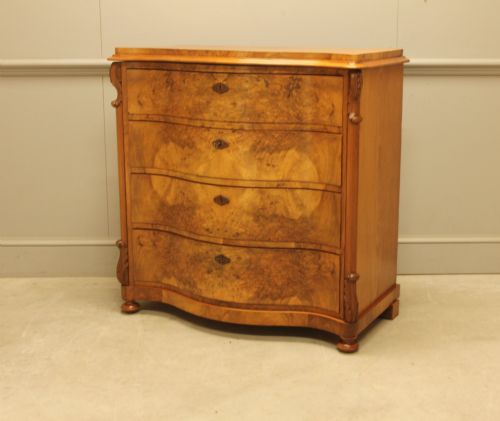
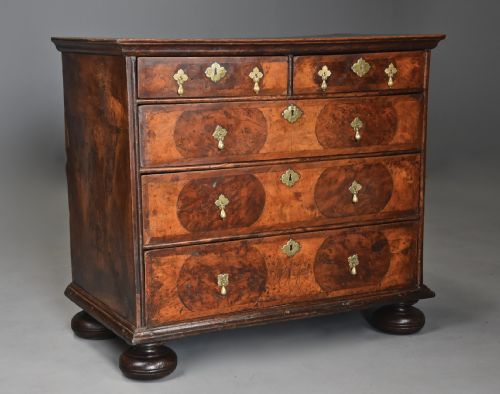
A burr veneer commode is a storage piece defined by its swirling, knotty wood grain, appearing in forms ranging from seventeenth-century William and Mary chests to nineteenth-century Swedish serpentine designs and Biedermeier cabinets.
Buyers seeking this phrase encounter various interpretations of form and timber, including walnut, ash, and yew, shaped into chests of drawers, bow-fronts, and cupboards across periods such as the seventeenth, eighteenth, and nineteenth centuries.
The pieces listed here showcase regional and stylistic diversity, spanning English marquetry, continental Louis Philippe, and Biedermeier aesthetic traditions while maintaining the characteristic figured surface that defines the category.
Materials and construction
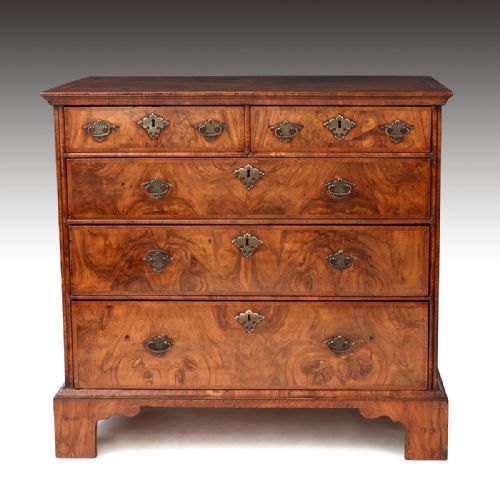
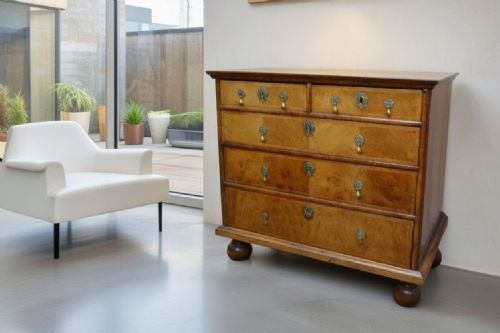
Cabinetmakers applied thin slices of burr walnut, ash, or yew veneers over stable secondary timbers such as oak, arranging the knotty grain patterns symmetrically to create decorative panels on drawer fronts and surfaces.
Joinery techniques matched the period, utilising solid timber carcases, hand-cut dovetails for drawers, and applied brass hardware or marquetry detailing that complemented the complex figuring of the wood.
Burr Veneer Commode Retail Price Guide 2026
Typical asking prices for burr veneer commode among the pieces listed under this phrase on Sellingantiques today, from the lower quarter to the upper quarter. They describe what is for sale here now, not the wider market.
Some seventeenth-century trees grew knotted burls just to confuse future cabinetmakers with wonderfully chaotic grain patterns.
Judging quality and character
Quality rests in the continuity and ambition of the wood figuring, where symmetrical grain alignment across drawer fronts elevates a piece far above simpler veneered surfaces.
The integrity of the structural joinery and the depth of the surface patina dictate the standing of an individual commode, distinguishing disciplined period execution from later interpretations.
The Burr Veneer Commode Glossary
- Burr veneer
- A thin slice of wood cut from a tree growth or burl, prized for its chaotic, highly decorative swirl of growth rings and knots. It forms the primary visual draw of these pieces.
- Marquetry
- The art of forming decorative patterns by fitting together small pieces of veneer of different woods, seen in seventeenth-century examples. This technique requires considerable skill from the maker.
- Serpentine
- A curved line of furniture front that sweeps outward at the sides and inward at the centre, creating a fluid movement. This shape appears on nineteenth-century Swedish pieces.
- Biedermeier
- A Central European style from the nineteenth century focusing on utilitarian comfort and clean lines that highlight the natural grain of timbers like blonde walnut. It avoids excessive ornamentation.
Burr Veneer Commode: Frequently Asked Questions
What is a burr veneer commode?
A burr veneer commode is a storage chest or cabinet surfaced with highly figured wood grain derived from tree growths. These pieces range from seventeenth-century English examples to nineteenth-century continental interpretations.
They serve as functional storage units while functioning primarily as decorative focal points due to the intricate patterns of the walnut, ash, or yew timber.
How do I date a commode?
Dating relies on observing the structural joinery, timber choices, and stylistic vocabulary such as William and Mary marquetry or Biedermeier minimalism. Seventeenth-century examples often display distinct carcass construction compared to nineteenth-century pieces.
Examining the secondary woods and hardware styles helps clarify the period of origin for each specific chest or cabinet.
Where should I place one?
These pieces suit reception rooms, hallways, or bedrooms where their figured wood surfaces can be appreciated without direct exposure to harsh environmental conditions. Their strong visual presence allows them to anchor a room's decor.
Ensure placement avoids direct sunlight and sudden temperature shifts to protect the historical veneer surfaces.
How do I care for burr veneer?
Maintenance involves dusting with a soft, dry cloth and occasionally applying appropriate natural waxes to nourish the historic timber. Avoid chemical polishes or excessive moisture.
Maintaining stable room humidity prevents the delicate burr veneers from lifting or cracking over time.