

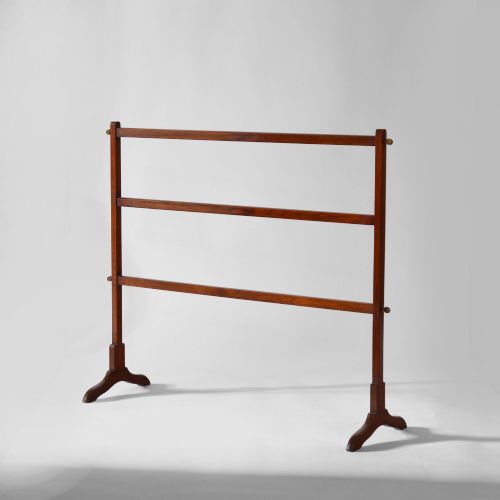
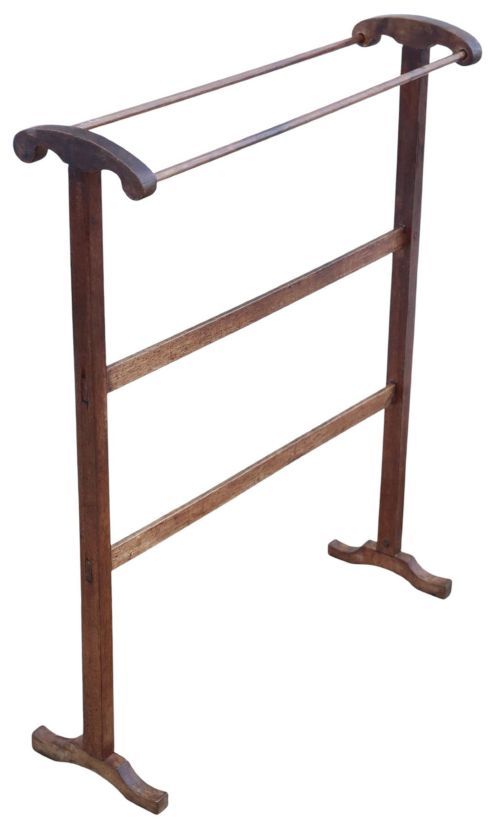
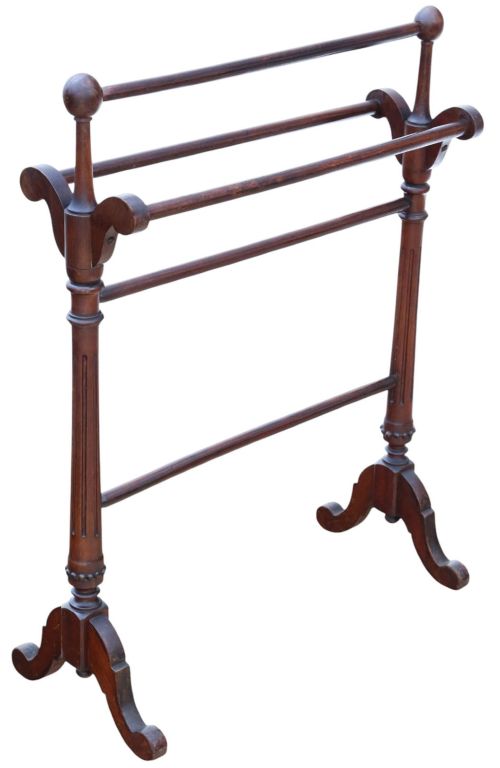
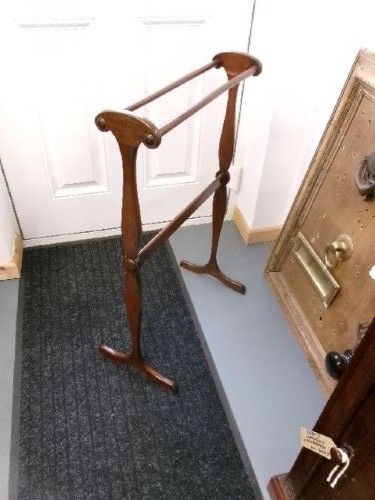


Brown Wooden Towel Rack
These brown wooden towel rack pieces are practical utility stands that bring period warmth and function to a bathroom or bedroom.
Brown Wooden Towel Rack
A brown wooden towel rack serves as a freestanding rail for hanging and drying linens in domestic spaces. The selection on this page consists entirely of towel rails and towel rail stands originating from the nineteenth and early twentieth centuries.
Most examples you encounter are constructed from mahogany, though oak pieces also appear. Forms range from simple folding designs to larger standing rails with multiple bars.
The styles span the Regency, Victorian, and Edwardian eras, alongside the Arts and Crafts movement. Folding cheval formats and three-fold configurations provide larger hanging capacity for daily use.
How they were made
Cabinetmakers utilised dense hardwoods such as mahogany and oak to build sturdy frames that could withstand daily damp environments. Boxwood and brass accents occasionally appear as decorative inlays or structural fittings.
Joints were traditionally pegged or joined by hand to ensure stability across folding and standing configurations. Timber surfaces were polished or waxed to protect the wood grain while highlighting its natural colour.
Brown Wooden Towel Rack Retail Price Guide 2026
Typical asking prices for brown wooden towel rack among the pieces listed under this phrase on Sellingantiques today, from the lower quarter to the upper quarter. They describe what is for sale here now, not the wider market.
The listings span from the Regency period through to the Edwardian era, with mahogany serving as the predominant timber.
What varies in quality
Quality in these stands rests upon the selection of timber and the solidity of the frame construction. Heavier mahogany rails with substantial uprights sit at the upper end of the scale compared to lighter, plain utility versions.
Detailing such as inlaid boxwood stringing, brass hardware, or sophisticated multi-bar folding mechanisms distinguishes finer country house pieces from standard domestic items.
The Brown Wooden Towel Rack Glossary
- Mahogany
- A durable tropical hardwood prized for its reddish-brown colour and fine grain. It forms the primary material for the majority of these nineteenth-century rails.
- Cheval rail
- A freestanding swinging frame supported on two side pillars. This configuration allows the rails to pivot independently for ease of hanging.
- Arts and Crafts
- A design movement prioritising traditional craftsmanship and simple forms. Pieces from this style often feature solid oak construction.
- Inlay
- A decorative technique where contrasting materials like boxwood are inserted into the wood surface. This adds subtle linear pattern to Edwardian examples.
Brown Wooden Towel Rack: Frequently Asked Questions
Where should I place a brown wooden towel rack?
These pieces suit bathrooms, bedrooms, or dressing rooms where extra hanging space is useful. Their freestanding design means they require no wall mounting and can be moved easily.
Ensure the room has adequate ventilation if you plan to dry damp towels on antique timber regularly.
How do I date a wooden towel rail?
Dating relies on observing the timber, style characteristics, and construction methods. Pieces from the Regency and early Victorian periods often feature heavier mahogany frames, while Edwardian versions may incorporate delicate inlay work.
Cross-referencing the turning style of the uprights with known period furniture helps narrow down the decade.
Are these towel rails practical for daily use?
Most nineteenth-century stands remain robust enough for regular service. Folding and multi-bar configurations offer ample space for modern linens.
Treating the wood with appropriate furniture wax periodically helps protect the finish from moisture exposure.
What is the difference between a folding and standing rail?
Standing rails utilise fixed uprights and crossbars for a rigid structure. Folding models, including three-fold and cheval formats, feature hinged sections that collapse or pivot for storage or adjusted placement.
Both types served the same domestic purpose in period homes.