

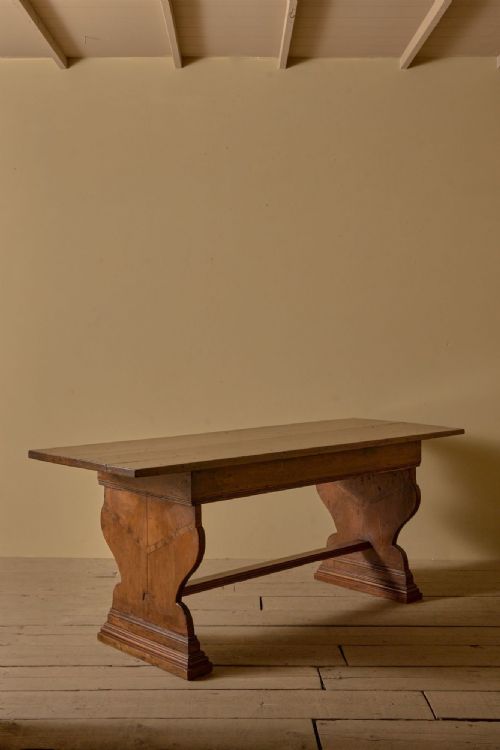
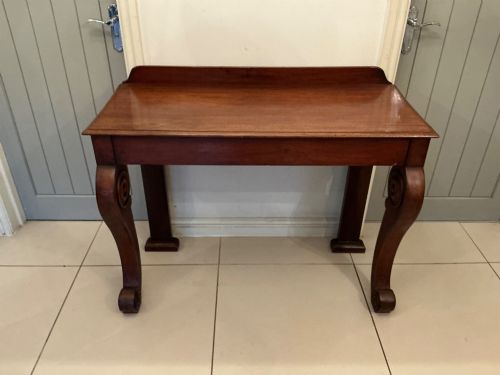
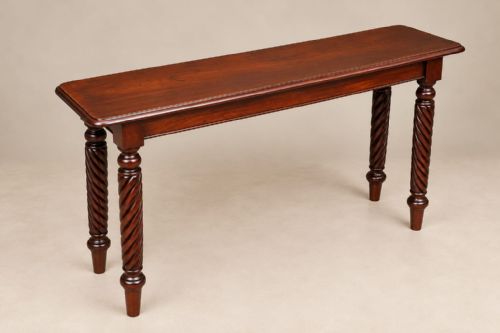
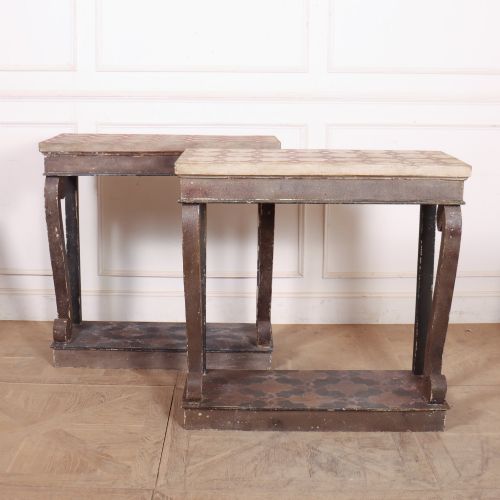




Brown Wooden Pier Table
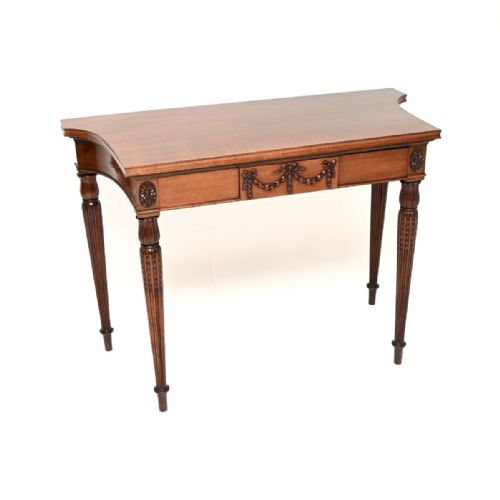
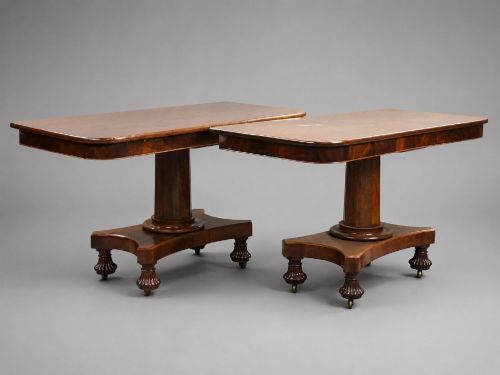
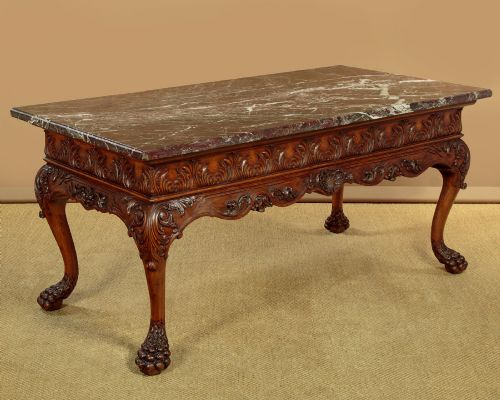
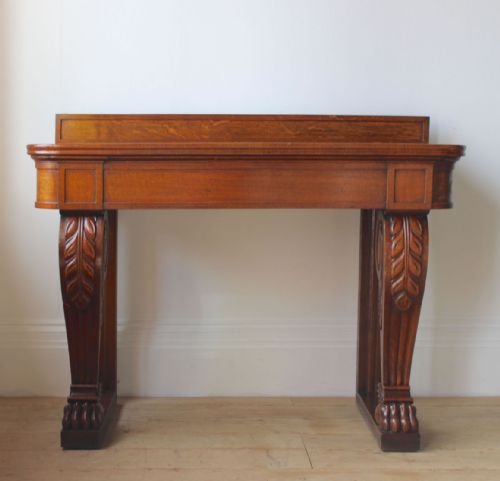
These brown wooden pier tables are substantial console and side furnishings designed for domestic reception spaces, combining timber frames with marble surfaces.
Brown Wooden Pier Table
A brown wooden pier table typically presents as a console, side table, or serving piece designed to sit flat against a wall, frequently beneath a mirror or between windows. When searching for a brown wooden pier table, buyers encounter formats spanning the Georgian, Victorian, and Edwardian eras, as well as early twentieth-century revivals.
The assortment on this page encompasses nineteenth-century mahogany and walnut examples, alongside Italian, French, and Spanish variants featuring marble tops and inlaid details. Forms range from straightforward hall tables to serpentine console tables and writing desks with distinct architectural influences.
Materials and construction methods
Cabinetmakers utilised dense timbers such as mahogany, walnut, and rosewood, frequently applying flame mahogany veneer or intricate marquetry inlay to primary surfaces. These woods provided the structural integrity required for heavy marble slabs.
Surfaces frequently incorporate polished marble tops in contrasting white or coloured stone, supported by wooden frames shaped with serpentine curves, satinwood banding, and occasional brass mounts.
Brown Wooden Pier Table Retail Price Guide 2026
Typical asking prices for brown wooden pier table among the pieces listed under this phrase on Sellingantiques today, from the lower quarter to the upper quarter. They describe what is for sale here now, not the wider market.
Listings span multiple eras from the 18th century through the 1930s, featuring mahogany, walnut, marble, and rosewood.
Distinctions in quality
Quality rests upon the selection of timber figures, such as matched flame mahogany veneer, and the precision of inlaid satinwood or marquetry details. Finer examples display crisp carving along the wooden framework and seamless integration of heavy marble tops.
Construction methods also separate standard production from superior workshops, visible in the stability of structural joints, the proportion of serpentine fronts, and the preservation of original polished finishes across nineteenth-century and revival pieces.
Freeman
The Brown Wooden Pier Table Glossary
- Pier table
- A table specifically designed to stand against a wall pier between two windows. These pieces often feature matching wall mirrors above them in period interiors.
- Console table
- A table supported by wall brackets or console legs rather than four independent vertical posts. They sit flush against domestic walls in hallways and reception rooms.
- Serpentine
- A curved shape featuring a convex centre flanked by concave ends, or vice versa. This contour appears frequently on eighteenth and nineteenth-century furniture fronts.
- Marquetry
- The art and craft of applying pieces of veneer to a structure to form decorative patterns. Craftsmen utilise various coloured woods to create pictorial or geometric designs.
- Flame mahogany
- A veneer figure characterised by a distinctive flamed or fire-like grain pattern. Cabinetmakers select this timber for prominent surfaces on high-status furnishings.
Brown Wooden Pier Table: Frequently Asked Questions
What is a brown wooden pier table used for?
These tables function primarily as decorative and functional furniture placed against walls in hallways, reception rooms, and dining spaces. They provide a stable surface for lamps, ceramics, and serving dishes.
Historically, they occupied the architectural pier space between windows, often positioned beneath a matching wall mirror to reflect light around the room.
How do I identify a Victorian pier table?
Victorian examples typically date from the nineteenth century and utilise dense timbers like mahogany and walnut. They often feature heavier proportions, dark polished finishes, and substantial wooden frames.
Many incorporate marble tops or serpentine fronts influenced by earlier Georgian styles, reflecting the eclectic revival tastes of the period.
Are marble top console tables original?
Many nineteenth-century console and pier tables were manufactured specifically with heavy marble tops to provide durable, water-resistant surfaces for serving food and displaying ornaments.
Examining the underlying wooden frame and support brackets reveals whether the marble top aligns with the construction methods of the stated period.
Where should I place a pier table at home?
A pier table suits narrow entryways, hallways, and living room walls where deep furniture obstructs movement. Their flat backs allow them to anchor securely against vertical surfaces.
Pairing the table with a hanging mirror or a table lamp recreates the traditional interior arrangement for which these console pieces were originally designed.