
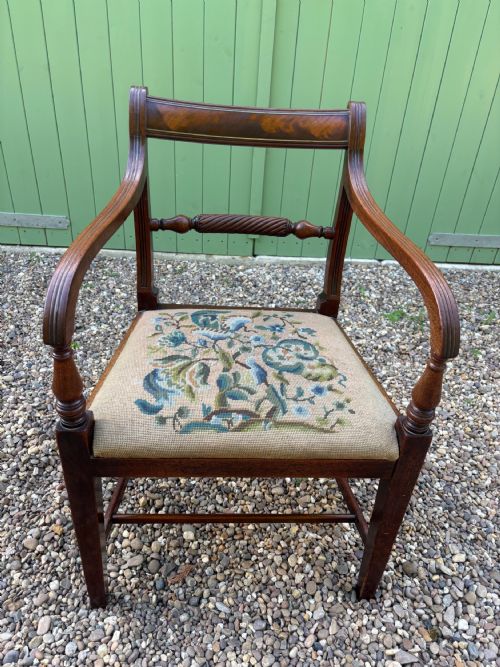
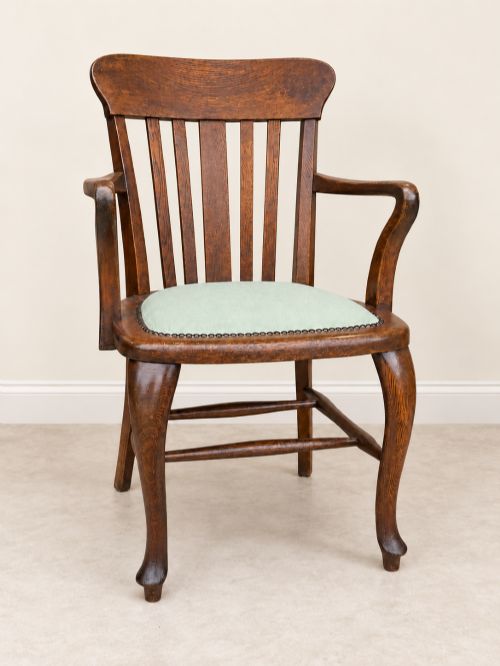
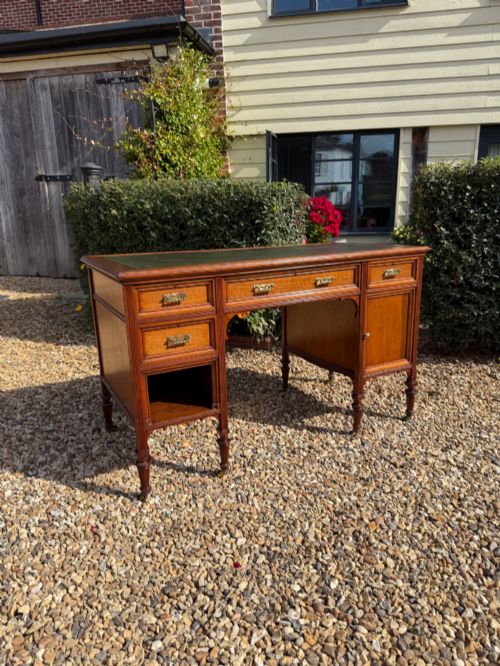
Brown Wooden Office Desk
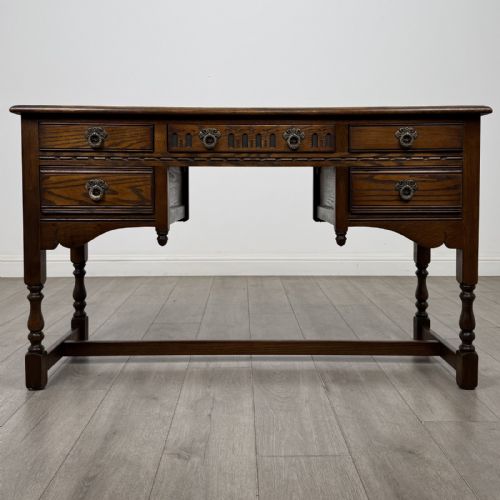
A brown wooden office desk anchors a room with timber weight and working history, built for letters and ledgers.
Brown Wooden Office Desk
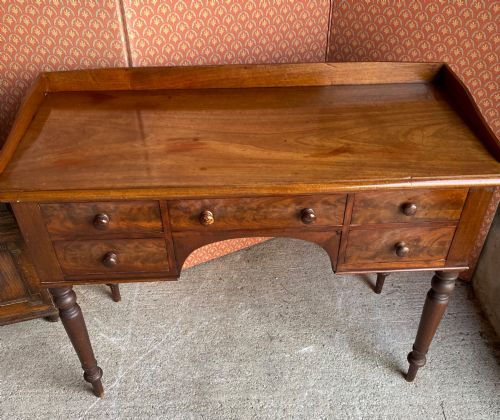
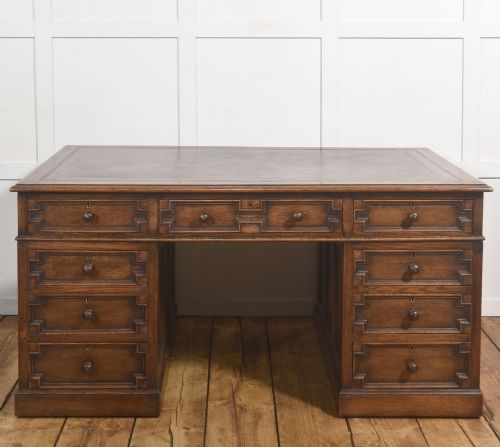
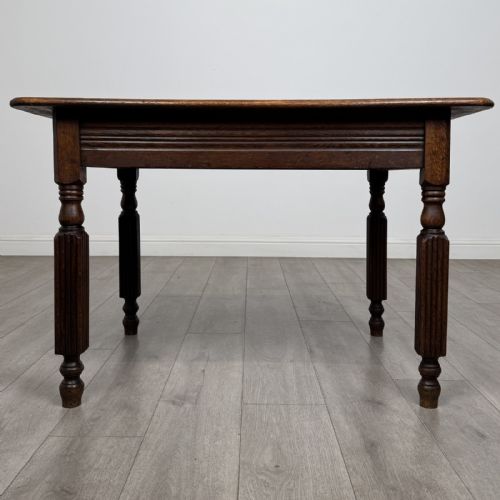
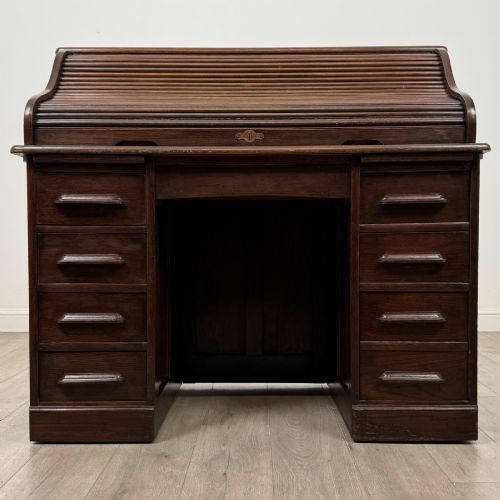
When you search for a brown wooden office desk, you encounter substantial writing tables, pedestals, partners desks, and roll-tops designed for administrative work. These pieces span the Victorian, Edwardian, and Art Deco periods, drawing on styles from Gothic Revival to Regency and Jacobean Revival.
Originating from British workshops and domestic offices of the nineteenth and early twentieth centuries, these brown wooden office desks carry the functional marks of daily commerce and private correspondence.
Construction materials and methods
Cabinet makers built these desks primarily from solid and veneered timbers such as oak, mahogany, and walnut, selecting dense woods that could endure heavy daily use. Drawer linings often utilise secondary woods like pine, joined with hand-cut dovetails for lasting structural stability.
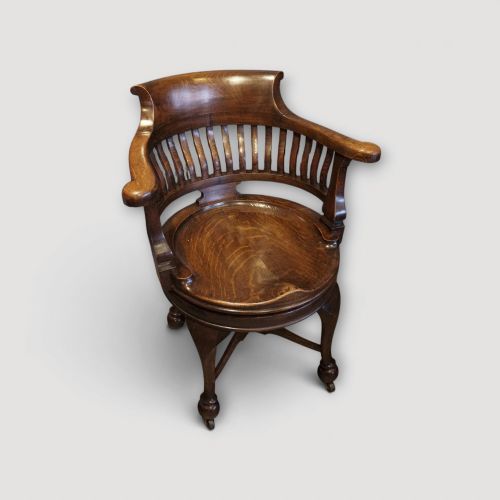
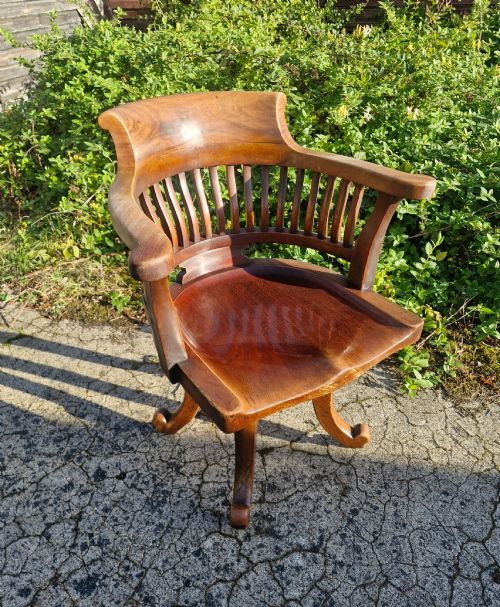
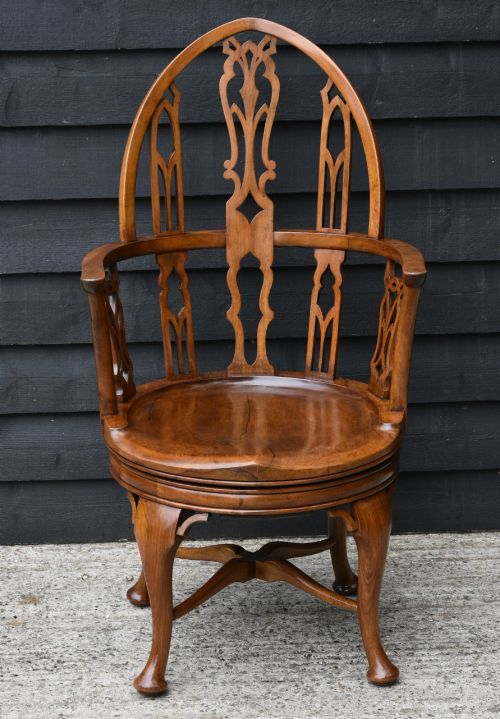
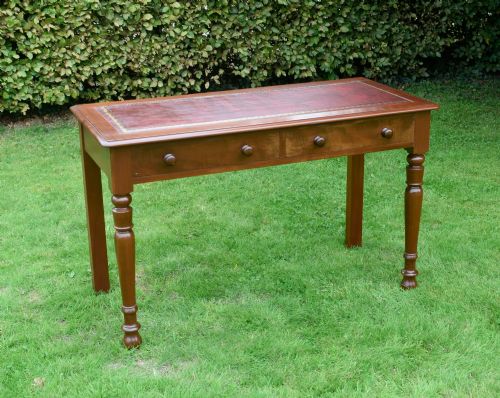
Writing surfaces frequently feature inset panels of tooled leather, whilst revolving desk chairs incorporate iron and brass swivel mechanisms to support movement. Carved pillars, tambour fronts, and brass handles complete the construction using traditional joinery without modern adhesives.
Listings feature woods spanning oak, mahogany, walnut, elm, and beech, paired with brass fittings and glass elements.
Distinctions in construction and design
The division between standard commercial output and superior craftsmanship rests in timber selection and secondary details. Desks utilising figured mahogany or burr elm veneers over sturdy oak carcasses demonstrate greater ambition than plain utility pieces.
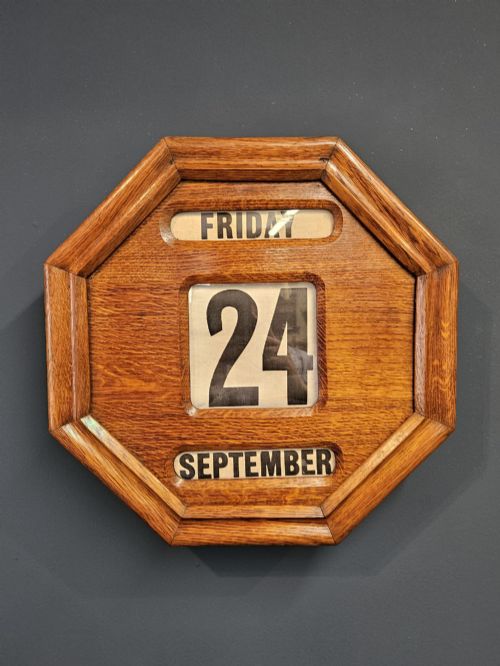
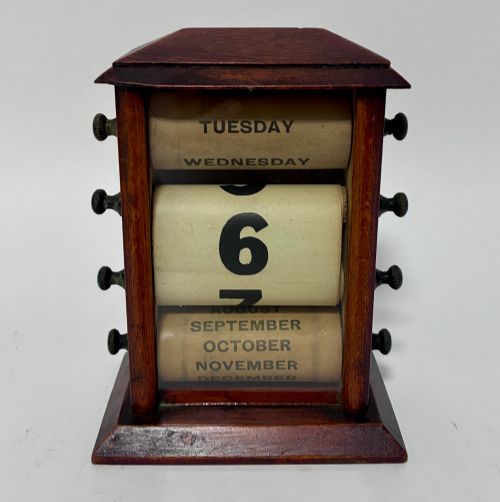
Hardware and movement define the upper tier, seen in smooth-running tambour cylinders, solid brass castors, and fully working mechanical actions on revolving desk chairs and perpetual calendars.
Howard and Sons·James Mein of Kelso·Hobbs and Co
The Brown Wooden Office Desk Glossary
- Pedestal desk
- A writing table supported by two vertical banks of drawers, often featuring a central kneehole space. These large pieces provide substantial storage capacity.
- Partners desk
- A double-sided workstation designed for two people to work opposite each other, featuring drawers and cupboards on both faces.
- Tambour front
- A flexible shutter made from narrow strips of wood glued to canvas, allowing a desk top to roll shut and secure the workspace.
- Kneehole desk
- A compact writing desk with a central recess for the legs, flanked by single or double stacks of drawers.
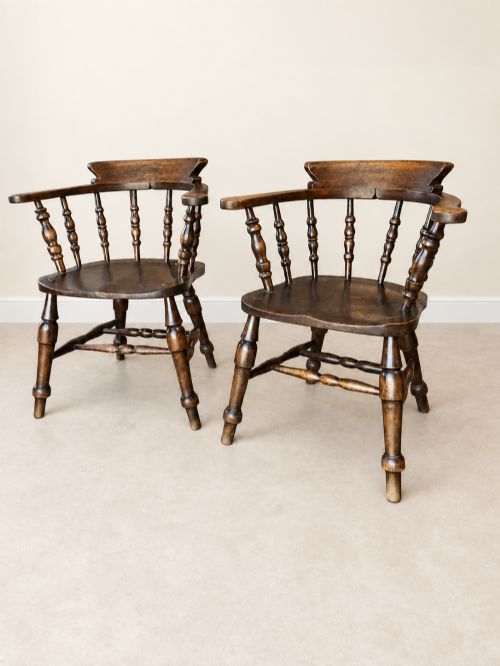
- Smokers bow
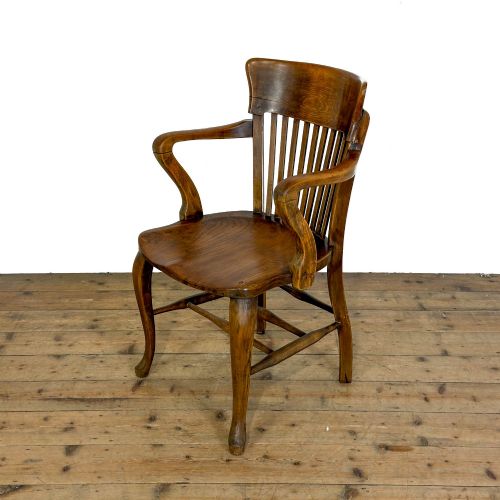
- A sturdy, low-backed wooden armchair with turned spindles and a solid saddle seat, frequently utilised at nineteenth-century office desks.
Brown Wooden Office Desk: Frequently Asked Questions
What is a partners desk?
A partners desk is a large, double-sided writing table built with storage drawers and cupboards facing outward on both sides. It allowed two clerks or business partners to sit and work opposite one another.
These pieces typically feature inset leather writing surfaces and heavy timber construction in oak or mahogany, serving as the centrepiece of a large study.
How do I care for leather desk tops?
Leather writing surfaces require gentle cleaning with a slightly damp cloth and occasional application of appropriate leather balm to prevent cracking. Avoid harsh chemical cleaners or excessive moisture.
Keep the leather away from direct sunlight to preserve the original colour and gold-tooled borders found on Victorian and Edwardian desks.
What is a tambour roll top desk?
A tambour desk incorporates a flexible slatted wooden screen that slides along curved grooves to cover the pigeonholes and drawers on the desktop. This mechanism locks to secure private papers.
The slatted curtain rolls away smoothly behind the writing surface when opened for daily work.
How do I date a wooden office desk?
Dating relies on examining construction methods, timber choices, and hardware styles across periods like the Victorian and Edwardian eras. Hand-cut dovetails, secondary woods, and lock types offer reliable clues to the decade of manufacture.
Stylistic shifts from heavy Gothic Revival to streamlined Art Deco help place the piece within its historical context.