

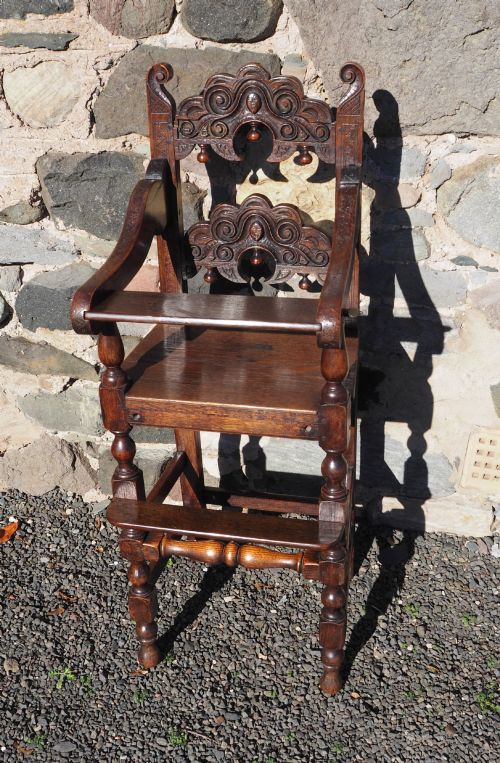

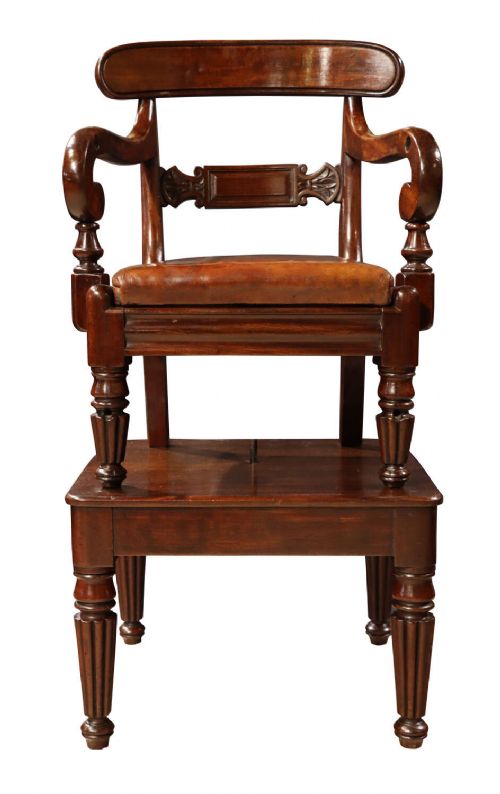


Brown Wooden Highchair
A brown wooden highchair brings domestic history into everyday rooms, offering solid timber construction and period character for modern homes.
Brown Wooden Highchair
When you search for a brown wooden highchair, you encounter sturdy seating designed for children across several historic periods. The selections span simple vernacular pieces to formal metamorphic designs that convert into low chairs.
You are most likely to meet elm, mahogany, beech, or oak examples originating from Georgian, Victorian, and Edwardian workshops. These range from rustic country armchairs to sophisticated William IV models mounted on stands.
How they were made
Maker's hands shaped these brown wooden highchair examples using traditional timbers like elm, beech, and mahogany, frequently combining woods within a single frame for structural strength.
Makers utilised turned spindles, steam-bent hoopbacks, and sturdy joinery to create safe, durable seating that endured generations of daily use.
Brown Wooden Highchair Retail Price Guide 2026
Typical asking prices for brown wooden highchair among the pieces listed under this phrase on Sellingantiques today, from the lower quarter to the upper quarter. They describe what is for sale here now, not the wider market.
One tiny elm chair patiently waited over two centuries for a very messy toddler who has long since grown up.
What varies in quality
Quality in a brown wooden highchair rests on the selection of timber, the sophistication of the turning, and the integrity of the original construction rather than decorative surface additions.
Simpler rustic pieces rely on straightforward country joinery, whereas sophisticated metamorphic versions demonstrate complex mechanical ingenuity in their design.
The Brown Wooden Highchair Glossary
- Metamorphic
- A piece of furniture designed to transform from a high chair into a low chair or a play table. This dual-purpose engineering allowed growing children to continue using the same furniture.
- Hoopback
- A curved backrest formed from a single continuous piece of steam-bent timber. This technique provided ergonomic support and structural rigidity.
- Vernacular
- Everyday utilitarian furniture made by local regional craftsmen using regional materials rather than following metropolitan fashion. These items prioritise function and local timber availability.
- Spindle
- A slender, turned wooden rod used as a decorative and structural support in chair backs and underframes. Master turners shaped these components on lathes.
- Stand
- A separate supportive base elevating the child's seat to table height. These elevated frames appear on specific Georgian and nineteenth-century designs.
Brown Wooden Highchair: Frequently Asked Questions
Are these old high chairs safe to use?
These historical items are primarily collected as decorative objects, historic artefacts, or display pieces rather than for modern nursery use. Their structural integrity reflects nineteenth-century standards and may not meet contemporary safety regulations.
Buyers typically integrate them into domestic interiors as plant stands, corner display pieces, or standalone sculptural timber objects rather than active seating.
How do I tell a Georgian chair from a Victorian one?
Georgian examples often display restrained lines, vernacular country craftsmanship, and native timbers like elm or ash with simple turned supports. Victorian iterations frequently incorporate denser mahoganies, more elaborate turnings, or mechanical metamorphic functions.
Examining the underlying timber shrinkage, tool marks, and construction fixings helps clarify the manufacturing era of each individual piece.
What woods were used for these chairs?
Cabinetmakers and country joiners utilised whatever strong domestic timbers were locally available, most commonly elm, beech, mahogany, ash, and oak. Elm and beech provided toughness for bent components, while mahogany appeared in more formal urban workshops.
Different wood grains and natural patinas developed over centuries of handling and polishing by past owners.