

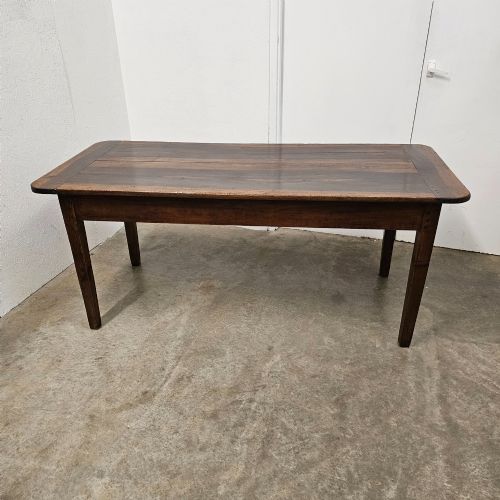
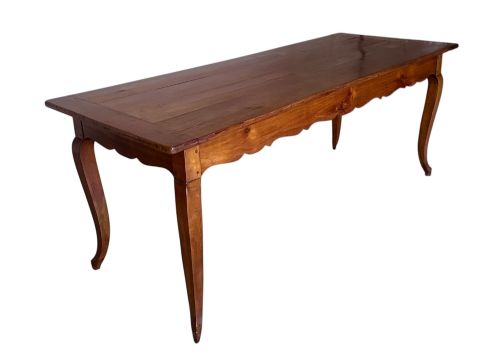
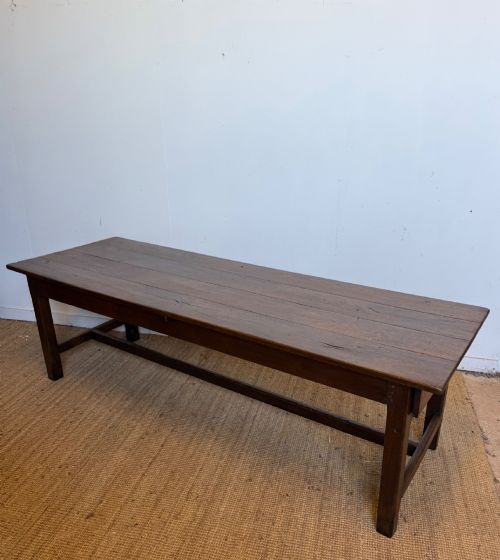
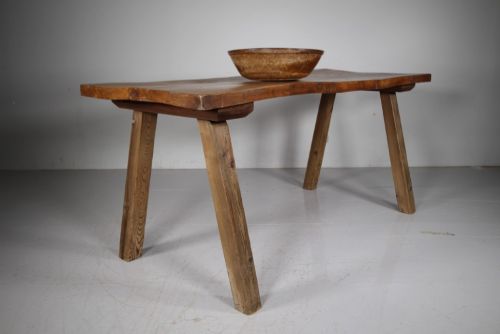


Brown Wooden Farm Table
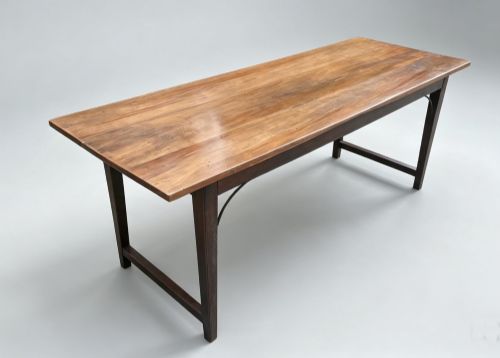
A brown wooden farm table brings utilitarian history into a modern room, offering generous space and honest timber construction.
Brown Wooden Farm Table
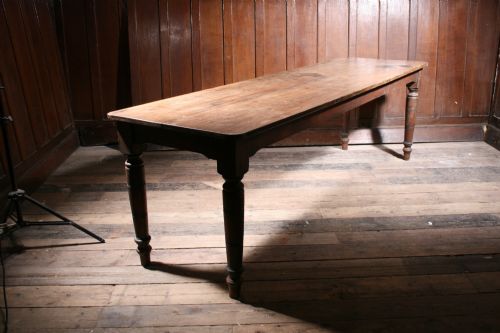
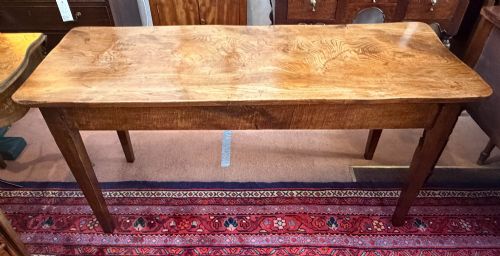
A brown wooden farm table is a utilitarian surface designed originally for domestic work or communal meals, spanning forms from dining and kitchen tables to coffee and console tables. These pieces emerge from periods including the Georgian era, the Victorian epoch, and the early 20th century.
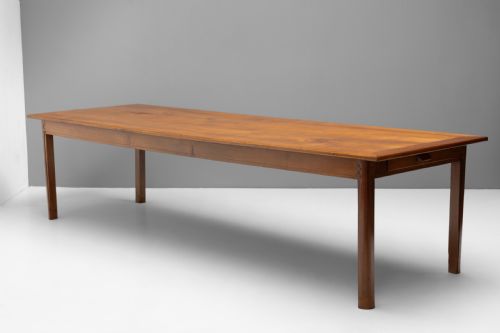
The version most commonly encountered on this page is the refectory or kitchen dining table, constructed from sturdy hardwoods or softwoods. Such items reflect regional styles such as rustic farmhouse, French provincial, and Arts and Crafts.
Origins stretch across English country houses and French provincial settings, occasionally including Burmese village examples. The fundamental character remains grounded in daily utility and robust wooden construction.
Materials and construction methods
Makers utilised solid timbers such as oak, pine, elm, and fruitwood, alongside cherry, walnut, and beech. These woods provided the necessary structural strength for heavy daily use in domestic and agricultural settings.
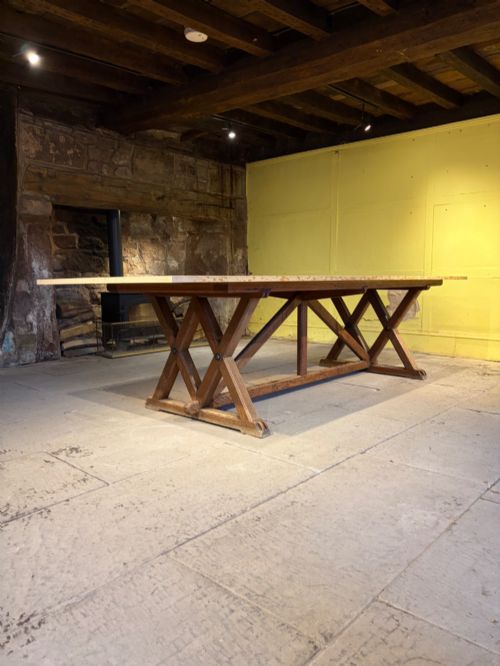
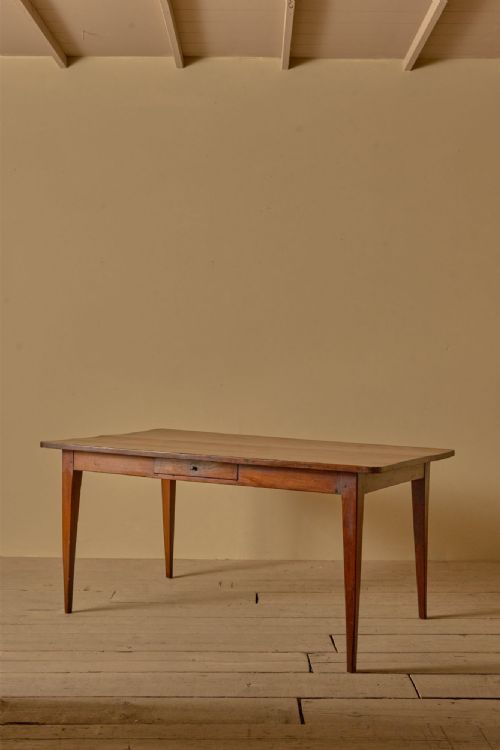
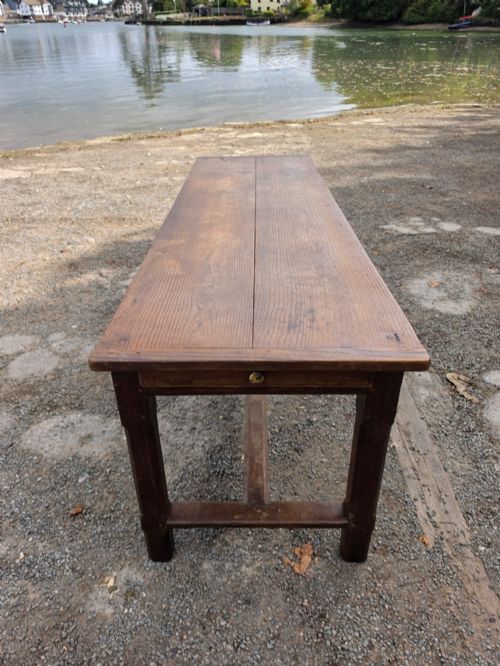
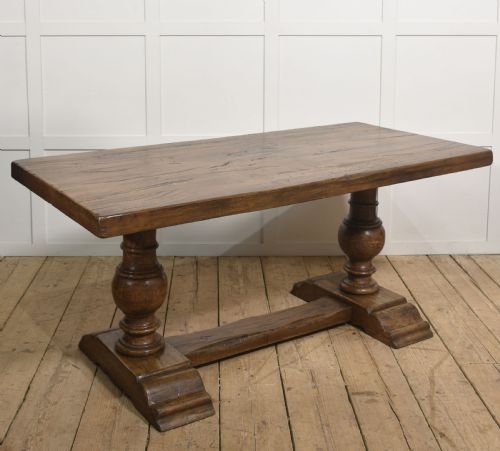
Construction techniques involve traditional joinery supporting thick plank tops, sometimes paired with trestle bases, drawers, or draw-leaf mechanisms. Brass hardware occasionally appears on functional components like side drawers.
Brown Wooden Farm Table Retail Price Guide 2026
Typical asking prices for brown wooden farm table among the pieces listed under this phrase on Sellingantiques today, from the lower quarter to the upper quarter. They describe what is for sale here now, not the wider market.
Formats span large community harvest tables, compact kitchen tables, and low coffee tables.
Distinctions in quality and execution
Quality rests upon the selection of timber, such as dense figured oak or mature fruitwood, and the integrity of the original joinery. Tables retaining their authentic structural framing command greater regard than those altered over time.
Proportion and surface patina distinguish exceptional examples from standard utilitarian pieces. Grain depth, untouched timber surfaces, and balanced dimensions elevate certain tables above routine domestic furniture.
The Brown Wooden Farm Table Glossary
- Refectory table
- A long narrow dining table traditionally used in monastic refectories and later adopted for domestic dining. They typically feature heavy timber legs connected by longitudinal stretchers.
- Draw-leaf table
- A table equipped with pull-out leaves stored beneath the main top, allowing the surface area to expand easily. This mechanism is frequently found in dining and kitchen formats.
- Fruitwood
- A collective term for timber sourced from fruit-bearing trees such as cherry, pear, or apple. It yields a fine grain and a warm tone suitable for provincial cabinetmaking.
- Parquetry
- A geometric mosaic of wood pieces used for decorative surfacing on tabletops. This technique appears in continental furniture traditions.
- Trestle base
- A support structure consisting of horizontal beams resting on vertical legs or feet. It provides stability without restricting legroom along the length of the table.
Brown Wooden Farm Table: Frequently Asked Questions
What is a brown wooden farm table?
A brown wooden farm table is a sturdy timber surface historically built for food preparation, daily dining, and communal gatherings in rural homes. These pieces are defined by their functional design and honest use of solid woods.
Today, they serve primarily as dining or kitchen tables, valued for their durability and the character accumulated through generations of domestic life.
How do I identify the period of a farm table?
Dating relies on observing construction methods, timber choice, and stylistic cues such as turned legs or trestle configurations. Georgian and Victorian examples often display distinct patination and joinery traits characteristic of their eras.
Examining the underside and fastening methods helps distinguish older hand-planed timbers from early 20th-century machine-processed equivalents.
Were these tables used only in kitchens?
While many originated as working kitchen or refectory tables, their roles varied widely according to household needs. They functioned as communal harvest tables, work surfaces, and primary dining furniture.
Their robust construction made them suitable for any domestic space requiring a reliable, heavy-duty wooden surface.
How do I care for a antique wooden table?
Maintenance involves protecting the timber from excessive moisture, direct heat sources, and rapid humidity changes. Regular dusting with a soft cloth preserves the natural wax finish and surface patina.
Avoiding harsh chemical cleaners ensures the historic wood finish remains stable and retains its character over time.