

Brown Wooden Display
These brown wooden display items range from oak bookcases to walnut pedestals, offering practical elevation for cherished objects.
Brown Wooden Display
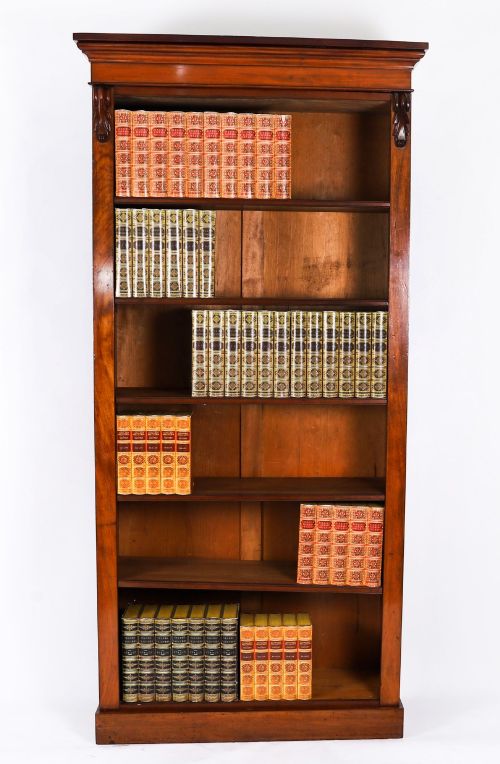
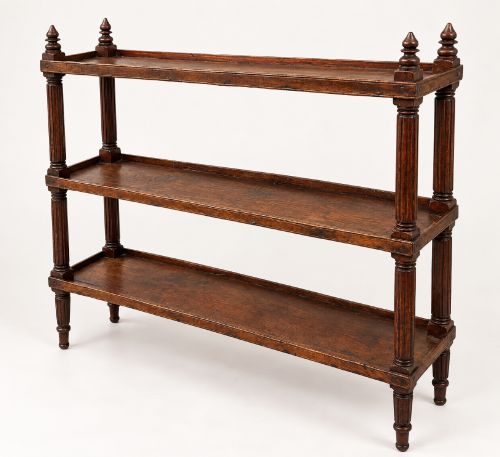
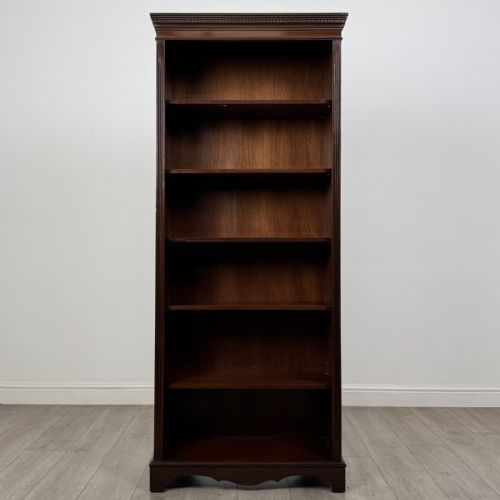
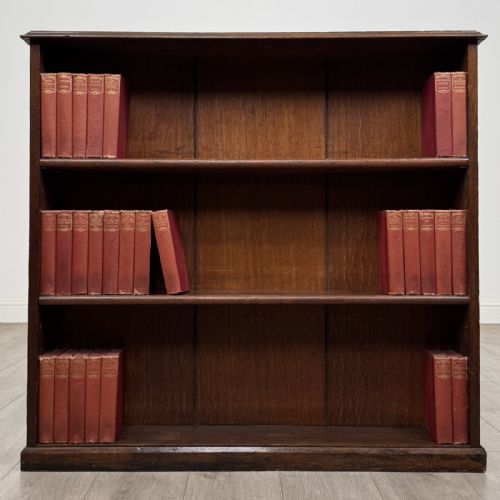
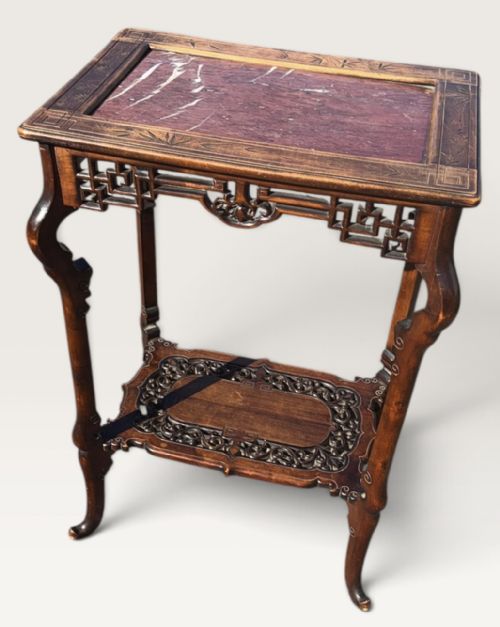
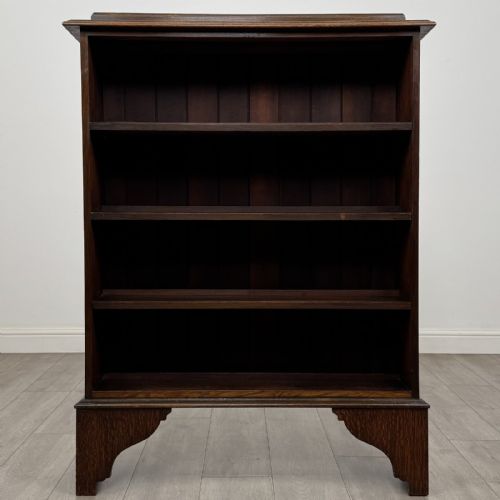
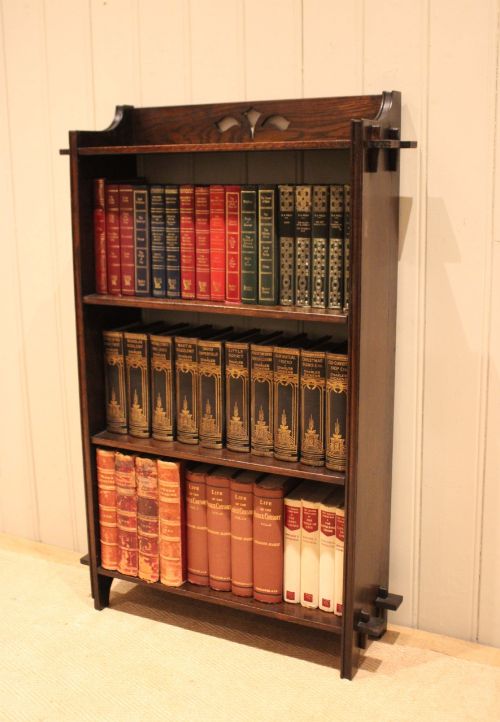
A brown wooden display search uncovers a diverse assortment of furniture designed to showcase or organise possessions, including open bookcases, multi-tiered étagères, plant stands, and glazed cabinets. The pieces span several centuries and regions, reflecting both formal British cabinet-making and international influences such as Anglo-Indian and Japanese craftsmanship.
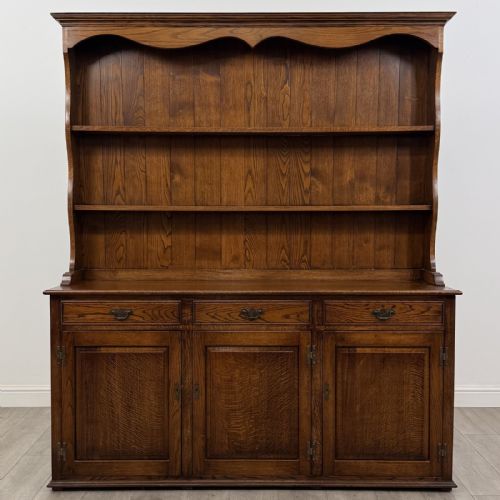
Visitors to this selection will most frequently encounter Edwardian and Victorian examples in oak and mahogany. These functional household furnishings typically feature adjustable shelving, raised galleries, or tiered platforms suited to domestic display.
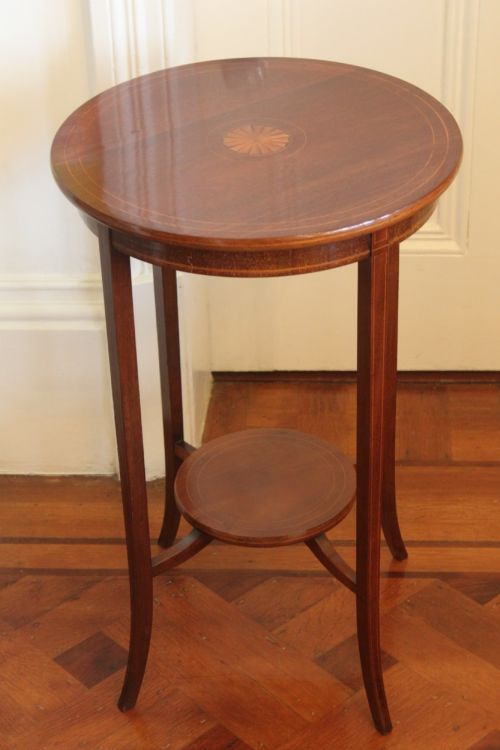
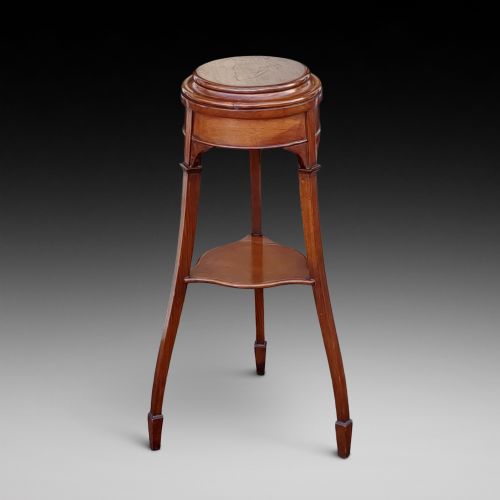
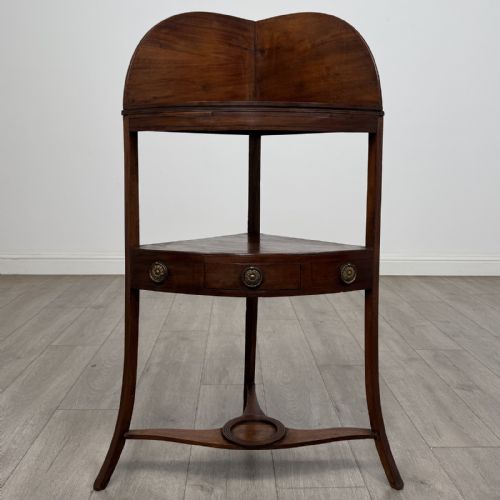
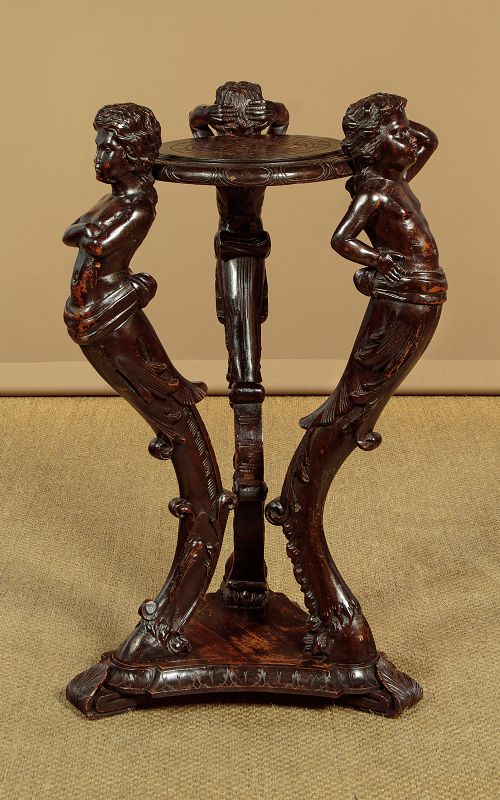
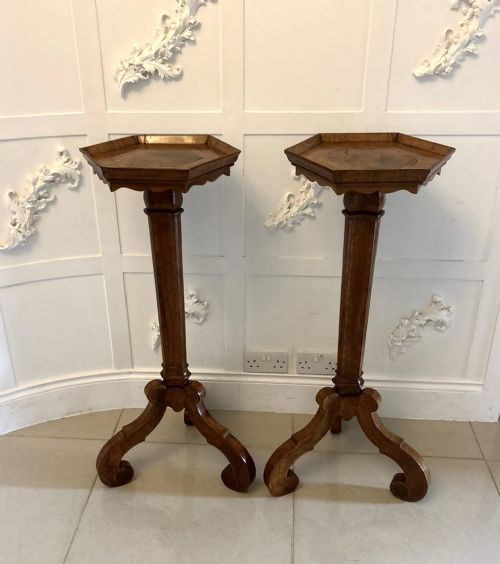
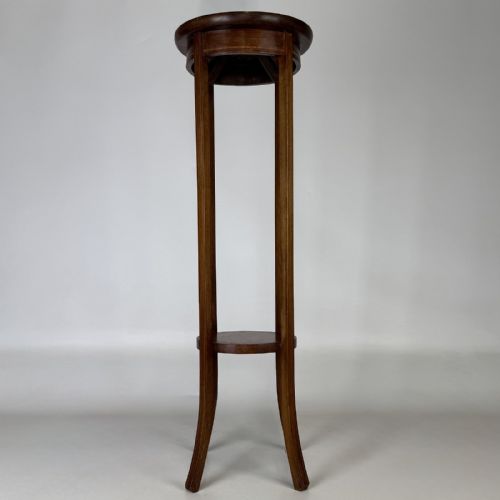
Alongside standard bookcases and side tables, the category encompasses specialist display items like pedestals, torchères, and wall brackets. These smaller forms allow collectors to elevate specific items such as vases, busts, and clocks within a room.
Materials and construction
Cabinet-makers relied primarily on durable timbers such as mahogany, oak, and walnut, often accentuating the grain with secondary woods like satinwood, kingwood, and amboyna. These materials were worked using traditional joinery techniques, ranging from pegged joints in Arts and Crafts pieces to intricate marquetry and inlay work.
Surface treatment and detailing define the construction of these items, with makers utilising brass hardware, carved decoration, and glass panels for glazed cabinets. Structural stability was achieved through thoughtful design, such as dentil cornices, shaped tops, and reinforced lower shelves.
Listings feature oak, mahogany, and walnut across periods spanning the eighteenth to the twentieth centuries.
Assessing quality and finish
Superior examples distinguish themselves through the selection of timber and the precision of the joinery rather than ornamental excess. Fine grain matching, crisp carving, and robust structural integrity separate high-grade workshop pieces from standard utilitarian furniture.
The sophistication of the design and the preservation of original surfaces heavily influence the calibre of each piece. Items retaining their original hardware, glass, and polished finish demonstrate a higher degree of authenticity and craftsmanship.
Gabriel Viardot·Rushworth's·Shapland & Petter
The Brown Wooden Display Glossary
- Étagère
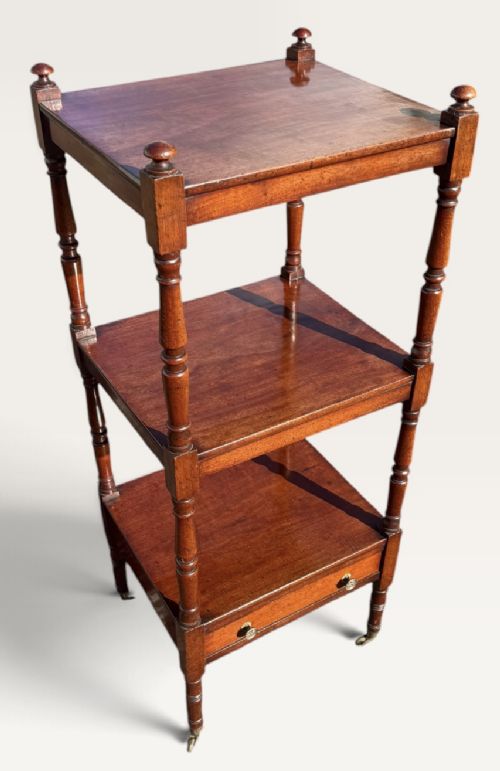
- A set of open shelves for displaying small objects or ornaments. These multi-tiered units became popular in the nineteenth century for exhibiting porcelain and decorative items.
- Torchère
- A tall ornamental stand designed to support a candelabrum, lamp, or vase. These slender supports often feature circular tops and decorative columns.
- Credenza
- A sideboard or display cabinet, frequently featuring glazed doors or marquetry inlay. Originating in Italy, the form evolved into a sophisticated nineteenth-century drawing-room piece.
- Whatnot
- A piece of furniture consisting of several open shelves above one another, used for books or ornaments. Variations include the three-tier hardwood models found in nineteenth-century homes.
- Dentil
- A series of small, rectangular blocks spaced evenly along a cornice. This architectural moulding is frequently seen on the upper sections of classical bookcases.
Brown Wooden Display: Frequently Asked Questions
What is a brown wooden display cabinet used for?
These cabinets serve to house and protect books, ceramics, and decorative objects while keeping them visible within living spaces.
Their shelved interiors and glazed doors provide a dust-free environment for delicate collections.
How do I date a wooden bookcase?
Dating relies on identifying characteristic timber choices, hardware styles, and construction methods associated with specific periods like the Victorian or Edwardian eras.
Details such as adjustable shelf mechanisms and cornices offer further clues to the manufacturing decade.
Where should I place a pedestal stand?
Pedestals and plant stands suit corners, hallway spaces, or empty wall segments where vertical height draws the eye upward.
They function best supporting single feature items like sculptures, urns, or large vases.
Are these pieces suitable for modern homes?
The compact footprints of many étagères, wall shelves, and side tables allow them to integrate easily into contemporary room layouts.
Their natural timber tones complement both traditional and modern interior colour schemes.