

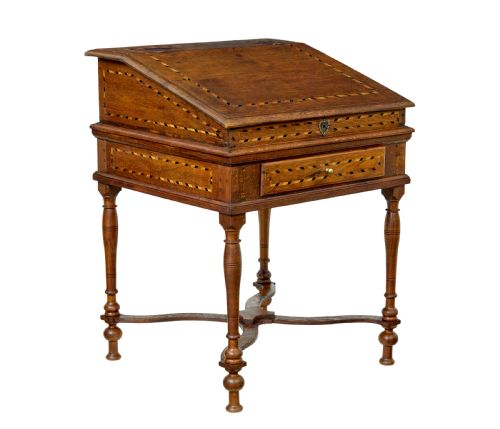

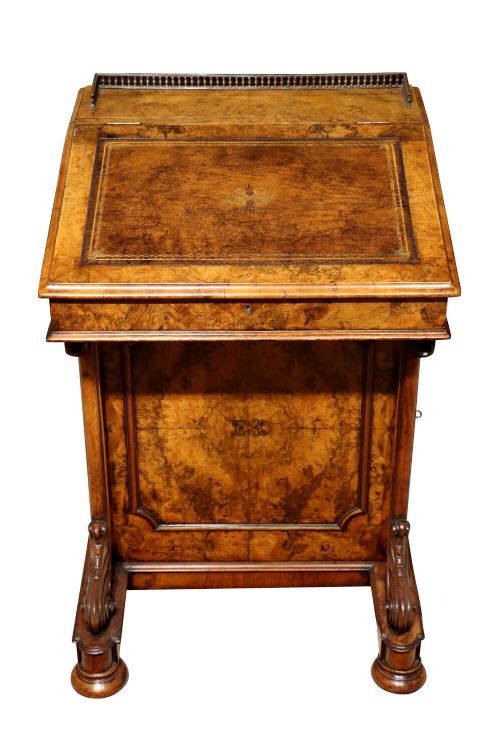


Brown Wooden Davenport
A brown wooden davenport is a compact writing desk offering enclosed storage and a slanted top, prized for combining functionality with fine timber craftsmanship in small domestic spaces.
Brown Wooden Davenport
A brown wooden davenport is a compact writing desk designed primarily for domestic correspondence and record keeping. The form typically integrates a sloped writing surface above a pedestal of drawers or a cabinet.
Most examples encountered on this page date from the nineteenth century, spanning the Regency and Victorian periods. These desks appear in various timber species including mahogany, walnut, burr walnut, oak, and rosewood.
Makers produced standard pedestal forms alongside specialised variations such as piano top davenports and diminutive proportions. Interiors often reveal satinwood fittings and small drawers beneath the main writing flap.
How they were made
Cabinet makers utilised dense hardwoods such as mahogany and rosewood, alongside decorative veneers like burr walnut and olivewood. Timber selection dictated both the visual character and the structural integrity of each desk.
Brass fittings, including casters, handles, and gallery rails, provided functional reinforcement and decorative contrast against the dark timber surfaces. Leather inserts were frequently incorporated into the sloping writing surfaces.
Internal joinery involved precise fitting of satinwood stationery compartments and secret drawers. Advanced variations incorporated mechanical slide fronts and pop-up writing mechanisms.
Brown Wooden Davenport Retail Price Guide 2026
Typical asking prices for brown wooden davenport among the pieces listed under this phrase on Sellingantiques today, from the lower quarter to the upper quarter. They describe what is for sale here now, not the wider market.
Some nineteenth-century davenports hide ingenious pop-up mechanisms and secret compartments originally designed to guard private correspondence from prying eyes.
What varies in quality
The choice of timber grain and veneer figure fundamentally separates standard examples from exceptional pieces. Highly figured burr walnut and richly grained mahogany indicate superior material selection by the maker.
Complexity of internal arrangement and mechanical ingenuity distinguish finer davenports. Desks featuring satinwood interiors, sliding fronts, and pop-up compartments demonstrate higher standards of cabinet making than simpler static forms.
Subtlety of carving and integration of brass mounts determine the aesthetic refinement of an individual desk. Coarse execution of decorative details contrasts with the crisp carving found on superior nineteenth-century pieces.
The Brown Wooden Davenport Glossary
- Davenport
- A small pedestal writing desk featuring a sloping top and side drawers. The form originated in the late eighteenth century and remained popular throughout the Victorian era.
- Burr walnut
- A prized timber veneer obtained from the knot growths of walnut trees. It exhibits swirling, highly decorative grain patterns.
- Satinwood
- A hard, yellow-toned timber frequently utilised for internal drawer linings and small compartments within nineteenth-century desks.
- Writing slope
- An inclined surface designed to support paper during correspondence. It often lifts to reveal storage space underneath.
- Pedestal
- The base support structure of the desk containing drawers or cupboards. It sits beneath the writing surface on one or both sides.
Brown Wooden Davenport: Frequently Asked Questions
What is a davenport desk used for?
A davenport desk serves primarily as a compact writing and correspondence station. The sloped top provides a comfortable surface for letter writing while internal compartments store stationery.
Enclosed drawers within the pedestal offer secure storage for personal papers and small household records. Their small footprint made them particularly popular for drawing rooms and private chambers.
How do I identify a Victorian davenport?
Victorian davenports typically date between eighteen thirty and nineteen hundred, showing characteristic proportions and timber choices. Mahogany, burr walnut, and rosewood predominate during this period.
Stylistic indicators include turned wooden knobs, brass gallery rails, and fitted satinwood interiors. Carved oak examples also appear from the mid-nineteenth century onwards.
Where should I place a davenport in a room?
Davenports work well in smaller spaces due to their compact footprint and enclosed storage. They suit placement against walls or functioning as freestanding items where the finished back panel remains visible.
Natural light directed across the sloping writing surface assists with reading and correspondence. Positioning them away from direct heat sources protects the timber and leather surfaces from drying out.