


Brown Wooden Cup
These brown wooden cup items span drinking vessels, chalices, and turned objects crafted across the eighteenth, nineteenth, and early twentieth centuries.
Brown Wooden Cup
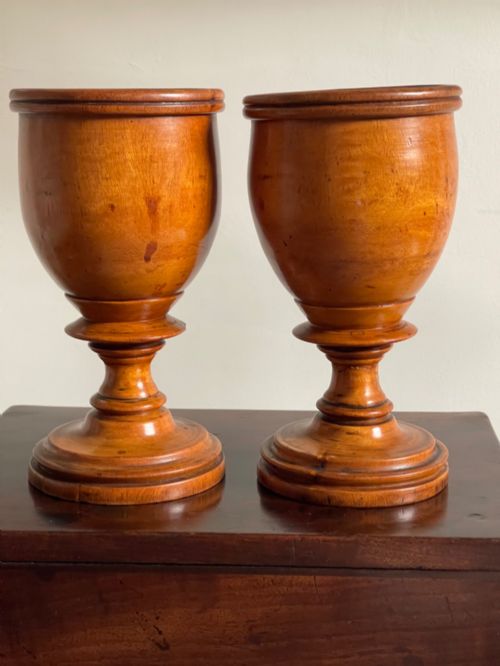
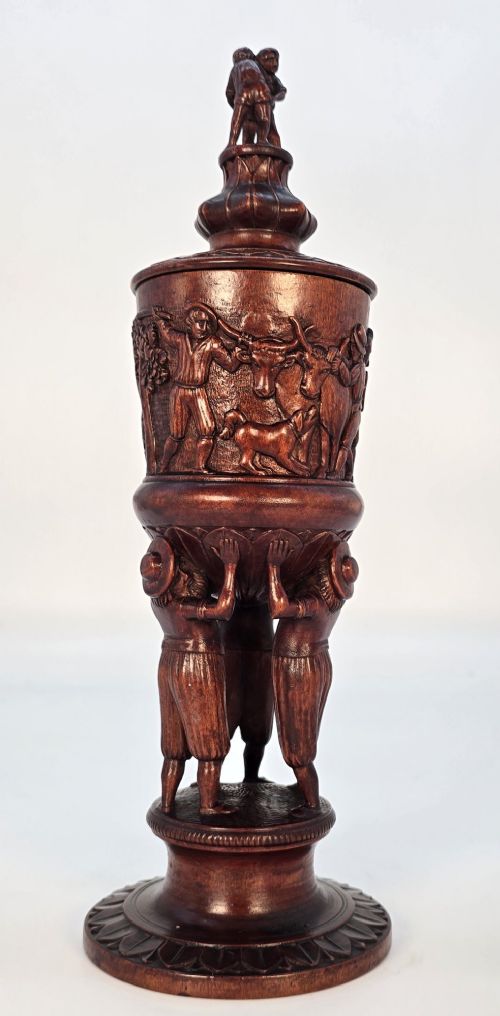
When searching for a brown wooden cup, buyers encounter a diverse selection of turned treen, drinking vessels, and game pieces spanning several centuries. The pieces on this page include fruit wood goblets, walnut lidded chalices, specimen wood turned goblets, and ball and cup toys.
Origins stretch from Swiss Brienz carvings to English Arts and Crafts workshops and Pitcairn Island vessels. Forms range from utilitarian chalices to decorative egg cup stands.
Materials and construction
Maker workshops utilised dense timbers such as walnut, oak, mahogany, fruit wood, and yew wood to shape these objects on lathes. Turning techniques allowed artisans to achieve smooth profiles on goblets, chalices, and spill vases.
Some vessels incorporate contrasting elements like brass hardware or metal fittings, while others rely purely on the polished grain of the hardwood. Carved details on Swiss Brienz items demonstrate manual cutting alongside lathe work.
Listings feature items from the eighteenth, nineteenth, and early twentieth centuries, constructed in oak, walnut, mahogany, fruit wood, and yew wood.
Distinctions in quality
The standard of a turned wooden vessel depends on the precision of the lathe work, the crispness of any carved decoration, and the preservation of the timber surface. Finer examples display balanced proportions and clean turnery without structural splitting or heavy timber loss.
Surface finish also dictates the appeal of each piece, with polished walnut and patinated fruit wood holding distinct visual weight compared to drier, untreated utility items.
The Brown Wooden Cup Glossary
- Treen
- Small handmade wooden objects for domestic or decorative use. These items include cups, goblets, and stands shaped by turning or carving.
- Chalice
- A large drinking cup, often featuring a stem and a footed base. Historic examples are frequently turned from single blocks of hardwood.
- Goblet
- A drinking vessel with a bowl, stem, and foot. Wooden variants showcase the natural grain of fruit wood or walnut.
- Swiss Brienz
- A style of intricate wood carving originating from a Swiss village. Pieces from this tradition often feature naturalistic foliage or figurative subjects.
- Turned
- Shaped on a lathe while rotating. This method produces symmetrical items such as cups, bowls, and spindles.
Brown Wooden Cup: Frequently Asked Questions
What is a treen cup?
A treen cup is a small, functional wooden vessel shaped by hand or on a lathe. These objects were produced for daily domestic use.
Over time, handling creates a natural patina across the surface of the timber.
How do I care for wooden cups?
Keep wooden vessels away from direct heat sources and dramatic humidity fluctuations. These measures prevent the timber from splitting or warping.
Apply occasional appropriate wax polish to maintain the sheen of the grain.
Are these cups safe for drinking?
Most historic wooden cups serve primarily as decorative objects or display pieces rather than active tableware. Older finishes and dry timber may react poorly to modern liquids.
Inspect the interior surface before attempting to use any antique vessel for consumption.
How are different wood types identified?
Observation of grain patterns, colour depth, and weight helps distinguish between woods like walnut, oak, and fruit wood. Hardwoods typically display tighter growth rings and greater heft.
Comparison with documented examples from similar periods assists with verification.