





Brown Wooden Corbels
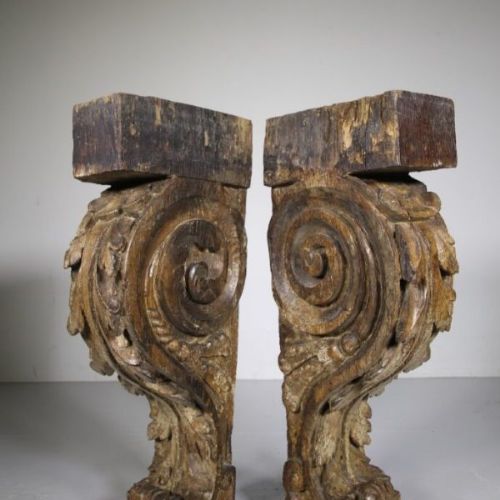
Brown wooden corbels are architectural supports and wall brackets carved from oak, walnut, and mahogany, bringing historic structural detail into domestic interiors.
Brown Wooden Corbels
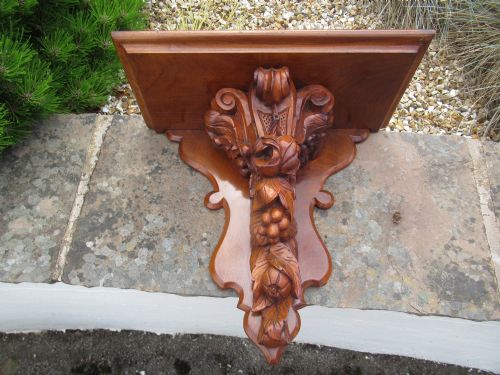
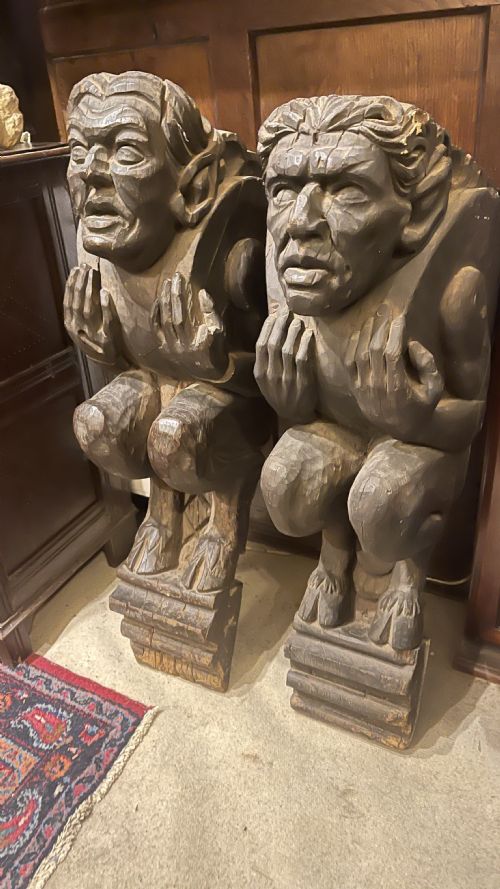
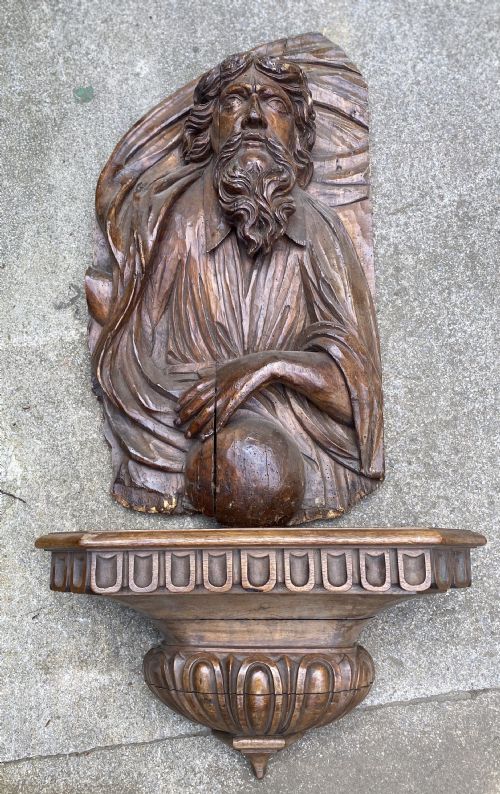
Brown wooden corbels encompass architectural salvage, wall brackets, and carved timber supports originating from periods such as the 17th century, Georgian era, and Victorian times. These items frequently take the form of paired wall brackets, figurative carvings, or structural elements salvaged from historic buildings.
The selection here includes carved oak examples from the 17th century alongside walnut pieces from the 18th and 19th centuries. Buyers encounter both British country house styles and continental workshops, including Black Forest carvings and Baroque-inspired designs.
How they were made
Craftsmen shaped these supports primarily from solid hardwoods like oak, walnut, and mahogany using traditional hand-carving techniques. The timber was selected for grain and density to support weight while allowing intricate sculptural detail.
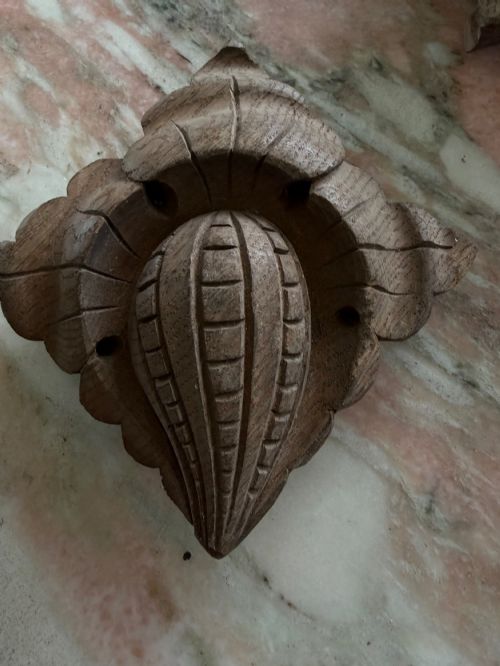
Surface treatments rely on natural wax polishes and traditional finishes that highlight the carved timber. Makers utilised gouges and chisels to achieve deep relief work, seen in figurative motifs such as cherubs, caryatids, and animal heads.
Brown Wooden Corbels Retail Price Guide 2026
Typical asking prices for brown wooden corbels among the pieces listed under this phrase on Sellingantiques today, from the lower quarter to the upper quarter. They describe what is for sale here now, not the wider market.
Some brackets feature the stern face of a medieval man peering across the room from his oak perch.
What varies in quality
The choice and age of the timber influence the character of each piece. Denser historic hardwoods retain sharper carved edges and richer patination through centuries of handling.
Luigi Frullini
The Brown Wooden Corbels Glossary
- Corbel
- A structural piece of stone, wood, or metal jutting from a wall to carry a superincumbent weight. In this selection, they function primarily as decorative wall brackets and architectural supports.
- Caryatid
- A sculptured female figure serving as an architectural support taking the place of a column or a pillar. Examples appear among 17th-century carved oak pieces.
- Black Forest
- A style of wood carving originating from the German region known for highly detailed animal and wildlife sculptures. Items in this category typically feature walnut carved with figures like lions or tigers.
- Baroque
- An ornate artistic style prevalent from the 17th into the 18th century characterised by dramatic curves and rich ornamentation. Pieces in this style often incorporate cherubs and elaborate scrollwork.
- Ceiling Boss
- A decorative projecting block of wood placed at the intersection of ribs in a ceiling or vault. Surviving panels demonstrate early timber carving traditions.
Brown Wooden Corbels: Frequently Asked Questions
What were wooden corbels used for?
These pieces functioned historically as structural supports for beams, shelves, and mantelpieces in grand buildings. Over time, many were salvaged to serve as decorative wall brackets for displays.
Today, they are mounted on interior walls to hold books, plants, or small sculptures, bringing historic architectural character into modern rooms.
How do I mount an antique corbel?
Most antique corbels require custom steel brackets or hidden fixings attached to the flat rear surface to support weight safely. Professional installation ensures the historic wood remains undamaged by modern fixings.
Consult a structural specialist if you plan to place heavy items on antique timber brackets.
How do I tell 17th-century oak from Victorian walnut?
Seventeenth-century pieces typically feature heavy, grained oak with deep, hand-chipped relief work and darker historic patination. Victorian walnut items often display smoother finishes and crisper, highly polished detailing.
Comparing the tool marks and wood density helps differentiate early continental and British styles from later revival work.
How do I care for antique wooden corbels?
Maintain the finish by dusting gently with a dry, soft cloth and avoiding chemical polishes that strip historic wax. Keep the timber away from direct heat sources and strong sunlight to prevent splitting.
Occasional application of microcrystalline wax preserves the surface sheen of walnut and oak without buildup.