



Brown Wooden Chess
These brown wooden chess pieces, boards and tables offer tactile play and period craft, built to last centuries.
Brown Wooden Chess
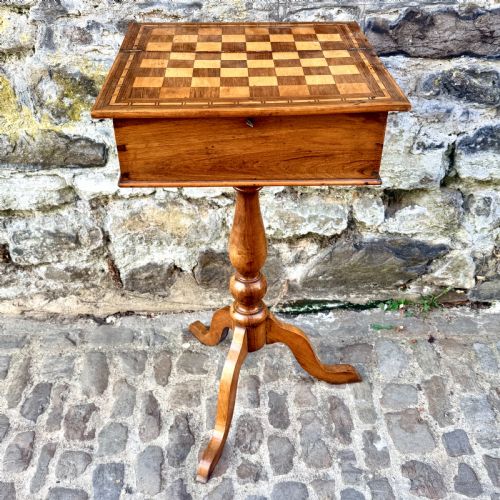
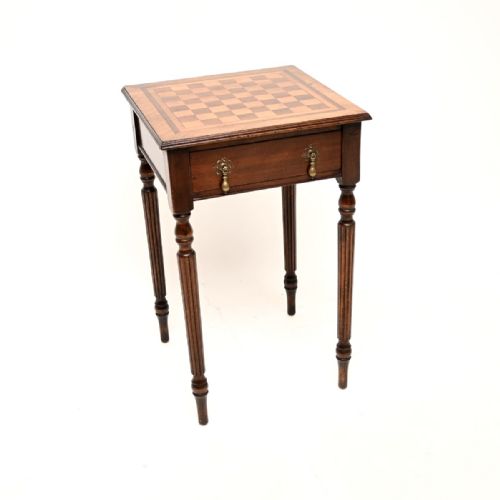
When you search for brown wooden chess, you encounter items ranging from standalone boards to multi-use tables and compendiums. The brown wooden chess category spans several eras, including the Regency, Victorian, and Edwardian periods.
The most common formats on this page include mahogany, walnut, and oak games tables alongside inlaid boards. These pieces serve practical play while functioning as decorative furniture within a room.
Origins vary from English traditional workshops to French provincial and Levantine makers. Each piece reflects the social habits of parlour games from the nineteenth and early twentieth centuries.
Materials and construction
Craftsmen utilised dense hardwoods such as mahogany and walnut for structural stability and rich natural tones. Boxwood, sycamore, and fruitwood frequently provide the contrasting lighter squares on boards and tables.
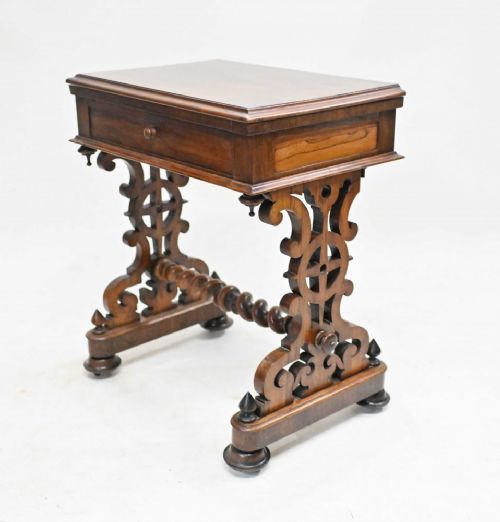
Marquetry inlay and surface carving define the decorative work on many of these items. Specialised tables integrate folding tops and storage compartments for pieces during the Victorian and Edwardian eras.
Brown Wooden Chess Retail Price Guide 2026
Typical asking prices for brown wooden chess among the pieces listed under this phrase on Sellingantiques today, from the lower quarter to the upper quarter. They describe what is for sale here now, not the wider market.
Listings feature walnut, mahogany, and oak across Victorian and Edwardian periods.
Judging quality in wooden chess items
Depth of timber grain and precision in marquetry inlay separate standard boards from finer examples. Superior tables demonstrate careful matching of veneers and stable joints across the framework.
Intricacy of carved detail on tripod bases and games boxes indicates the level of workshop labour invested. Original surfaces with balanced patination hold more visual integrity than heavily refinished pieces.
Gillows
The Brown Wooden Chess Glossary
- Marquetry inlay
- Decorative patterns formed by fitting small pieces of veneer into a prepared wooden surface. This technique creates geometric or floral designs on table tops.
- Games compendium
- A fitted box containing multiple pastimes such as chess, backgammon, and cards. These sets represent comprehensive entertainment hubs from the Victorian period.
- Tripod table
- A small occasional table supported by a central pillar and three feet. They often feature tilt-top mechanisms suited for board games.
- Boxwood
- A dense, pale wood traditionally utilised for the lighter squares on chess boards and lighter chess pieces. Its tight grain allows for precise cutting.
- Tantalus
- A locked wooden frame displaying decanters, occasionally incorporated into larger games compendiums. The design keeps contents secure from unauthorized access.
Brown Wooden Chess: Frequently Asked Questions
What is a games compendium?
A games compendium is a box or cabinet housing equipment for multiple pastimes, including chess, backgammon, and card games. These sets became popular in upper-class households during the Victorian and Edwardian eras.
They combine utility with fine cabinetry, often featuring internal trays and lockable compartments. Collectors value them for their completeness and the variety of materials used in the internal pieces.
How do I identify a Regency chess table?
Regency chess tables typically date from the early nineteenth century and display classical restraint in their design. Look for formal lines, rosewood or mahogany timbers, and brass mounts.
Many incorporate subtle turning on the legs and fold-over tops designed specifically for board games. They reflect the neoclassical tastes prevalent during the Regency period.
Where were Levantine inlaid tables made?
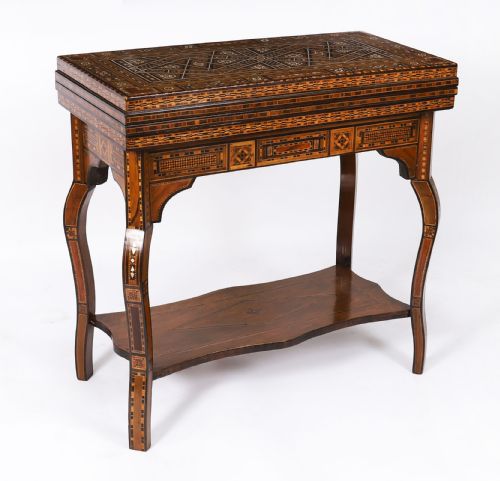
Levantine inlaid tables originate from the Eastern Mediterranean region during the late nineteenth and early twentieth centuries. They are characterised by intricate geometric mosaic patterns created using various woods, bone, and mother-of-pearl.
These tables frequently feature multiple fold-out surfaces for chess, backgammon, and card playing. Their distinct aesthetic blends traditional Middle Eastern woodworking techniques with European furniture forms.