



Brown Wooden Butler Table
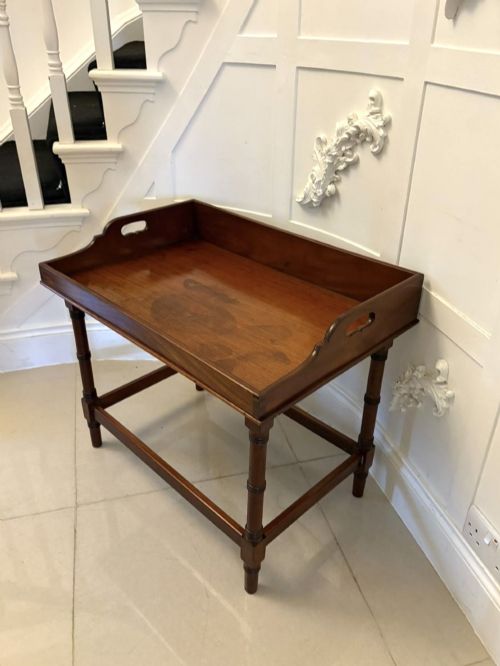
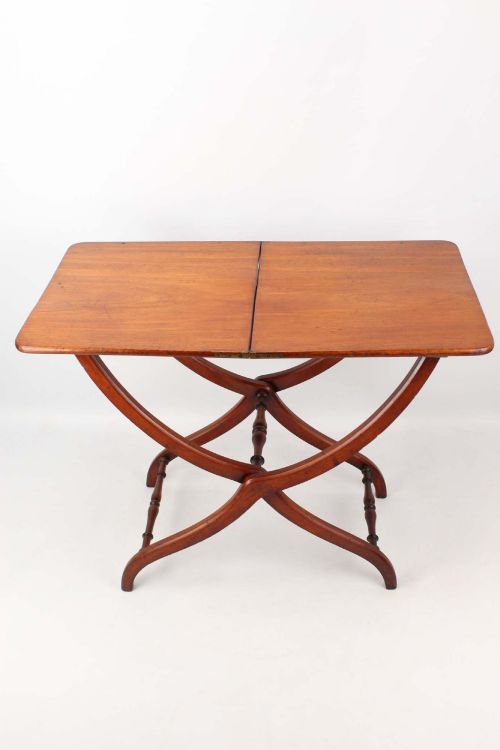
A brown wooden butler table brings portable service into a room, offering a removable tray top resting upon a folding or fixed stand.
Brown Wooden Butler Table
A brown wooden butler table combines a practical serving tray with a supporting stand, originating from periods when dining and refreshments moved across the house. You will frequently encounter examples from the nineteenth century and the Victorian era, alongside pieces dating from the eighteenth century, Georgian period, and Edwardian years.
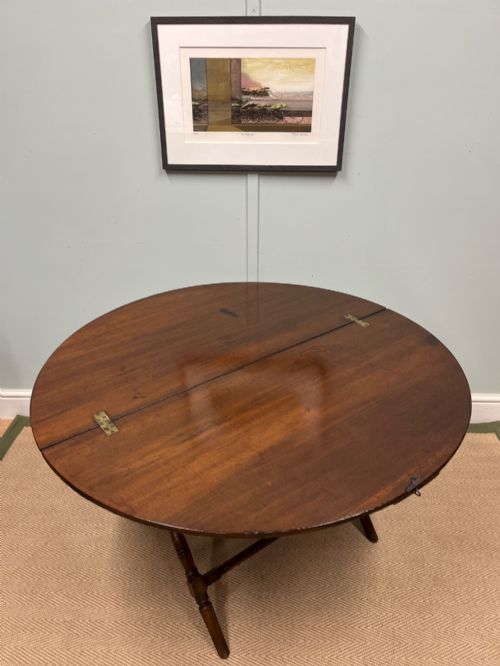
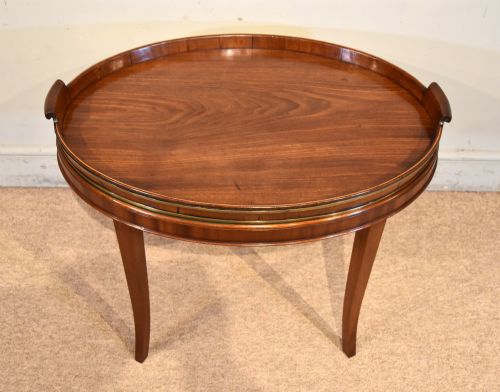
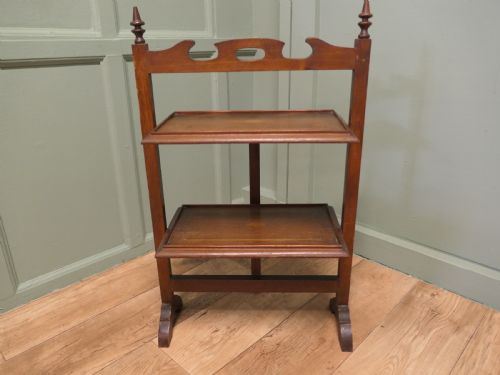
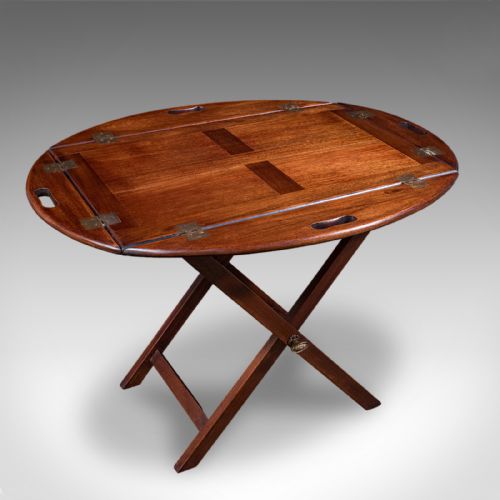
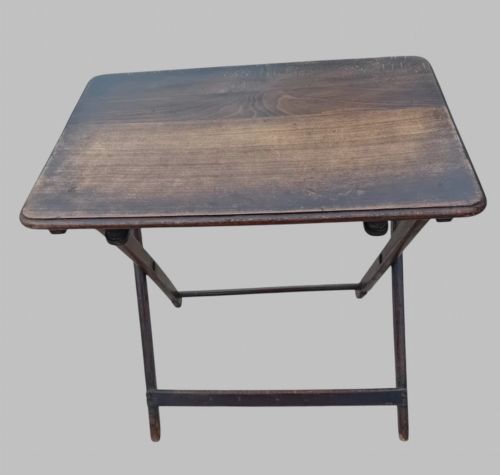
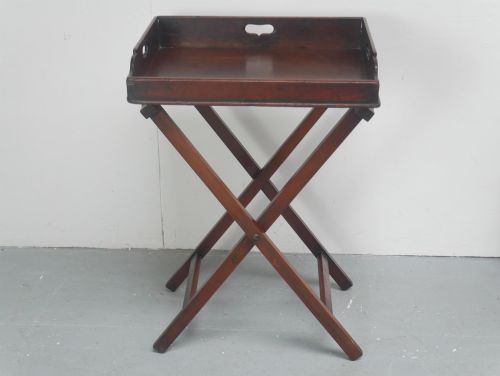
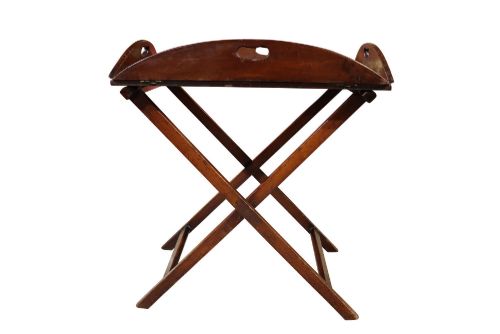
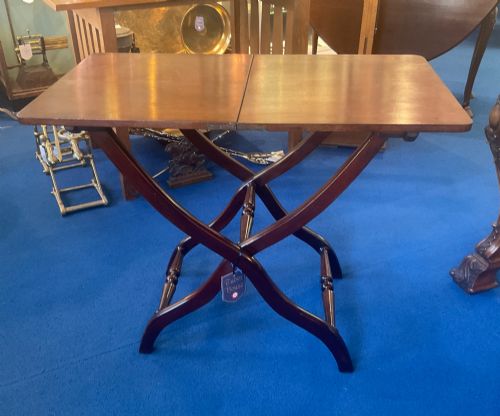
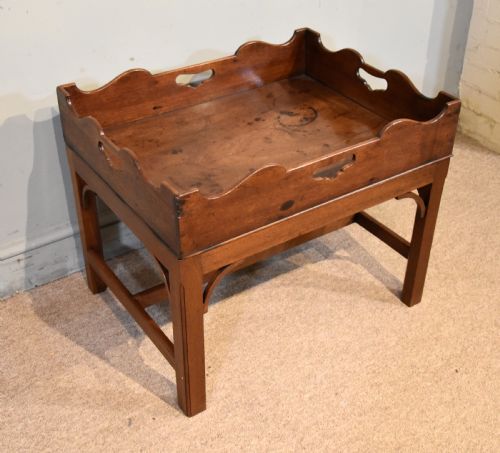
The form typically splits between rectangular, oval, or kidney-shaped trays set upon X-frame folding bases or rigid stands. These items function as occasional tables, coffee tables, and side tables in modern interiors, retaining their original portability.
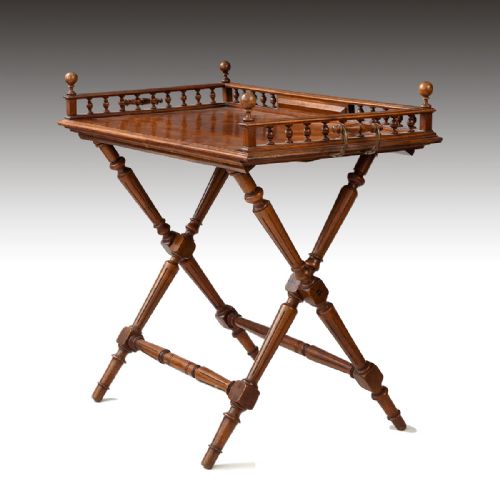
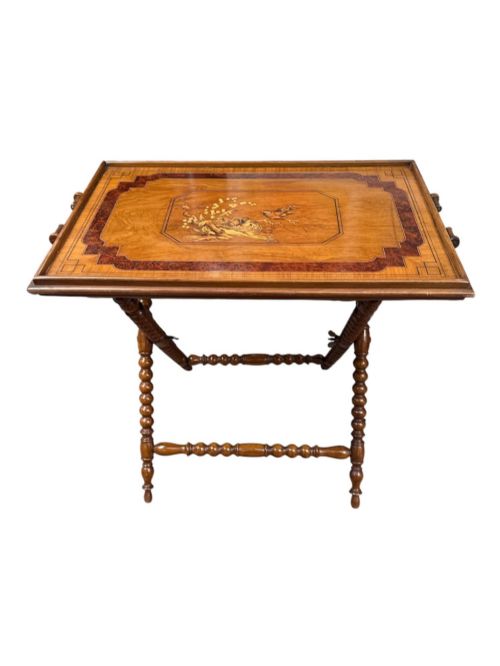
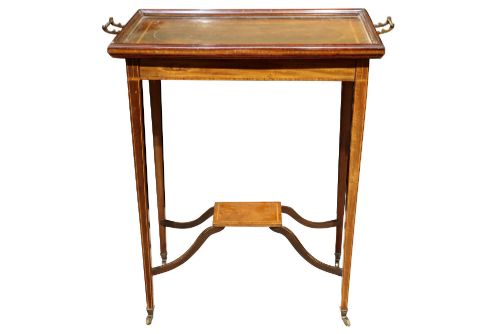
Makers utilised various native and imported timbers, resulting in pieces spanning simple folding campaign tables to inlaid marquetry serving stands. The integration of drop-flaps, brass handles, and galleried edges defines the primary variations within this functional furniture type.
Materials and construction methods
Cabinet makers relied heavily on mahogany as the principal timber, complemented by walnut, oak, beech, satinwood, and olivewood. Trays often featured raised rims, hand-cut handles, and delicate veneer work or inlay wood.
Stands were constructed either as rigid frames or collapsible folding supports, incorporating brass hinges and joints designed for easy storage. Marquetry and Sorrento ware techniques appear on decorative surfaces, contrasting with plain solid timbers used for utilitarian serving pieces.
Brown Wooden Butler Table Retail Price Guide 2026
Typical asking prices for brown wooden butler table among the pieces listed under this phrase on Sellingantiques today, from the lower quarter to the upper quarter. They describe what is for sale here now, not the wider market.
Listings demonstrate that mahogany is the dominant timber, accompanied by walnut and oak across the nineteenth and early twentieth centuries.
Assessing quality and craftsmanship
The distinction between ordinary and superior pieces rests on the selection of timber grain, the precision of the joinery, and the integrity of the stand. Tables retaining their original matching stand demonstrate a higher degree of authenticity than those paired together later.
Refined examples show careful attention to detail in the edge mouldings, brass mounts, and hand-cut handholds on the tray. Simpler folding camping models prioritize functional robustness, whereas decorative items display intricate marquetry and satinwood banding.
The Brown Wooden Butler Table Glossary
- Stand
- The supporting frame that holds the tray at table height. These can be rigid occasional tables or folding X-frame structures.
- Campaign style
- Furniture designed for military officers to pack flat for travel. Pieces in this style utilise folding frames and brass hardware.
- Sorrento ware
- Decorative woodwork featuring intricate micro-mosaic marquetry scenes. This Italian technique appears on tabletop panels and trays.
- Gallery
- A raised wooden border surrounding the edge of a tray. This feature prevents items from sliding off during transit.
Brown Wooden Butler Table: Frequently Asked Questions
What is a brown wooden butler table used for?
These tables function primarily as movable serving surfaces, side tables, or low coffee tables in living spaces. Their removable trays allow them to double as serving platters when entertaining guests.
In daily use, they provide flexible surface space that can be folded away or repositioned around a room with minimal effort.
How do I date a brown wooden butler table?
Dating relies on examining the timber species, construction methods, and hardware style. Eighteenth-century and Georgian pieces generally show hand-cut dovetails and dense mahogany, while Victorian and Edwardian examples may incorporate machine-sawn elements or lighter satinwood inlay.
The presence of original brass hinges on folding stands also offers clues to the manufacturing period.
Are the trays removable from the stands?
Most trays lift off their supporting stands entirely, adhering to the traditional purpose of carrying items between rooms. Some later metamorphic designs or occasional tables feature fixed tops or integrated pivoting mechanisms.
Checking the underside reveals whether the tray was built to detach from the base.
How do I care for antique wood surfaces?
Maintenance requires avoiding direct sunlight and excessive moisture to protect the polished wood and delicate marquetry. Regular dusting with a dry cloth preserves the patina, while occasional wax application nourishes older timber.
Keep these tables away from direct heat sources to prevent the wood or veneer from warping and cracking.