

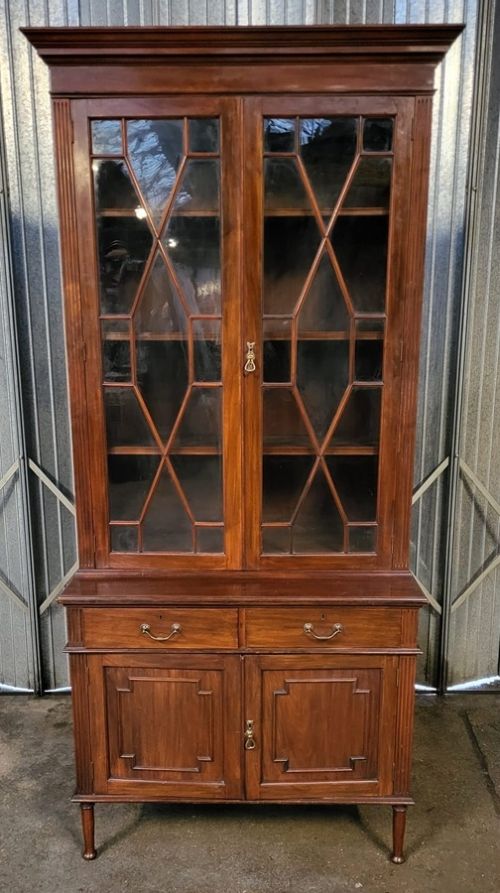
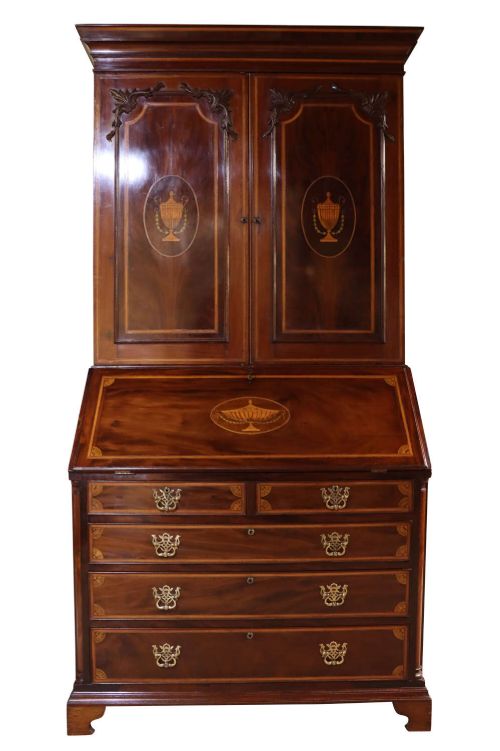
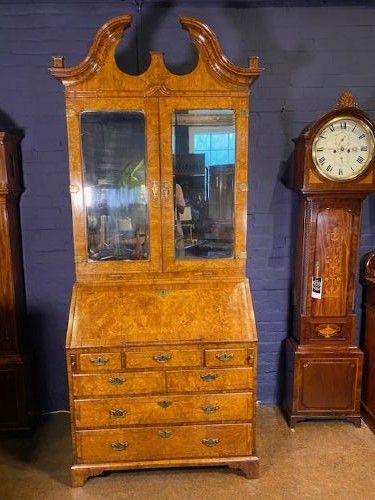
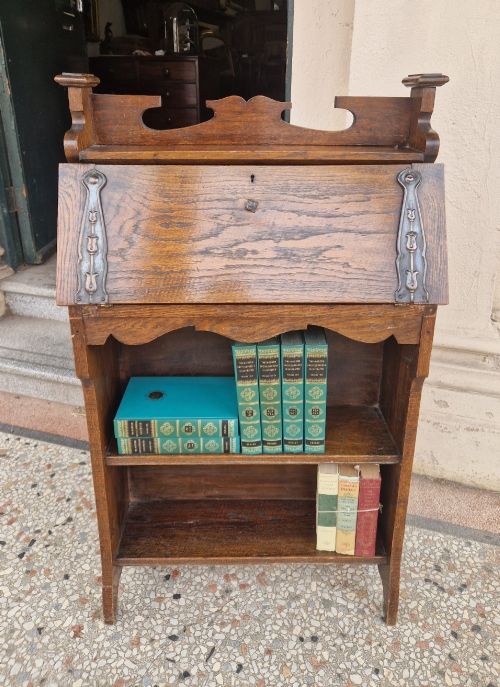
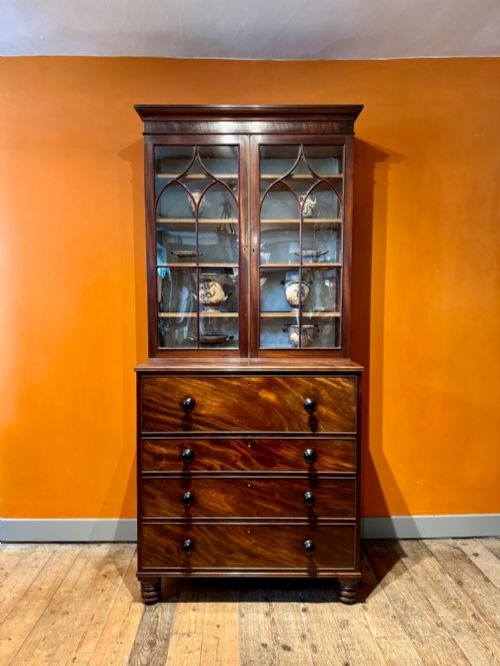


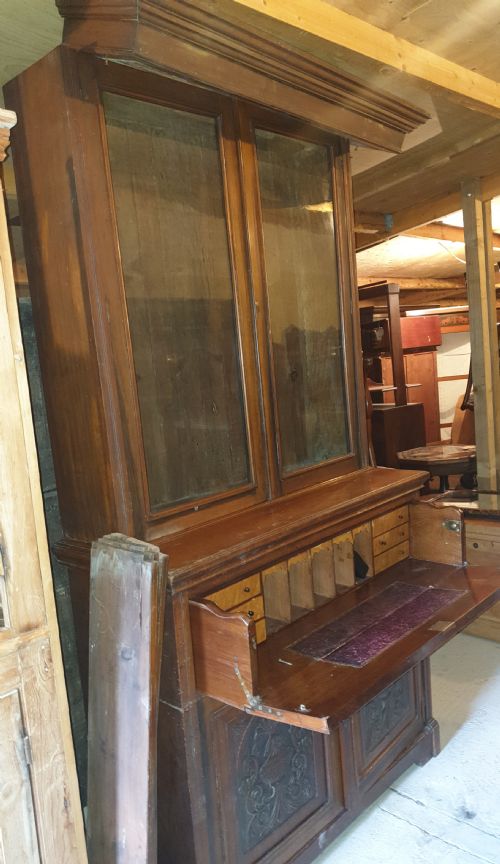


Brown Wooden Bureau Bookcase
A brown wooden bureau bookcase combines a writing slope and a shelved cabinet, offering private workspace alongside enclosed display storage for serious home study.
Brown Wooden Bureau Bookcase
The pieces appearing on this page span several distinct eras, incorporating Georgian, Regency, Victorian, and Edwardian examples alongside Arts and Crafts designs. Buyers encounter everything from early Queen Anne walnut models to refined mahogany constructions built in the eighteenth and nineteenth centuries.
Formations range from tall cabinet structures with glazed upper doors to smaller compact variants utilising satinwood and flame mahogany. Each version provides a dual function, keeping manuscripts and books neatly organised behind locked timber paneling.
Distinctions in construction and material standard
The standard of a brown wooden bureau bookcase depends heavily on the selection of timber veneers and the precision of the internal cabinetwork. Superior examples display carefully matched grain patterns across the fall-front writing surface and drawer fronts.
Internal arrangements demonstrate craftsmanship through the complexity of secret compartments, small drawers, and fitted pigeonholes within the desk space. Finely articulated glazing bars on the upper bookcase doors further separate high-tier examples from simpler utilitarian workshop output.
Brown Wooden Bureau Bookcase Retail Price Guide 2026
Typical asking prices for brown wooden bureau bookcase among the pieces listed under this phrase on Sellingantiques today, from the lower quarter to the upper quarter. They describe what is for sale here now, not the wider market.
The listings feature brown wooden bureau bookcases constructed from mahogany, walnut, oak, and satinwood across multiple periods.
Maple and Co.
The Brown Wooden Bureau Bookcase Glossary
- Secretaire
- A desk or cabinet featuring a pull-down writing drawer that conceals smaller pigeonholes and compartments. This mechanism allows a chest of drawers or bookcase to function as a writing desk.
- Escutcheon
- A protective plate surrounding a keyhole, usually cast from brass. It prevents the surrounding timber from sustaining wear when inserting keys into cabinet doors.
- Glazing bar
- A narrow strip of wood that holds individual panes of glass within a sash window or bookcase door. Complex arrangements of these bars define the visual style of upper cabinet doors.
- Flame mahogany
- A decorative veneer cut from timber where the branches join the main trunk, producing a distinctive flickering flame pattern. Cabinetmakers utilised this timber on prominent surfaces for visual impact.
- Pigeonhole
- A small, open compartment within a desk or bureau used for sorting letters and papers. These compartments are often concealed behind the main writing flap.
Brown Wooden Bureau Bookcase: Frequently Asked Questions
How do I use a bureau bookcase in a modern room?
A brown wooden bureau bookcase works well in a study or living area where both display space and a concealed writing desk are useful. The upper glass shelves hold books or ceramics, whilst the drop-front provides a compact working area that closes away when not in use.
Position the piece against a stable wall away from direct sunlight to protect timber finishes and veneer surfaces. Keeping the interior organised maintains the practical function of the writing compartments.
How can I tell a Georgian piece from a Victorian one?
Georgian examples often exhibit restrained classical proportions, rectilinear cabinetry, and fine flame mahogany or walnut veneers. Proportions tend to be balanced, with subtle stringing and bracket feet supporting the carcase.
Victorian pieces frequently introduce heavier timber sections, darker finishes, and more robust carved details or cylinder roll tops. Construction methods also shift slightly as industrial woodworking techniques developed through the nineteenth century.
Are these bookcases suitable for heavy books?
The internal wooden shelves are built to support standard collections of books, though antique timber can sag under excessive weight if overloaded for long periods. Distributing heavy volumes evenly across the shelving helps preserve the structural integrity of the upper cabinet.
Adjustable shelf systems found in certain later models allow heights to be modified to suit larger volumes safely.